
Kiwi singer-songwriter legend Neil Finn is taking his latest album “Dizzy Heights” on the road.
Actor James Garner dies
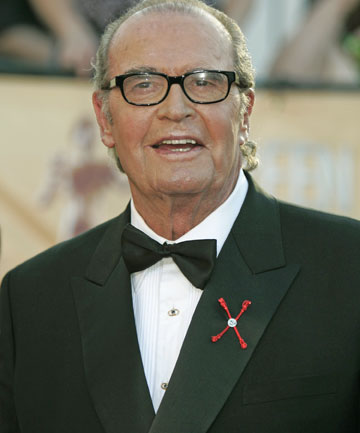
Legendary actor James Garner, known for his parts in The Rockford Files and The Notebook has died, aged 86.
Entertainment website TMZ reported that an ambulance was depatched to the actor’s Los Angeles home about 3pm (NZT) but he was dead when they arrived.
Garner’s career spanned more than five decades, in both televison and movies.
This Ladi’s got it going on

Despite her casual attire of Chuck Taylors and a black shirt dress, excitement is bubbling beneath the surface for hip-hop artist Ladi6.
Balancing an upcoming 13-stop New Zealand tour of her chart-topping third album, Automatic, with overseas commitments, Karoline Tamati has a lot on her plate.
The 31-year-old artist from Canterbury is relieved. “It’s busy but it’s better than last year. I didn’t want to do much. I’m quite a lazy person really.”
With her producer partner Brent “Parks” Park, Tamati regularly flits between her home country, her studio base in Berlin and now her Brazilian fanbase. She’s soon to add the US to her stomping ground, with her first tour coming up.
It’s all great news for Tamati but she’s wary of not becoming overwhelmed.
“Success in America scares the s… out of me,” she says. “It looks like hard work. My ideal situation is to kick it with my family and do a little bit of work.”
Tamati and Parks are parents to 10-year-old Philly, who tours with them around the world.
Raising a son and juggling an international music career are a challenge, but at the same time Tamati’s enjoying her boy being at an age where she can balance the two.
“We worried about it but he’s really bright, we’re really lucky. I kind of don’t want to chance it in the lottery by having another one,” she laughs.
In saying that, she wouldn’t say no to another baby at the moment. “My friends are at the age now where they’re getting married and having kids and I think I could fit another one in. You never know.”
It’s been a decade since Tamati teamed up with Parks, made some music and had a baby. In an industry full of egos and feisty creatives, making music with your spouse doesn’t often result in happy endings. But for Tamati and Parks, it works.
“We’ve been doing this 10 years, we’ve been together the same amount. Of course we have same frustrations as any couple that don’t see eye to eye. I think that keeps us interesting.”
With the typical melancholic personality of a songwriter, Tamati says she takes herself far too seriously. That’s where Parks, the clown, comes in handy.
“Everything’s sarcastic and it drives me nuts because I’m so super-serious. I’m basically a worrying, over-thinking anxious mother and he’s the cool dad.”
Tamati is proud of her producer partner and is keen to see him have his time in the limelight.
“It’s crazy what’s happened in the hip-hop scene, MCs used to be at the top of the game and now producers are at the top of their game. It’s happening overseas as well where people want to know who’s behind a production. My partner’s a producer so I’m like, go babe!”
With lyrics like “Hold tight to me. If in this world you could be anywhere, this is where I would like to be”, there’s a refreshing vibe to Ladi6’s music which makes her stand out.
Sympathising with the “down and outer” – kids who grow up surrounded by drugs and not much money – Tamati’s music is designed to be uplifting.
Ad Feedback
Without wanting to go into details, Tamati admits she’s had enough negativity in her own life to make her want to change the record.
“That’s the kind of person I am. I’ve always felt I wanted to say something, not wholesome, but something that might be helpful. A message that’s positive.
“My messages have always been messages that I want to hear in music. Affirmations like everything’s going to be OK and tomorrow’s going to be all right, we’re going to make it. My background leans to a need-to-hear-this kind of thing.”
Tamati wasn’t into hip-hop growing up. It was the 1990s, the era of grunge, so Nirvana, The Smashing Pumpkins and Morcheeba were in vogue.
Now she enjoys Australian rap artist Iggy Azalea and is “obsessed” with Swedish electronic band Little Dragon, who she was excited to see when she performed at Britain’s Glastonbury music festival recently. But Tamati wasn’t hanging out backstage to meet them. “I’m so useless with celebrities.”
She’s opened for the likes of 50 Cent, Alicia Keys and Kanye West but is yet to say two words to them. “I’m too scared. What would I say ‘Hi, I’m a really big fan’
She blubbed when meeting her idol, American singer-songwriter Erykah Badu once. “She was, like, will you support me in Berlin and I couldn’t talk, I just nodded. She was, like, ‘I’m sorry’ and hugged me. I was like, wow, I was a frickin baby.”
The Ladi6 with Team Dynamite tour kicks off in Auckland on August 1 and ends in Napier on August 30.
– Sunday Star Times
Sequel that’s no false Dawn
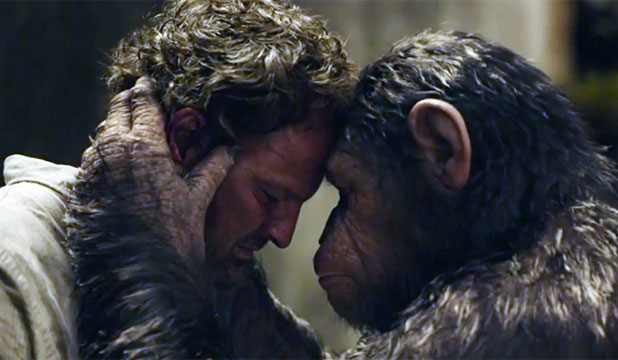
REVIEW:
Like that other near half-century old allegorical science-fiction franchise Star Trek, there’s been a quick rule of thumb about the success or failure of each instalment of this “simians-rule” series. Every second movie is worth seeing.
But while it’s been the even numbers that have stirred the imaginations of Trekkers, the odds have ruled when it comes to Planet of the Apes (which given that one went from TV to film and the other the opposite way has just the right “parallel universe” feel to it).
The 1968 original, the time-travelling Escape From and the original series circle-completing Battle all have their merits, while 2011’s Rise reinvigorated the story’s “reimagining”, left floundering by Tim Burton’s monkeying around with the basic concept a decade earlier.
History suggests then that Matt Reeves’ (Let Me In, Cloverfield) new Dawn should be treated with caution, but I’m pleased to report that it is a vital, vigorous and vibrant sequel to Rise – one that not only charts the progression of the science and art of motion capture (Burton’s 2001 prosthetic jobs now look laughable in comparison) but also the highs and lows of ape society, led by the enigmatic Caesar (Andy Serkis).
It’s 10 years after the events of Rise and the Simian Flu has left humanity on its knees. Government functions have been suspended and San Francisco’s remaining residents are two or three weeks from running out of fuel.
Their only hope is restarting a long dormant hydro dam, but standing between them and the power they crave are Caesar and the rest of the ALZ-113-enhanced apes.
Yes, Weta’s mo-cop magic is breathtaking, but it would be nothing if not allied to some smart, suspenseful storytelling from The Wolverine’s Matt Bomback and returning Rise duo Rick Jaffa and Amanda Silver. They takes us from a Quest for Fire-esque opening, through Lion King-esque potential tragedy to a stirring yet poignant showdown.
At times, the parallel father-son symbolism is ladled on a little too thick, but it’s hard not to be swept along by the thought-provoking premise and sheer entertainment value of watching gorillas as guerrillas.
DAWN OF THE PLANET OF THE APES (M) 130 mins
Ad Feedback
– Sunday Star Times
Patrolling on

Atlanta, Georgia, in the 1970s was a city exhausted by civil rights battles, a city in which counterculture activists were settling into jobs and mortgages and were tired of being “mad at society”.
For Karin Slaughter – a toddler then, though she remembers the music and the commercials – it was a fascinating time for her city and a rich source of material for her latest novel, Cop Town, the first in a new series.
“As a city, people were extremely apathetic so when it came time for women’s rights it was like, we cannot fight one more battle,” Slaughter, now 43, says. “It seems like women are always told, it is not your time.”
Slaughter’s key new characters are female cops – Kate Murphy, a Vietnam war widow on her first day in the force – and Maggie Lawson, whose brother and uncle are also cops. Tough at work, she is the victim of her sexist, racist, homophobic uncle’s violence at home.
“There is a higher rate of domestic violence among women police officers than in the general population,” says Slaughter, citing a statistic discovered while researching Cop Town. “Women can be two different people – one person at home, another at work.
“I thought, what a great challenge to create two new characters and talk about a part of policing I had never talked about before, which is patrol officers.”
Her research included talking to Atlanta’s now-retired policewomen about their experiences in the 1970s. “This was not a time when it was easy for women to stand up and say, we are not taking it any more,” she says.
“It was a very radical thing for a woman to stand up for herself,” she adds, mentioning the vilification of American feminist Gloria Steinem.
Many things which happen to Maggie and Kate – fellow officers groping them, a locker filled with faeces, urine in purses – actually happened to the women Slaughter talked to.
It was a tough time – a fact acknowledged when you talk about women in the 70s today, Slaughter says. “If women today bitterly complain people say, you are a whiney bitch. But if you mention the 70s people say, yeah, it was bad.
But issues for women’s rights back then- reproductive rights and pay equality, for instance – are still issues today, she says.
So has society gone backwards “In many ways it has. Now if someone says something that is sexist, racist or homophobic people say something. Whether they do anything about it is another matter, but they say something.”
Ad Feedback
She read Erica Jong’s seminal feminist novel Fear of Flying at college and hated it, but re-read it for her research and was struck by a particular line: “There is a line in there which says, a single woman is taking a vow of poverty. To some extent that is still true, especially if they have children. I thought, that is interesting that that has not changed.”
Kate and Maggie are very dear to her, she says, and she needs a break before resuming their story: “I feel a very real connection with these characters and want to make sure that next time I write about them I am clear on what I want to say. I like them, the potential that they have.” But fans of her long-running series featuring Sara Linton and Will Trent need not worry – unlike some writers who tire of their series and need a break, she is keen to resume their story.
Fourteen books ago – and that is not counting the various novellas, e-books, books she has edited – Slaughter began her Grant County series, set in small-town Georgia where she grew up. It featured paediatrician and coroner Dr Sara Linton and her husband, cop Jeffrey Tolliver. But when Slaughter killed off Jeffrey she moved Sara to Atlanta.
She had also begun a new series featuring damaged Special Agent Will Trent, his partner Faith and dysfunctional friend, then wife Angie. Four books ago, she brought Will and Sara together.
“I have to go back to writing my Will and Sara books or people will kill me,” Slaughter says of her ardent fans. She is not exaggerating – she has sold more than 30 million copies worldwide. “I really feel like now they are going to go into that next stage of their relationship, but they need to get rid of Will’s wife Angie.
“I have a story for it but I need to do some really hard thinking about that.”
Meanwhile, her next book will be a stand-alone, one to ponder during international tours to promote Cop Town. There’s just one downside: a herniated disc from a yoga class which makes flying uncomfortable.
But her trip down under will be worth the pain, she says. The much-travelled Slaughter says New Zealand is “the most beautiful country I have ever seen”.
Karin Slaughter will speak at the Auckland Central City Library, Lorne St, on Monday, August 11, 5.30pm-7.30pm and at the Wellington City Library, on Tuesday, August 12, 6pm-7.30pm. Both events are free.
COP TOWN Karin Slaughter Century, $37
When the music stops
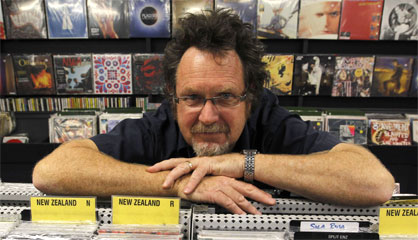
No, that wasn’t a tear on my cheek. There’d been a little light rain.
But I will admit to a great sadness following the closure this month of one of New Zealand’s longest-lived music stores, Everyman Records, right here in my adopted home of Nelson.
Said to be the oldest independent record store in the country, the place had been operating from the same site since 1975, when two local high school teachers followed their love of music and literature and opened what was then known as the Everyman Book and Record Shop.
In the intervening decades the books were gradually edged out in favour of music, while an impressively diverse roll-call of the blessed and the damned served as staff members. Esteemed author Maurice Gee even manned the counter on occasion while the staff buggered off to grab some lunch. In recent years, the shop had been going for so long that several children of former staff members had become staff members themselves.
The place was a magnet for local eccentrics, musical obsessives and wastrels of every stripe. On any Friday night throughout the boom years of the 80s and 90s the place was rammed with opinionated punters, arguing over the merits and shortcomings of new releases and spending up large. Around the back, if you happened to wander into the car park, assorted reprobates gathered to smoke spliffs and continue the musical conversation.
Back then, the store was a bright beacon of alternative culture in a conservative provincial backwater; a meeting place for collectors of rare books, band members, vinyl addicts, lost souls, and passing drunks who’d only wandered in because it was warm and busy.
As that egalitarian name suggests, The Everyman crossed all social, economic and taste boundaries, being equally happy to supply the soundtrack du jour for young and old, rich and poor, classical and country fans, hippies, bogans, rastas, squares and punks. I suspect it was this unusually broad cross-section of loyal buyers that helped it survive for so long, despite intense competition from cut-price chain stores and digital downloading.
For more than 20 years I loved the place. It felt like a second home. Churches aside, I regularly darken the door of most cultural institutions – art galleries, libraries, museums, cinemas, concert halls, bars – but my favourite forum for community engagement, enlightenment and joy remains a good record store, and The Everyman was one of the great ones.
A former customer himself, current owner Greg Shaw was behind the counter for 28 years, his legendary grumpiness matched only by his generosity. When I was employed one summer setting up a community radio station in nearby Motueka, he lent us CDs for the playlist. When I first moved to Nelson and couldn’t find a place to stay, he let me doss for a month rent-free in the basement flat under his house.
In an earlier life, before record companies began to bombard me with review CDs, I bought so many records in the store that the weight of them caused major structural issues in my rumpty old villa and I had to have it repiled.
Ad Feedback
Not only did I squander my wages on LPs in there, I also found myself the perfect wife. My beloved Josephine’s mum was part-owner for a couple of decades, back when it sold books as well as records. During breaks from university in Dunedin, her daughter – my future missus – would work part-time in the store, and I would spend my lunch breaks lusting after her while sifting through the record racks.
I knew I was onto a winner when we argued one day over the merits of an obscure funk album. Outgunned by my superior musical knowledge, she resorted to personal attacks, disparaging me for my height. “Stand up when you’re talking to me!” she said, and from that moment on, I was in love. Still am.
But now this citadel of music and culture and romance is no more. Yet another casualty of iTunes and Spotify, rising rents and changing technology, The Everyman went into voluntary liquidation in early July. Even the recent vinyl revival wasn’t enough to keep the nation’s oldest record store afloat.
Things ended badly, with the business mired in more than $200,000 of debt. To recoup a little cash for creditors, there was a liquidation sale.
A sadder sight I’ve seldom seen, with hundreds of former customers gathering around the cold corpse – a flock of reluctant vultures, picking over the bones. I was there myself, a mourner at the graveside, scooping up armfuls of cut-price jazz and punk LPs.
In the queue heading for the counter, former customers exchanged memories of happier times. One of them recalled a rock’n’roll-addled staffer declining to order an obscure free jazz LP they’d asked for because this was clearly “tugger’s music”.
Another reminded me of a typically iconoclastic event The Everyman had sponsored: an anti-talent show called Nelson Idle, set up to find Nelson’s least-gifted performer and staged during the local arts festival to undercut the notion that our fair city was awash with artistry.
Now, for the first time in 39 years, Nelson joins the growing ranks of New Zealand towns and cities which no longer have a dedicated record store. Of course, those looking for cut-price CDs or Top 40 albums can still find them in The Warehouse. And anyone with an internet connection can download music without paying a cent or even having to venture out of their house.
But anyone searching for obscure, back-catalogue albums, second-hand vinyl, unusual New Zealand releases or even just a spirited chinwag with fellow music fans among the record bins is now out of luck. Seems a crying shame to me, but that dampness on my cheek That’s just a few stray spots of winter rain.
– Sunday Star Times
Soundtrack to my life: Daimon Schwalger

Daimon Schwalger aka The Nomad is a DJ, producer, recording artist and recently converted beard enthusiast, currently based on the South Island’s West Coast.
“I guess I first got into music back in the mid 80s when the stuff that hit me hard was break-dance music.
“But even before that, my first ever vinyl LP was 1978s Don’t Walk, Boogie, a disco compilation which featured artists like A Taste of Honey, La Belle Epoque and many more.
“But when I was 12 and living in Hamilton, I really loved the break-dance scene. The music just blew me away as it was so fresh and unique, and after we moved to Dunedin, I started to piss off my Mum and Dad by trying to scratch, badly, on their nice new turntable.
“A few years later, I discovered an LP called The Hits of House. It had a track on it called Paid In Full by Eric B & Rakim, a killer hip-hop track that changed my life.
“It all really just escalated from there. The next track that really hit home when I stared DJing in the late 80s was New Order’s Blue Monday, which was so cutting edge for its time, and also sounded seriously phat on vinyl and in the club.
“Then came De La Soul’s Three Feet High and Rising, which was hip-hop at the next level, and also had a real positive message. The next album that really stood out for me was Goldie’s Timeless – it was around the time that Jungle was big, and this album took a lot from the rougher breakbeats of earlier jungle production but made it all smooth, sexy and well-produced with added live elements.
Lately, the albums that really stand out for me are by Bro Safari, Pink Oculus and Mungo’s Hi Fi. All these sounds are influences in my new album, but they’ve been absorbed, reconfigured and and mutated with my own distinctive Nomad feel.”
Ad Feedback
– Sunday Star Times
Zappa knew how to let riffs rip
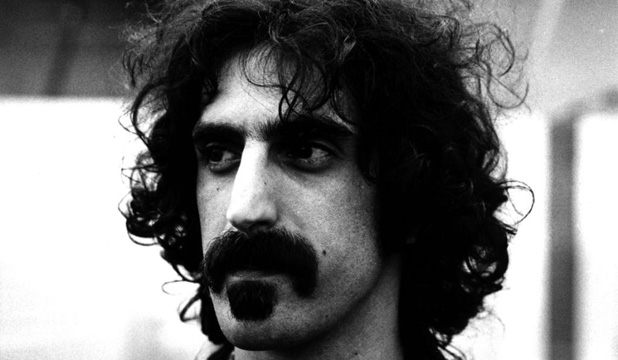
Who has the best guitar riff of all time We asked our readers to make their picks from rock ‘n’ roll history, and
Book review: Bark a skillful collection

Lorrie Moore is an American writer who takes her time – just six books in more than 20 years – and Bark is her first short-story collection in 15 years.
But there is a good reason for her leisurely pace in writing. Everything she writes is crafted to perfection, not a word out of place and not a false note. No surprise that she has a growing audience of discerning readers and has won a number of prestigious literary awards.
Not one of the eight stories in Bark is actually called Bark, and this at first creates something of a mystery.
The opening story is called Debarking. In it, a wife complains that her husband used to “bark” things at her like an angry dog. Life has gradually “debarked” him. But there’s a double meaning in giving this odd title to the whole collection.
Trees too can be “debarked”, just as dogs can be – they can have their thin, protective coating stripped off them. In all of these stories, people are depicted in emotionally fragile moments, when they’ve had their protective assumptions and certainties stripped away. The “bark” is what covers us before more essential truths are revealed.
Interestingly, the stressful moments in these stories nearly always concern couples or parenting. In Debarking, a divorced man starts seeing a divorced woman but discovers how hard it is for middle-aged people to resume dating when they are out of practice.
Desperate middle-aged women, reacting to the death of one of their friends, medicate themselves with gin as they face their unhappy singleness (The Juniper Tree). As she divorces, a wife expresses her utter primal rage at having been betrayed by her husband (Paper Losses).
In an excruciatingly awful and funny story, a man, seated next to his wife at a public banquet, finds himself having to talk with another woman whose political views are the diametric opposite of his own (Foes). And there is a riotous, outrageous and sad story of a wedding ceremony being disrupted (Thank You For Having Me); a story about a couple caring for a mentally unbalanced son (Referential); and a painful dating scenario where a woman shares a table with a guy she once thought glamorous (Subject to Search).
While it’s easy to tick off themes like this, the really important thing is how well these stories are written. Moore gives her stories texture and context by referencing them to recent events in American public life. The private and the political intermesh.
Ad Feedback
Her skill with language is extraordinary. Of a man unexpectedly being chatted up by a woman, she writes: “Like everyone he knew, he could discern the hollowness in other people’s charm only when it was directed at someone other than himself.”
Of a fundraising dinner where arty people appeal to wealthy corporations for grants, she writes “here at this gala even the usual diaphanous veneer of seemliness had been tossed to the trade winds”.
What a book is “about” is only 50 per cent of its meaning. How it is expressed is the other 50. Moore scores highly on both sides of the sum, and Bark is an outstanding collection.
BARK
By Lorrie Moore
Faber and Faber $37
– Sunday Star Times
Kiwi stars forced to go moonlighting

Hip-hop artist Ladi6 waited until the end of our interview to drop the bomb.
Before the release of her third studio album Automatic, she was on the benefit.
“I’m really busy now but it’s better than last year. I was on the dole for a week,” the lady, real name Karoline Tamati, admits.
After that she came to her senses and got back on with the job.
Spilling drinks on unsuspecting diners or forgetting to ask if you want fries with that is all part and parcel of growing up and entering the workforce. But for a chunk of our drama and music professionals, there is no end in sight to the minimum-wage jobs which put bread on the table.
Describing herself as ultimately lazy, last year Tamati grew tired of slaving away in the studio, writing lyrics and recording with her producer/partner Brent “Parks” Park. She says she was homesick for their 10-year-old son, Philly, who otherwise has to travel with the pair to Ladi6’s Berlin-based studio, to the United States, Brazil and everywhere else they have been touring.
“I didn’t want to do too much, I wanted to be a stay-at-home mum, you know
“The mum who makes the lunches and gets the kids ready for school. But that lasted about six months and then I was like, ‘that’s enough of that’.”
She’s not the only local success who’s struggled to make ends meet.
It’s a catchcry that has long rung out out through the New Zealand entertainment industry.
Actress Rena Owen, best-known for her gritty role as battered wife Beth Heke in cult Kiwi film Once Were Warriors turned to the dole after earning just $15,000 for her efforts and then struggling to get subsequent roles, it was reported at the time.
But Kiwi actors are optimistic the tide is changing.
Benedict Wall, who features in TV One Radio Hauraki docudrama Pirates of the Airwaves, left our shores for the greener pastures of Sydney’s acting industry, where he found work in feature films and shows such as Underbelly.
He had previously had a stint on Shortland Street and is now part of Sydney’s hub of expat Kiwi actors.
“The rules around tax rebates have changed again so hopefully it will encourage productions back into Auckland, like Spartacus and Power Rangers,” Wall says.
“[Post production and visual effects company] Digipost was doing great things here. It was a great place for young actors.”
He and his band of ex-Kiwi Sydneysiders such as Sara Wiseman and Craig Hall take every opportunity to come back. The latter are said to be on their way here for a project shortly, while Wall jumped at the chance to star as radio pirate Rick Grant in Pirates of the Airwaves.
“When I left it seemed there was more work in New Zealand. I was lucky to get cast in the role but then I knew most of the people working on it. It’s always nice to go home.”
Actress, comedian and feature director Jackie Van Beek has had her fair share of odd jobs as she’s got herself off the ground.
Ad Feedback
Although she loves writing and directing her own work, she also does it out of necessity to earn a crust.
“I’m sure I won’t get rich off this – I won’t be able to buy a yacht from making a low-budget art-house film.”
It’s nice work if you can get it. Van Beek, of all people should know.
“I have been very poor in the past,” she says. “When I got a mortgage I thought I better do something else so I became a pizza delivery driver, but then I quit after three weeks.
“I also freaked out and got my taxi licence so I could be a taxi driver, but I never drove a taxi.”
That wasn’t the worst of it. A stint with an improvisation group while she was a student was particularly painful. It was at a Wellington Telecom conference that she decided she couldn’t do it any more.
“I spent an hour in makeup, completely green faced and they attached this lettuce to my head. There was a hole in the buffet table, I had to climb under it and stick my head up through the hole and when they all broke for lunch I had to make jokes as a lettuce. I was so young and the money was so good but I just remember thinking, ‘I can’t sustain this. This isn’t my future’.”
And even in seemingly greener pastures, there’s still no let up.
Hope and Wire actress Luanne Gordon, perhaps best known for her starring role on TV drama The Strip, found herself in an embarrassing case of life imitates art while living in Britain recently.
In between acting gigs, the Kiwi actress worked in her flatmate’s North London sex shop. She lasted only six months, during which time she was recognised by customers for the steamy soap she starred in back home.
She’s considering turning the hilarious experience into a short film.
Meanwhile between playing doctors on Shortland Street, actress Ria Vandervis is up to her eyeballs co-running an apparel printing business and dabbling as a marriage celebrant. She was inspired to do the latter while out of acting work when she became engaged to her now-husband Chris Ashton.
Struggling to find someone fresh, young and relevant to perform the ceremony and with little else to do, Vandervis applied for her licence. She now performs a handful of weddings when recording for Shortland Street lightens up over summer.
Fellow Shorty Streeter Teuila Blakely also famously worked her way through the retail sector before gaining steady work in media.
Pregnant at 17, the Sione’s Wedding star had to work hard to provide for her young family. For 10 years she moved through flipping burgers at McDonald’s and assisting customers at Glasson’s and Just Jeans.
She’s hoping she doesn’t end up back there again, recently announcing she was leaving the soap to pursue the film she’s writing based on her play Island Girls.
– Sunday Star Times