Plays explore relationship to internet


This year’s season of Young and Hungry at Bats Theatre in Wellington, the 20th, has an eclectic mix of themes but one feature consistent with all three is a laptop, and of course the internet. Dysfunctional families are also central to two of the plays, the first in particular, a futuristic gothic horror, Our Parents’ Children by Alex Lodge, directed by Erina Daniels.

The central character Mary is home alone with her father John who spends all his time in his study drinking whisky. Mary’s mum left when she was very small and all she has left is a lock of her hair which plays an integral part in her future relationship with online boy friend Joe, a bible-bashing American. Joe coerces Mary into a futuristic cloning type experiment but when Mary decides to assert her independence and do her own thing, there are dire consequences.

The script has moments of interest and intrigue but is far too piecemeal to allow for any cohesive forward momentum. As a consequence, the production suffers and director and cast are unable to save it from looking shambolic and uncoordinated, not helped by technical aspects of the production like hand-held data projects being more of a hindrance than a help.

In the second play, Second Afterlife, by Ralph McCubbin Howell, directed by Kerryn Palmer, the central character Dan has also spent a lot of time on his laptop. He has tried Bebo, Warcraft, even NZDating. Now he is addicted to Facebook. Then one morning, after an all-night party with his friends, he announces that he has had an epiphany and is going to delete his Facebook profile and all other profiles. But Facebook is undeletable and so Dan finds himself in the internet underworld where the Guide makes him confront the ghosts of his past profiles, the Bebo emo, the Warcraft gamer and NZDating’s casanova.

During these encounters there are also flashbacks to his school days showing his relationships with his friends which all helps to resolve Dan’s dilemma with great effect.

With snappy dialogue and direction with pace and energy, and lots of well choreographed fight scenes, the cast of six bring the production together excellently, making it a fascinating piece of entertaining theatre.

The third play of the evening, Uncle Minotaur by Dan Bain, directed by Sara Brodie, although not without its faults, is nevertheless still an interesting piece of writing brought very creatively to the stage.

Ad Feedback

With a mother who spends all her time on her laptop, a father who has disappeared, but reappears in an unusual guise, and bullied by her peers, Grets is having a hard time. When eye surgery goes wrong, she decides to confront her demons and ends up wandering through some sort of labyrinth where she meets a very creatively constructed Minotaur, which, it transpires, is her uncle.

Although many strands of the play appear left unconnected and a lot of the dialogue becomes inaudible through too much shouting, the production is nonetheless cleverly put together with some excellent puppet work, the monkeys on the backs of Greta’s tormentors particularly effective, making this an interesting end to this year’s Young and Hungry season.

The Young and Hungry Festival of New Theatre runs at Bats Theatre until August 2.

– The Dominion Post

Anika Moa sings way to national awards


Anika Moa has won two national awards for her beautifully crafted children’s music.

The winners in the New Zealand Children’s Music Awards were announced live on What Now yesterday by Jason Kerrison, a first for the show.

With her album Songs For Bubbas, Moa won a New Zealand Music Awards Tui for Best Children’s Music Album and also won Best Children’s Music Song of the Year for her song Colours are Beautiful.

Aimee Herd’s video for Dragons Under My Bed, written and performed by Kath Bee, won the Best Children’s Music Video category.

Damian Vaughan, CEO of Recorded Music New Zealand, said Moa’s album was “brilliant”.

”Kids all over New Zealand should get to hear this, it really is brilliant – and not just for bubbas,” he said.

Ad Feedback

– The Press

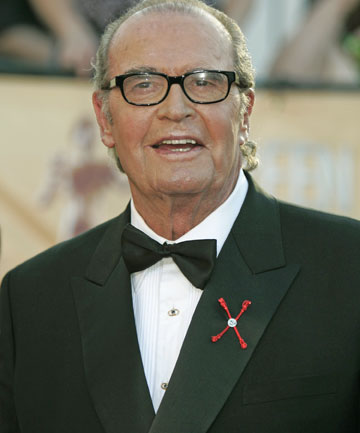
Film, TV legend James Garner dies


Few actors could register disbelief, exasperation or annoyance with more comic subtlety.

James Garner had a way of widening his eyes while the corner of his mouth sagged ever so slightly. Maybe he would swallow once to further make his point.

This portrait of fleeting disquiet could be understood, and identified with, by every member of the audience. Never mind Garner was tall, brawny and, well, movie-star handsome. The persona he perfected was never less than manly, good with his dukes and charming to the ladies, but his heroics were kept human-scale thanks to his gift for the comic turn. He remained one of the people.

He burst on the scene with this disarming style in the 1950s TV Western Maverick, which led to a stellar career in TV and films such as The Rockford Files and his Oscar-nominated Murphy’s Romance.

The 86-year-old Garner, who was found dead of natural causes at his Los Angeles home on Saturday (local time), was adept at drama and action. But he was best known for his low-key, wisecracking style, especially on his hit TV series, Maverick and The Rockford Files.

His quick-witted avoidance of conflict offered a refreshing new take on the American hero, contrasting with the blunt toughness of John Wayne and the laconic trigger-happiness of Clint Eastwood.

There’s no better display of Garner’s everyman majesty than the NBC series The Rockford Files (1974-80). He played an LA private eye and wrongly jailed ex-con who seemed to rarely get paid, or even get thanks, for the cases he took, while helplessly getting drawn into trouble to help someone who was neither a client nor maybe even a friend. He lived in a trailer with an answering machine that, in the show’s opening titles, always took a message that had nothing to do with a paying job, but more often was a complaining call from a cranky creditor.

Through it all, Jim Rockford, however down on his luck, persevered hopefully. He wore the veneer of a cynic, but led with his heart. Putting all that on screen was Garner’s magic.

Well into his 70s, the handsome Oklahoman remained active in both TV and film. In 2002, he was Sandra Bullock’s father in the film Divine Secrets of the Ya-Ya Sisterhood. The following year, he joined the cast of 8 Simple Rules … For Dating My Teenage Daughter, playing the grandfather on the sitcom – and helping ground it with his reassuring presence – after star John Ritter, who played the father, died during the show’s second season.

He even scored in commercials. During the late 1970s, he was paired with actress Mariette Hartley in a popular series of ads for Polaroid cameras. Their on-screen banter felt so authentic that many viewers mistakenly believed they were husband and wife.

When Garner received the Screen Actors Guild’s lifetime achievement award in 2005, he quipped, “I’m not at all sure how I got here.” But in his 2011 memoir, The Garner Files, he provided some amusing and enlightening clues, including his penchant for bluntly expressed opinions and a practice for decking people who said something nasty to his face – including an obnoxious fan and an abusive stepmother.

Ad Feedback

And when he suspected his studio of cheating him on residual payments – a not-unheard-of condition in Hollywood – Garner spoke out loudly and fought back with lawsuits.

They all deserved it, Garner declared in his book.

It was in 1957 when the ABC network, desperate to compete on ratings-rich Sunday night, scheduled Maverick against CBS’s powerhouse The Ed Sullivan Show and NBC’s The Steve Allen Show. To everyone’s surprise – except Garner’s- Maverick soon outpolled them both.

At a time when the networks were awash with hard-eyed, traditional Western heroes, Bret Maverick provided a breath of fresh air. With his sardonic tone and his eagerness to talk his way out of a squabble rather than pull out his six-shooter, the con-artist Westerner seemed to scoff at the genre’s values.

After a couple of years, Garner felt the series was losing its creative edge, and he found a legal loophole to escape his contract in 1960.

His first film after Maverick established him as a movie actor. It was The Children’s Hour, William Wyler’s remake of Lillian Hellman’s lesbian drama that co-starred Audrey Hepburn and Shirley MacLaine.

He followed in a successful comedy with Kim Novak, Boys Night Out, and then established his box-office appeal with the 1963 blockbuster war drama The Great Escape” and two smash comedies with Doris Day – The Thrill of It All and Move Over Darling.

Throughout his film career, Garner demonstrated his versatility in comedies (The Art of Love, A Man Could Get Killed, Skin Game), suspense (36 Hours, They Only Kill Their Masters, Marlowe), and Westerns (Duel at Diablo, Hour of the Gun, Support Your Local Gunfighter).

In the 1966 racing film Grand Prix he starred as an American driver in the Formula One series. Garner, who loved auto racing, formed and owned the American International Racers auto racing team from 1967 through 1969, and drove the pace car at the Indianapolis 500 in 1975, 1977 and 1985.

In the 1980s and 1990s, when most stars his age were considered over the hill, Garner’s career remained strong. He played a supporting role as a marshal in the 1994 Maverick, a big-screen return to the TV series with Mel Gibson in Garner’s old title role. His only Oscar nomination came for the 1985 Murphy’s Romance, a comedy about a small-town love relationship in which he co-starred with Sally Field.

He starred in a musical, Victor/Victoria (1982), and a romantic drama, The Notebook (2004).

His favourite film, though, was the cynical 1964 war drama The Americanization of Emily, which co-starred Julie Andrews.

Unlike most film stars, Garner made repeated returns to television. The show he often cited as his favourite, “Nichols” (1971-72), and “Bret Maverick” (1981-82) were short-lived, but “The Rockford Files” proved a solid hit, bringing him an Emmy.

Among his notable TV movies: Barbarians at the Gate (as tycoon F. Ross Johnson), Breathing Lessons, The Promise,’ My Name Is Bill W., The Streets of Laredo and One Special Night.

He said he learned about acting while playing a non-speaking role as a Navy juror in the 1954 Broadway hit play The Caine Mutiny Court Martial, starring Henry Fonda and Lloyd Nolan.

“I had no lines, and I had trouble staying awake,” Garner recalled.

After Caine Mutiny, Garner found work in Hollywood as a bit player in the Cheyenne TV series. Warner Bros. gave him a screen test and signed him to a seven-year contract starting at $200 a week.

The studio cast him in supporting roles in three minor films, followed by the important break as Marlon Brando’s sidekick in Sayonara. When Charlton Heston declined a war movie, Darby’s Rangers, because of a money dispute, Garner assumed the role.

Maverick, which co-starred Jack Kelly as brother Bart Maverick, made its debut on September 22, 1957, launching him as a star.

Garner was born James Scott Bumgarner (some references say Baumgarner) in Norman, Oklahoma. His mother died when he was 5, and friends and relatives cared for him and his two brothers for a time while his father was in California.

In 1957, Garner married TV actress Lois Clarke, who survives him. She had a daughter Kimberly from a previous marriage, and the Garners had another daughter, Gretta Scott.

In the late 1990s, the Garners built a 12,000-square-foot house on a 400-acre ranch north of Santa Barbara, California.

“My wife and I felt … we’d just watch the sunset from the front porch,” Garner said in 2000. “But then the phone started ringing with all these wonderful offers, and we decided, ‘Heck, let’s stay in the business for a while.'”

– AP

Kimye ‘hire North look-a-like’


Kim Kardashian and Kanye West have apparently invested in a body double for their daughter North.

This method is considered common in Hollywood, and the doubles are regularly used when film stars can’t film their own stunts. But as North is only a baby, her look-a-like would be used in a different way.

Sources close to the power couple allege they’re sick of media intrusion, and want to protect their 13-month-old daughter from it as much as possible.

“Kim and Kanye hired the look-a-like to shield North from the paparazzi. There were auditions held in LA at a specialist agency. In the end they found a child who is spitting image of their daughter,” an insider told British magazine Grazia.

The source added that the Sheezus singer and reality TV star Kardashian, who wed in a lavish Italian ceremony in May, are splashing US$855,500 (NZ$983,800) a year on the doppelganger.

And they haven’t just stopped at a North stand in.

“They also hired a body-double nanny, who they hope will really throw the paps off the scent,” the source added.

The couple are no strangers to using look-a-likes to avoid the waiting media, and friends say Kardashian has used one for years to help her go incognito.

West has also openly slammed paparazzi intrusion in the past, most recently ranting about it during a festival performance in Britain.

While headlining Wireless festival earlier this month West spent 20 minutes talking to the crowds about what annoys him, with the press making it high on to the list.

Ad Feedback

– Cover Media

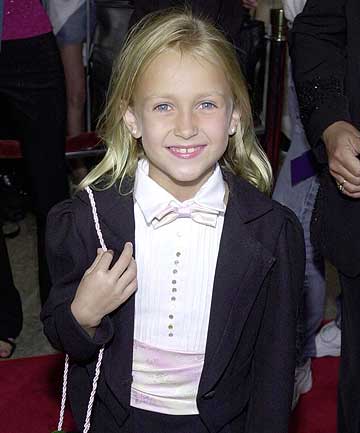
Patriot actress Skye McCole Bartusiak dies at 21


Actress Skye McCole Bartusiak, who portrayed Mel Gibson’s young daughter in the 2000 film The Patriot, died in her Houston home, her mother said Sunday (local time). She was 21.

Bartusiak’s mother, Helen Bartusiak, told The Associated Press the actress had been living in a garage apartment at her parents’ home. She said the actress’ boyfriend found her unresponsive on her bed Saturday.

Helen Bartusiak said she tried to resuscitate her daughter but could not. She said the actress had been healthy and did not drink or do drugs and the family did not yet know a cause of death.

Bartusiak made her acting debut in the television miniseries Storm of the Century in 1999 and also had a role on 24 in 2002-2003.

She made her film debut in the The Cider House Rules in 1999 and starred with Michael Douglas in Don’t Say a Word in 2001. Her most recent move was Sick Boy in 2012.

Bartusiak was best known for her role in Gibson’s Revolutionary War epic The Patriot, where she played the daughter of militia leader Benjamin Martin who struggles to speak with her father.

The Patriot cast also included Heath Ledger, who died after an accidental overdose of painkillers and sedatives in 2008.

Ad Feedback

– AP

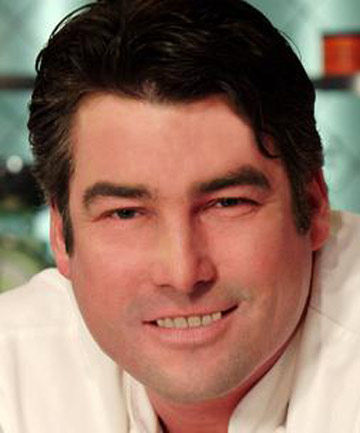
Celebrity chef Ross Burden dies


Celebrity chef Ross Burden has died suddenly following cancer treatment aged 45.

Burden, who was born in Napier, hosted Ready Steady Cook in the United Kingdom after appearing in the British Masterchef final in 1993.

A self-taught cook, Burden filmed a healthy eating video with Joan Collins, set up his own catering company, and was once voted one of the UK’s most eligible bachelors – “The Tastiest Man in Britain”.

He lived in London for nearly two decades before returning to New Zealand to judge the first Masterchef series in 2010.

Burden was diagnosed with a form of leukemia in July last year, and contracted an infection following a bone marrow transplant to treat the cancer, his sister Kirsten Hughes told the New Zealand Herald.

He died unexpectedly in Auckland Hospital on Thursday.

A celebration of Burden’s life will be held on Wednesday at Auckland University’s MacLaurin Chapel at 11am.

Another memorial would be held in later in Napier where Burden was born.

Ad Feedback

– Stuff

Kia ora Maori Spongebob


Who lives in a painaporo under te moana

Spongebob Squarepants. Well, for the next two months, at least.

The comical yellow sea sponge is heading Down Under for Maori Language Week and he’s brought his mate Dora the Explorer with him.

In a first, a full 60 episodes each of the popular cartoons have been translated to Maori for free-to-air television.

Commissioned by Maori TV, the approximately $500,000 project will see kids able to tune into Maori cartoons for 10 weeks in what’s hoped will aid a revitalisation of the language.

“There were quite a lot of words we had to research to find out their meaning,” translator and producer Pania Papa says.

“We had to break some down and decide what their best representation was. That’s what happens when you create new words. It makes the language live and breathe.

“I absolutely enjoyed it,” Papa says.

The hardest phrase Hydrodynamic spatula.

“We figured out rapa means spatula or anything broad and flat,” Papa explains. “Wai means hydro and whakakori is to disturb the water or to make movement. So it’s rapa whakakori wai.”

Translation company Takatu Associates and 12 translators spent eight months dubbing over the cartoons with Maori voices, paying particular attention to keep them sounding as much like the originals as possible.

The cartoons’ distributors Viacom allowed Maori TV the rights to dub and broadcast the versions with funding available through Crown entity Te Mangai Paho.

The result’s not bad.

While eagle-eyed fans may be able to spot a few mouth movements slightly out of sync, the voices – including Spongebob and his chubby starfish friend Patrick – are remarkably like the real things.

“Maori language experts say the language needs to be cemented in the home. It’s part of the Government’s Maori language strategy,” Papa says.

“If the parents don’t speak it, the cheapest way to see that happen is with good quality TV.”

The project runs on the back of a pilot of five episodes of Maori Spongebob which aired five years ago.

Papa says it’s not just for kids. She reckons her adult students will be glued to their screens to hear what Spongebob sounds like in Maori.

“Spongebob’s got a lot of adult fans, a lot of the jokes are for adults.”

The Spongebob characters even have their own dialects with the sponge himself hailing from the east with an accent of the Ngati Porou iwi. His smart-witted squirrel companion Sandy Cheeks hails from the South Island.

Beginners in the language might like to stick to preschool favourite Dora the Explorer. Dora Matatoa, as she will be called, will be shouting “Kua tutuki!” in place of “We did it!” as her mate Boots (Putu) helps her outwit the sly fox (Tahai), otherwise known as Swiper.

Maori Language Week starts today.

The rise of the celebrity sex tape


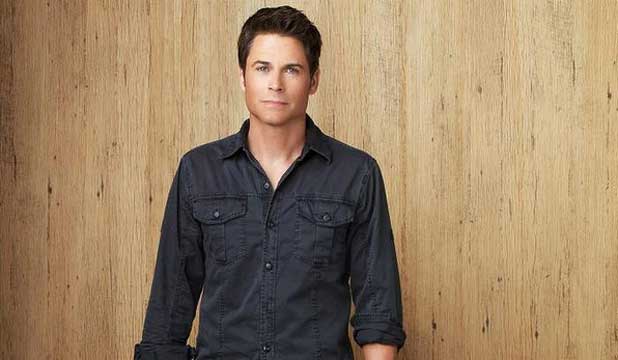
The world changed, if only a little, on July 17, 1988, in a hotel room in Atlanta, Georgia. That was the night Rob Lowe pressed the red button on his camcorder to kick off what we now call the celebrity sex tape.

He was there for the Democratic National Convention, to support Michael Dukakis. Ted Turner gave a party, then Lowe, Judd Nelson and Ally Sheedy went to a nightclub called Club Rio on Luckie Street (and that joke is too obvious even for me).

He went back to his hotel with two Atlanta hairdressers: one was 22, the other 16, which was the legal age of consent in Georgia, although he said later he had no idea she was that young. Who did what to whom is disputed, but they filmed it.

When he went to the bathroom, according to his version, recounted in

Carbone role a lifetime ambition


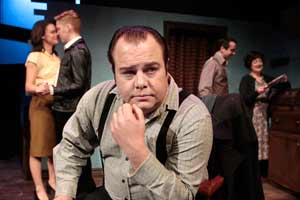
Actor Gavin Rutherford knows he’s filling some very big shoes. In playwright Arthur Miller’s A View from the Bridge he stars as Italian American Eddie Carbone, who works on the Brooklyn docks.

Carbone is considered one of the pre-eminent roles in American theatre and one of the most memorable in Miller’s works, up there with Willy Loman in Death of a Salesman.

Carbone has been performed by some big names overseas, including Anthony LaPaglia, Liev Schreiber – with Scarlett Johansson as Carbone’s niece Catherine – and, most recently, British actor Mark Strong in London earlier this year.

But for Rutherford, who was in Miller’s The Price at Circa Theatre last year, landing the part was a lifetime ambition. Since he was a teenager he had been passionate about Miller’s 1955 play.

“I fell in love with this play when I saw it at the Mercury Theatre [in Auckland] many years ago with Paul Gittins [as Carbone] and George Henare [as narrator Alfieri]. As a kid I was just gobsmacked by it. A little bit later on when doing amateur dramatics as a teenager, I chose the script [of the play] to do a reading from.”

In the play Carbone and his wife Beatrice (Jude Gibson) welcome into their home two of Beatrice’s cousins Rodolpho (Paul Waggott) and Marco (Alex Greig) from Sicily, who have illegally entered the United States. But Carbone later turns on the two when Catherine (Acushla-Tara Sutton) becomes romantically involved with Rodolpho. The more Carbone tries to assert control, the more everything gets out of control.

Rutherford says when he was a teenager one of the reasons he was so attracted to the play and Carbone, despite the character being a married man, was that Carbone’s struggles resonated with him. “There is such a huge masculinity about the Eddie Carbone character and it is a destructive masculinity. It’s an over-the-top passion and an over-the-top desire for honour and protecting his own, which becomes obsessive.

“All those sorts of male things, especially when you are a teenager of ‘what is my name What is my self-respect’ It’s trying to find your role. Are you the alpha male or the beta male or the omega male in your group of friends It’s how those kind of shake-downs happen, especially when you are full of hormones. That is what struck me.”

But to actually play Carbone was another matter for Rutherford. While working on The Price last year with director Sue Wilson, it was Wilson who first suggested that he consider auditioning for the part.

“I was excited and also scared because so many big names have done this through the years. Even [Kiwi actor] Bruce Phillips, who played a version in Auckland recently, is coming to opening night. That’s intimidating because he is such a fine actor.”

Being Carbone “from the inside” has been eye-opening for the actor. Of special importance to master is that Carbone is Italian American. It included the accent and Carbone’s physical presence. Rutherford says audiences like the accent thanks to its use in numerous films and television shows, including On the Waterfront – which directly grew out of the same framework as A View from the Bridge – and The Sopranos. “The accent itself is now so famous, so that comes relatively easy. But Arthur Miller writes in a very precise cadence and so getting those finicky words right: ‘am I saying ain’t this time or am I saying didn’t’. . . There are double negatives and all of these things to play with, but learning them is a great challenge.”

Ad Feedback

To help get it right the Circa Theatre production called on two Italians based in Wellington for advice, Massimo Tolve and Antonio De Martino from Pizza Pomodoro. “Just to hear them talk and see the physical gestures that go with it, and see the way they hold themselves -there’s a humility about them, but at the same time there’s a passion,” says Rutherford.

“I’ve had to look a little more Italian, so I’ve got darker hair and darker eyebrows. I see myself in the mirror and I see this different man, who seems to strut more. I think it comes from that passion of the physicality. I find myself strutting more just walking around town.”

Miller first wrote A View from the Bridge as a one-act play, but he re-wrote it as a two-act work, which legendary director Peter Brook staged in London in 1956. While it is considered one of Miller’s greatest plays, it isn’t performed as often or is as well-known as The Crucible or Death of a Salesman. Rutherford isn’t sure why. “It’s quite raw and passionate. It may have something to do with it being produced when he [Miller] was working on a screenplay with [film-maker] Elia Kazan and they had a falling out. The film is On the Waterfront, which everybody knows. But A View from the Bridge, which was done [as a] film later, didn’t have that same thing as Marlon Brando doing On the Waterfront, so perhaps that’s one of the reasons why.”

Regardless, Rutherford is happy to inhabit Carbone in a play that encouraged him to take up acting in the first place. “There is part of me – and maybe it’s the misogynist male-type masculinity in me – that does kind of enjoy the strut.”

THE DETAILS

A View from the Bridge is at Wellington’s Circa One until August 23.

– Wellington