Isaiah Washington back in The 100


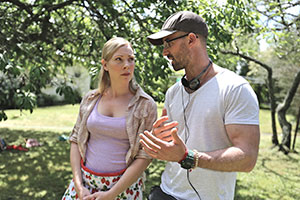
Seven years after his acrimonious departure from hit medical drama Grey’s Anatomy, Isaiah Washington is finally back on the small screen in sci-fi series The 100. He talks to James Croot about what drew him back into the fold.

What was it about The 100 that made you want to be a part of it

The writing – it’s always the writing for me. I’ve always been dreadfully picky as an actor. I’ll let my finances go from several thousands of dollars to zero. I’ll wait and wait and wait until I find the right project. I have to be confident if I’m going to spend my lifeblood, my time. I had the script for three weeks and I had thought there’s nothing more I can say on TV – I’ve done it, I’ve been at the pinnacle of success in TV – whatever that’s supposed to mean. But then I read it and I was wrong and I’m glad I was wrong. I’m glad my wife said “you have to read this”.

It’s been said that the show (set on a post-apocalyptic, long-since abandoned Earth) has something of an environmental message. Do you subscribe to that theory

I think it has a plethora of messages, but they don’t punch you in the nose like Spike Lee (Washington’s old collaborator on films like Clockers and Crooklyn) did – “Pow – get the message”. You don’t have to do it 90s style now, you just put it out there and let the people decide. However, sometimes in TV you gotta be on the nose, because the audience has ADD or they go to the restroom, come back and get lost.

What was the toughest challenge of bringing the character of the show’s nominal leader Chancellor Thelonius Jaha to life

Emotionally it’s been mind-blistering – I’m worn out. But that’s the job I signed on for. I wanted the challenge of not just saying the lines. I’m working on a different kind of acting – less is more. I want people to actually believe what is happening without a shadow of a doubt. Forget about the acting, storytelling and all that jazz and you fall into this world. I’m hoping, in the great words of DMX, that “people feel me”.

So, to that end, did you have much say in the character’s development

Jason (Rothenberg, the series’ creator) talked to all of us about what we thought of our character and actually adhered to our opinions. That never happens – I thought I’d died when I was invited into the writers room like that. The only other time was on a medical show I was on, but only after some time, and that turned out to be a hit.

Ad Feedback

The 100, 1.30pm, Sundays, TV2

– Stuff

Snoop Dogg: I smoked at White House


Snoop Dogg says he smoked in the White House bathroom.

The 42-year-old Gin and Juice rapper made the revelation on the latest episode of his web series, which airs on his GGN (Double G News) YouTube channel.

When guest Jimmy Kimmel asked the musician if he had ever smoked at the White House, Snoop, who has been a public proponent of marijuana for decades, replied with a shocking anecdote.
“Not in the White House, but in the bathroom,” the star told Kimmel.

Snoop explained he managed to trick security into believing he needed to visit the lavatory for a poo.

The star even likened himself to smooth-talking like the “The CIA, or the FBI; the Alphabet Boys.”

“‘Cause I said, ‘May I use the bathroom for a second'” Snoop recalled. “And they said, ‘What are you going to do Number One, or Number Two’ I said, ‘Number Two.’ So I said, ‘Look, when I do the Number Two, I usually, you know, have a cigarette or I light something to get the aroma right.”

But no smoking of any kind is allowed in the White House toilet.

However, Snoop found a way around that rule.

“And they said, ‘You know what You can light a piece of napkin.’ And I said, ‘I’ll do that.’ And the napkin was this,” he smiled while inhaling smoke from a blunt wrap.

Ad Feedback

– Cover Media

Batman still thriving after 75 years


In a world filled with seemingly daily disasters and endless turmoil, it’s no wonder that superheroes are as popular as ever, from blockbuster movies all the way to the local toy shop. “When the world gets scary, superheroes’ sales go up,” says Brad Meltzer, the bestselling political-thriller author and comic-book creator. “What resonates today is, as we look around at this scary world, we want someone to come save us.”

And to Meltzer, no superhero resonates quite like Batman. It was May of 1939, during the run-up to World War II, when Batman made his debut in the Detective Comics (later shortened to “DC”) book The Case of the Chemical Syndicate. The Caped Crusader immediately found an eager national audience. Now, so many thousands of crime-fighting adventures later, DC Comics is celebrating the 75th anniversary of the iconic character by declaring July 23 “Batman Day”. Comic-book outlets around the world are partnering with the publisher to offer various Bat-birthday collectibles, as well as a new comic written by Meltzer.

DC is also timing its Batman event to coincide with the Wednesday-night kickoff of San Diego Comic-Con, the granddaddy of American pop-culture conventions and festivals that draws more than 125,000 fans to the San Diego Convention Center over four and a half days. And Batman has had a huge hand in that: Comic-Con — which arose in the wake of the character’s hit 1960s TV show — enjoyed huge growth in the ’90s as Tim Burton’s Batman movies starring Michael Keaton reignited Hollywood’s interest in superheroes.

To help celebrate the Batman anniversary, DC Entertainment will have a sizable presence at this year’s festival, including a “Batman 75: Legends of the Dark Knight” panel.

And to think this was all spawned by a couple of young creators trying to come up with a character to rival the introduction of Superman — an emergence that sparked the entire multibillion-dollar superhero industry.

In 1938, the world’s first popular superhero was launched by Detective Comics. “As World War II started encroaching on our shores,” Meltzer says, “that’s when Superman took off, selling over a million copies.”

By the next year, the publisher was looking to replicate that success, and an editor tasked Bob Kane with creating another caped crime-fighter. Inspired partly by da Vinci’s drawings of flight, Kane rendered a birdlike bat-man, then took his idea to artist-friend Bill Finger, who sharpened and darkened the look of “the Batman.” In May 1939, in Detective Comics No. 27, Batman was born. (A copy of that issue can now fetch US$1.5 million (NZ$1.7m) at auction.)

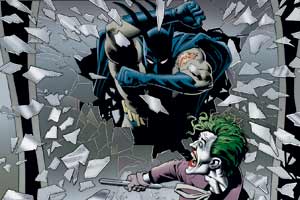
Soon, with help from teenage writer-illustrator Jerry Robinson, Batman had a sidekick (Robin) whose look was drawn from a Wyeth painting; a great villain (the Joker) inspired (according to Robinson) by a playing card; and a moody aesthetic influenced by everything from German expressionist films to Harry Clarke’s illustrations for the books of Edgar Allan Poe.

Ad Feedback

Batman has persevered through so many phases, from a film-noir feel to the high camp of the ’60s TV show starring Adam West to the Dark Knight of a shadowy, psychologically tortured figure as popularised by Frank Miller’s graphic novels and Christopher Nolan’s feature films. The character endures by having as many entry points to his story as he has incarnations.

“Through these 75 years, Batman has been fine-tuned by hundreds of writers and artists into honed perfection,” Meltzer says. “He is perfectly defined and, I maintain, the most perfectly defined literary character. The odd part is, although he’s moved from camp, to dark, to self-hating, to self-confidence, you always somehow know exactly what Batman ‘would do’. There’s a core that never changes.”

For Batman Day, DC co-publisher Dan DiDio asked Meltzer to create a new comic that would rightly celebrate the Caped Crusader’s entire history. “I wanted the story to stay true to that original and honour all the came after,” Meltzer says. “No pressure.”

“Batman has stayed relevant,” DiDio says by phone from DC’s New York offices, “because he is constantly reinvented and reinterpreted by every generation.”

For the new comic, Meltzer and designer Chip Kidd deconstructed Kane and Finger’s first Batman story, then weaved in a trove of character history. “We took the story apart and then rebuilt it with those original images from the first story,” Meltzer says. “It was like doing a jigsaw puzzle.”

Meltzer and Kidd’s reimagined comic echoes the theme of need for superheroes in a scary world, as it alludes not only to young Bruce Wayne becoming an orphan after a theatre performance, but also to the 2012 multiplex shooting in Aurora, Colorado, at a midnight screening of The Dark Knight Rises the final instalment of Nolan’s recent “Batman” trilogy.

“First and foremost, that was of course a call to his dead parents,” Meltzer says of a scene in his new Batman story. “But you better believe that those theatre shootings were right there, too. For 75 years, Batman has been a cultural shield, protecting us from our deepest fears.”

So beneath the savvy marketing and cool collectibles, why exactly does Batman endure as a pop-cultural force

“Thanks to Bill Finger, Batman was the first comic-book superhero to have a psychological reason to wage war on crime,” says Marc Tyler Nobleman, the Washington-based author of Bill the Boy Wonder: The Secret Co-Creator of Batman. “While he was an original fusion of elements of earlier characters, it was this emotional motive that stood out most. We identify with Batman/Bruce Wayne not only because he has no powers, but also because he has no parents. We emphathise with his empathy.”

Glen Weldon, a Washington-based comics contributor for NPR and author of the forthcoming book The Caped Crusade: The Rise of Batman and the Triumph of Nerd Culture, believes Batman has remained relevant because of a crucial reinvention: He gained the psychology of obsession, thanks to writer Dennis O’Neil, who was hired to “fix” Batman after the campy TV show’s demise.

“O’Neil’s decision to introduce a note of obsession saved Batman, and indirectly the comics industry, by offering a masculine ideal with whom [capital-N] Nerds could identify, and cherish,” Weldon says.

“Batman was obsessed. Driven. Consumed by his passionate devotion. Nerds read him, and saw themselves — their inner lives — reflected in a dark mirror,” Weldon says.

Meltzer, by contrast, finds value in the constancy within Batman’s creative malleability.

“The ears gets taller, then shorter. The costume will get darker, then lighter. The utility belt will get pouch-y, then sleeker. But Batman’s character is as stubborn as the man beneath the cowl,” Meltzer says. “He is immovable. He projects sheer will, convincing us we have a chance — even when we don’t. And. He. Will. Not. Change. We, as a people, need someone that committed to an ideal.”

-The Washington Post
Cowell’s attorneys address gay rumours


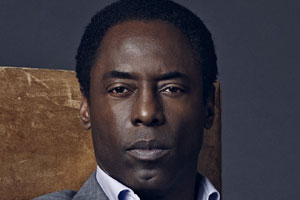
Simon Cowell’s attorneys insist their client is “truthful in the public arena”.

The TV mogul was without warning dragged into a trial in the UK last week when a recording was played in which his former manager, Gareth Varey, could be heard claiming Cowell is gay.

Addressing speculation in a statement to E! News, a spokesperson for the star insisted Cowell would have no problem speaking candidly about his sexuality if that was the case.

“Simon was referred to during the trial without forewarning, resulting in widespread media coverage of untrue claims regarding his private life,” attorneys for Simon told the outlet.

The spokesperson, who was not named in the report, also suggested the very notion sexuality would stir controversy is a dated idea.

“In 2014 the question of whether someone is or is not gay is antiquated. (As it happens he isn’t, though if he were, he would simply have said so). However, the issue was the false suggestion made by Mr. Varey that Simon-who is renowned for his honesty and candidness-had thus not been truthful in the public arena and this is what we have been obliged to clarify.

“Considering Cowell is beloved (and despised, but in a love-to-hate-him way) for his candor, he understandably wanted to put a rumour to rest that implied he had been any less than honest,” the statement continued.

Cowell meanwhile has been revelling in fatherhood since becoming a first-time dad.

The X Factor creator welcomed a son with girlfriend Lauren Silverman back in February and was recently gushing about the tot.

Appearing at an event for British foundation Shooting Star Chase, a hospice charity that cares for children with life-limiting conditions, Cowell admitted welcoming his little boy helped him realise how fortunate the couple are.

“Of course. You feel blessed and luckily he’s in good health. It did put things into a different perspective,” he told British magazine Hello!

Ad Feedback

– Cover Media

Art outside the box


American Sol LeWitt has been called one of the most influential artists of the 20th century. Ahead of a documentary on the artist this week in the New Zealand International Film Festival, John McDonald saw the some of his works in Sydney.

‘Souless twit!” was the verdict from a Sydney art identity when an exhibition of works by American conceptual artist Sol LeWitt opened this year.

It’s a harsh call because LeWitt may not be the most expressive of artists but his precise, geometric work has that appeal we associate with anything so blatantly perfectionist. Besides, as the exhibition Your Mind is Exactly at That Line demonstrates, he loosened up considerably in his old age.

This weekend the New Zealand International Film Festival will screen the documentary Sol LeWitt on the artist. He was notoriously camera-shy, rarely gave interviews and refused to become “an art personality”.

LeWitt is one of the acknowledged gurus of conceptual art and minimalism, although he disavowed both labels. He consistently argued that the idea of a work of art was more important than the realisation, but he referred to his own work as “conceptual art with a small ‘c”‘. He was even more dismissive of minimal art.

“It went nowhere,” he said, which seems a reasonable assessment of a style that aimed to reduce art to its most basic elements.

Despite his conceptual rigour, an aspect of LeWitt’s wall drawings and minimalist “structures” makes us feel good. By all accounts LeWitt (1928-2007) was a charming, easy- going man and a great supporter of other artists. This makes him an anomaly among his American peers of the minimalist generation, who were notoriously self-centred and irascible. It’s doubtful anyone ever met Richard Serra or Dan Flavin and said: “What a nice man!”

Although he worked in many different media, he is chiefly known for his three-dimensional modular structures, such as the Incomplete Open Cubes of the 1970s, and for large-scale wall drawings. The structures are radically simplified, gaining power through repetition and the artist’s single- minded determination to explore every possible variant on a given form. The Three Part Variations on Three Different Kinds of Cubes (1975) resembles a slightly dysfunctional set of shelves.

So clean, dull and obdurate are they that the viewer is forced into a grudging admiration of the chutzpah it takes to make such a piece and call it art.

In these early works, LeWitt did not indulge the decorative impulse that would characterise his later production. He stuck doggedly to the grid, producing works in serial fashion until they became something quite different from the cold, industrial-style fabrications they resembled as singular units. Many critics noted the burgeoning absurdity in producing so many variations on a geometric theme, usually the square or the cube.

The first proposition in LeWitt’s quasi-manifesto Sentences on Conceptual Art (1969) is: “Conceptual artists are mystics rather than rationalists. They leap to conclusions that logic cannot reach.” Looking back over the totality of LeWitt’s career we can see he was not being merely provocative. He may have been a serialist but he was never a rationalist. A buyer of LeWitt’s wall drawings would acquire a contract that gave instructions as to how the work should be created. It wasn’t necessary the artist himself do the drawing. In most cases it was done by assistants who would be credited for their input.

Ad Feedback

Instructions might be precise or left deliberately vague: the process was similar to the way a composer expects a musician to interpret a piece. Elevating the idea over the actual labour of making the work was not simply an avant-garde gambit, it had a practical corollary in terms of LeWitt’s productivity and marketability.

It meant he could be prolific, turning out thousands of works that had only to be dreamed up and described on a piece of paper. It allowed the most exacting pieces to be executed according to a plan, regardless of his own physical frailties as he grew older and battled cancer.

Even after his death, new versions of his wall drawings can be created by accredited assistants – which is exactly what’s happened for the Sydney exhibition.

The longer one spends with LeWitt’s art, the less clinical it grows. No wonder he rejected the dogmatism of the minimalists. His carefully designed works might be best described as a refined form of play.

Music festival set to rock Masterton CBD


Wellington’s got its Cuba St and Newtown street festivals and now Masterton is going to have a rocking event of its own.

King St became well-known for its successful art therapy studios; more recently it has been seen as the heart of Wairarapa’s live music scene, a reputation set to be furthered by being the venue for a new street festival from 3pm on October 25.

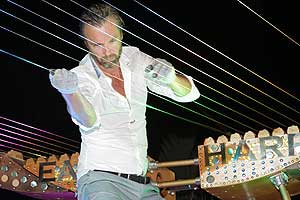
The Huia Festival on Labour Weekend will be headlined by one of New Zealand’s most sought-after live acts, The Black Seeds, and the immensely popular Wellington International Ukulele Orchestra, and will see the street closed off for the day’s Mardi- Gras-style party.

The brainchild of Wairarapa-based top Kiwi musician Warren Maxwell and his brother Alan who is also bar manager of King Street Live, the festival is named after that most emblematic of New Zealand birds, the huia.

Maxwell is bringing his musical connections to bear and Mark Rogers of Up With People is also organising the event.

King Street Live and Up With People have invigorated the local music scene by bringing international acts to Wairarapa and kicking off new events such as this year’s wildly successful Pink Floyd Tribute at Stonehenge Aotearoa.

The Black Seeds were one of the most popular acts at King Street Live since it opened and they still hold the record for attracting the fastest sellout of the venue. At the Huia Festival Maxwell will be playing with one of his bands, King Oriori and Masterons. Solo instrumentalist Adam Page is bringing his wildly innovative musical talent and Shapeshifter’s DJ Sambora is another drawcard.

The stage will be at the Chapel St end of the street and the car park between Liquor King and King Street Live will be home to the food and beverage court. A special VIP Party will be held after the street festival in King Street Live from 10pm onwards.

Band members from The Black Seeds and Adam Page will be holding workshops the next day in association with Bully Free Wairarapa in the Stopping Violence Rooms.

In conjunction with the festival, organisers are also holding a song-writing competition for young people and they will get to play their song on stage.

Wairarapa News has teamed up with the festival to offer readers $20 off the normal $85 ticket price and also a discount for the VIP party. Just enter the code WaiNews when buying tickets at http://www.eventfinder.co.nz/2014/huia-festival-2014/masterton/tickets

Ad Feedback

– Wairarapa News