Exit polls: Kadima leads Israeli vote, big gains for Likud

Kadima's Tzipi Livni won more support than was predicted in the Israeli elections.
Israel’s two largest parties each claimed a mandate early Wednesday after exit polls showed a surprise first-place finish by the ruling Kadima party and dramatic gains by its conservative rivals.

Foreign Minister Tzipi Livni’s failure to assemble a ruling coalition for Kadima last year triggered Tuesday’s elections. But she told supporters after the vote that the narrow edge Kadima appears to have held over the conservative Likud shows her party is “the common denominator of Israeli society.” Livni called on Likud leader Benjamin Netanyahu “to respect the choice of Israel’s citizens … and to join a unity government, led by us, that will be based on the large parties in Israel, left and right.” But Netanyahu said the showing by Likud — which appears to have more than doubled the number of seats it holds in the Knesset — Israel’s parliament — show voters have rejected Kadima’s leadership, and he said conservative parties could form a majority when the results are in. “With God’s help, I shall head the coming government,” he said. “I am sure that I can manage to put together a good, broad-based and stable government that will be able to deal with the security crisis and the economic crisis.” “It’s a typical Israeli election in that you might have two winners,” Israeli political analyst Chemi Shalev told CNN. “The clear-cut winner, in the sense that she did much better than any expectations, is Tzipi Livni and Kadima. But we have to judge elections by the bottom line, and if it turns out that … Benjamin Netanyahu will be the the prime minister, he will be judged to have been the winner.” CNN correspondent Ben Wedeman and Israeli political analysts warned that exit polls had been wrong in past elections. The campaign was dominated by the recent war with Palestinian militants in Gaza, which was popular within Israel despite widespread international condemnation. Netanyahu was a harsh critic of Kadima founder Ariel Sharon’s 2005 withdrawal of Israeli troops and settlers from Gaza, and his supporters say he has been proven right. Exit polls gave Kadima a narrow lead over Likud, with the right-wing Yisrael Beiteinu in third place and Labor — Israel’s founding party and Kadima’s current coalition partner — in fourth. According to Israeli newspaper Haaretz, with 98 percent of precincts reporting, Kadima was on track to win 28 seats in the 120-member Knesset, the same as it currently holds. Likud was forecast to win 27 — a dramatic jump from its current 12. Yisrael Beytenu was on track to win 15 seats, up from 11 currently, while Labor appeared to have slid from 18 seats to 13. A fourth-place finish would be an unprecedentedly weak showing for Labor, now led by Defense Minister and former Prime Minister Ehud Barak. Shalev suggested a Kadima-Likud-Labor coalition is possible — but it was not clear who would lead it. The next prime minister will have six weeks to form a coalition government. A government needs a controlling majority of 61 in the 120-seat Knesset. Neither Likud nor Kadima is expected to reach even half that figure.

Don’t Miss
Blog: Bill Schneider on meeting the candidates

Profile: Likud seeking to capitalize on lead in polls

Profile: Kadima faces fight to hold onto power

Profile: Polls point to tough election day for Labor

Livni took control of Kadima in September, when Prime Minister Ehud Olmert stepped down as the party leader amid several corruption investigations. She has been careful not to cast herself as a dove in the election with advertising focused on the military assault in Gaza and tough statements against the Palestinian fundamentalist group Hamas. Netanyahu served as prime minister from 1996 to 1999. He has supported the expansion of Israeli settlements in the West Bank and opposed further territorial concessions to end the decades-old Israeli-Palestinian conflict. Kadima member Machman Shai told CNN that Livni “was attacked from the right and the left. They said she was not capable for the job — very chauvinistic. And I think it was all wrong. She is a leader and up to leading Israel in the years to come.” Early joy at Kadima HQ » “The majority of the people want a windfall,” Netanyahu said Tuesday while casting his ballot. “They want a change of direction to security, honor and hope, and I think they will vote for this today.” About 5.2 million people were eligible to vote, choosing from 33 parties, with polls closing at 10 p.m. (3 p.m. ET). According to the Central Election Committee, 62.5 percent of eligible voters cast ballots — about 2 percentage points higher than the country’s last elections, in 2006. Will a new leader make any difference » This year, the election was expected to largely determine which Israeli parties should take credit for the recent war in Gaza. iReport.com: See photos of the scene as voters head to the polls Despite international condemnation over the high number of Palestinian civilian casualties, it was a popular war in Israel. Domestic support was strong throughout, especially among residents within Palestinian militant rocket range, and it was perceived in Israel as a success. Polls showed that could bode well for Israel’s right-wing parties. Defense Minister Ehud Barak, head of the Labor Party, also hoped for a sizable boost from the three-week Gaza war. But it probably will not be enough to lead the government. Before the operation, Labor was tipped to win just eight seats. That doubled in some polls, albeit briefly. A small number of rockets are still falling in southern Israel, and that could play into the hands of Netanyahu. He was not in a position of power during the war, but he sought to capitalize on his opposition to Israel’s 2005 withdrawal from Gaza, telling voters he warned the move would result in Palestinian militant rockets hitting major cities. At the time he was ridiculed by his political rivals, but his supporters say he was proven right. A party even further right-wing than Likud is Avigdor Lieberman’s Yisrael Beiteinu, which recent polls show was gaining strength. Lieberman’s party could gain six seats if it performs as well as recent polls suggest, taking it to 17 seats. That would take it past Labor as the third largest faction in the legislature.

If Lieberman’s party surpasses Labor, the founding party of the Jewish state, it would be unprecedented. Lieberman, 50, is a polarizing figure whose party has been accused of racism against Palestinians and Arab citizens of Israel.


Frustration for survivors as Australian bushfires smolder

A woman dresses a  boy in donated clothes in Whittlesea, north of Melbourne.
As fires smoldered and sometimes raged across sections of the scarred landscape Tuesday, rescue officials in Victoria attempted to offer solace to hundreds burned out of their homes and frustrated at being unable to return.

Tent cities sprung up around Whittlesea, just north of Melbourne, as relief agencies pitched camps for those forced out of their homes. Weekend bushfires “completely wiped out” the towns of Marysville and Kinglake, officials said. More than 20 fires were burning Tuesday, according to the Country Fire Authority. Frustration also brewed as residents desperately wanted to return to their homes, or what was left of them, but were prevented by authorities because of safety concerns. The toll from Saturday’s inferno has grown day by day. Police in the state of Victoria put the number of deaths from the fires at 181 on Tuesday. Watch survivors coping with the grief » “We think there will be more deaths,” Police Chief Christine Nixon said. “It’s a major issue … that we’re finding more bodies as we gain access to locations.” But there was hope. Watch an emotional reunion for a couple separated during the bushfires » “We don’t muck around in this country. It will be back to the same in 18 months,” said Ash Phelin, a volunteer worker helping displaced families. “It might not look the same. It’ll be a bit burnt. But it’ll be back.” Photos: Bushfires leave path of destruction » The scope and scale of the fire brought Monique Locklier to help her bush mates. “It’s up the road from where we live,” she said. “It’s the worst tragedy we’ve ever seen and I hope we never see it again.” iReport.com: ‘Thank God we were spared’ Charitable contributions continued to pour into the Salvation Army as Australians were touched by the crisis. “We’re in the midst of this huge financial crisis and people want to give,” Major Rodney Barnard said. “The Salvation Army has been running an appeal and we’ve raised in excess of AUS$2 million (US$1.3 million).”

Don’t Miss
Blog:  ‘Rural Australians are a tough bunch’

Survivor films firestorm damage

BackStory:  Face-to-face with wildfires

iReport.com: Send your photos, videos and stories

Impact Your World

See how you can make a difference

The need for humanitarian aid is expected to be great, with Prime Minister Kevin Rudd laying out the costs of the fires before Parliament. In addition to those killed, more than 500 people were injured, nearly 1,000 homes were destroyed, thousands were left homeless and 365,000 hectares (901,935 acres) of the Australian countryside have been burnt black, he said. See a map of the area » “The seventh of February will become etched in our national memory as a day of disaster, of death and of mourning,” Rudd said, as he announced that offers of assistance had poured in from around the world, including from France, Japan, New Zealand, Singapore, Thailand and the United States. “All Victorians and all Australians should know that in this darkest hour, they are not alone,” he said. German Chancellor Angela Merkel and French President Nicolas Sarkozy wrote letters to Rudd expressing their condolences.

“I would like to express my deep, profound sympathy to you, the families and loved ones of the victims, and the Australian people,” Merkel wrote. “To the wounded I wish a quick and full recovery.” Sarkozy also offered his support and suggested that the French island territory of New Caledonia in the Pacific could be used as a staging ground for supplies to Australia.

Brain scan may reveal risk for Alzheimer’s disease

A Mexican soldier guards the entrance at a Cancún police station where the military is investigating a murder.
Key structural changes have been identified in the brain images of some patients with mild cognitive impairment which could help determine who’s at greatest risk for developing Alzheimer’s disease.

Francisco Velasco Delgado was detained by military officials early Monday and flown to Mexico City, where he was placed under 45 days of house arrest, according to the media reports. With Delgado’s removal, the military has taken over the Cancún police force, several newspapers reported. Cancún Mayor Gregorio Sanchez Martinez said the move was made “to facilitate all types of investigations into the triple murder that happened last week,” the Diario de Yucatan newspaper said. Salvador Rocha Vargas, the secretary for public security for the state of Quintana Roo, will lead the police force. He said he will take all the pertinent measures “to clean up the Cancún police,” the Excelsior newspaper reported Tuesday. Retired Gen. Mauro Enrique Tello Quinonez’s bullet-riddled body was found a week ago on a road outside Cancún. Authorities said he had been tortured before being shot 11 times.

Don’t Miss
Mexico drug fighter killed after less than a day on job

Latin America to hold summit to fight crime

His aide and a driver also were tortured and killed. Quintana Roo state prosecutor Bello Melchor Rodriguez y Carrillo said last week there was no doubt Tello and the others were victims of organized crime. “The general was the most mistreated,” Rodriguez y Carrillo said at a news conference. “He had burns on his skin and bones in his hands and wrists were broken.” An autopsy revealed he also had broken knees. Tello had been appointed less than 24 hours earlier as a special drug-fighting consultant for Gregorio Sanchez Martinez, the mayor of the Benito Juarez municipality, which includes the city of Cancún. Tello, who retired from the army in January at the mandatory age of 63, had moved to the resort area three weeks ago. Mexico is undergoing an unprecedented wave of violence that some have likened to a civil war. The government is battling drug cartels as the traffickers fight each other for control of the lucrative illicit market. Tello was the second high-ranking army officer to be killed in the area in the past few years. Lt. Col. Wilfrido Flores Saucedo and his aide were gunned down on a Cancún street in 2006. That crime remains unsolved. The latest killings come as Mexico grapples with the highest violent-death rate in its history. Mexican Attorney General Eduardo Medina Mora reported in December there had been around 5,400 slayings in 2008, more than double the 2,477 tallied in 2007. There already have been more than 400 drug-related killings this year, according to some news accounts.

Man arrested with rifle said he had delivery for Obama

A man drove to the Capitol with a rifle and said he had a delivery for President Obama, police said.
Police arrested a man near the U.S. Capitol on Tuesday after he drove up to one of the building’s barricades with a rifle in his vehicle and told officers that he had a delivery for President Obama, a Senate spokesman said.

Sgt. Kimberly Schneider identified the man as Alfred Brock, 64, of Winnfield, Louisiana. She said Brock was charged with possession of an unregistered firearm and unregistered ammunition. Brock drove up to the north barricade at the Capitol late Tuesday afternoon, saying he had a delivery for the president, Schneider said. After further questioning, he admitted he had a rifle in his truck. He was arrested and taken to police headquarters for processing, she said. A search of his truck turned up several rounds of ammunition, Schneider said. Police also checked the area around the barricade, but found nothing hazardous. Threats against Obama have led to arrests in previous cases. In one, federal prosecutors concluded that three people arrested with drugs and weapons in a suburban Denver, Colorado, motel posed a “true threat” to Obama during the Democratic National Convention. In the second, a Florida man was charged with threatening bodily harm against the then-candidate in August. He has pleaded not guilty.

Gates: Obama to decide on Afghanistan troops in ‘days’

Defense Secretary Robert Gates says the president will make a decision on troop increases soon.
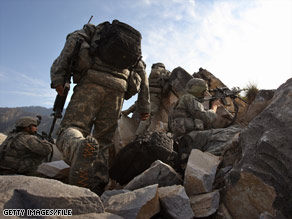
President Barack Obama will likely make a decision on sending additional troops to Afghanistan "in the course of the next few days," Defense Secretary Robert Gates said Tuesday.

“I think that there is a realization that some decisions have to be made … before the strategic review is completed,” Gates said at a news conference. “He has several options in front of him.” Gates, one of three Republicans appointed to Obama’s Cabinet, said the administration will wait until a strategic review of military operations is complete to make decisions on “the strategies going forward.” “I worry a lot about the foreign military footprint in Afghanistan. … I think and I hope that the strategic review that is under way will sort of point a path forward in terms of what we think the right number, the right size of the foreign military presence in Afghanistan should be,” Gates added. On Sunday, two senior Pentagon officials said decisions about withdrawing troops from Iraq and sending more troops to Afghanistan have been delayed until the Pentagon provides Obama with more detail about the risks and implications of the issues confronting him. Watch more on the challenges Obama faces in Afghanistan » Both officials, who asked not to be named because of the sensitivity of the issue, have a direct understanding of the discussion regarding troop withdrawals. They said that the military is not worried about the delays but that there is concern about the deteriorating levels of security in Afghanistan.

Don’t Miss
Obama team works to define U.S. strategy in Afghanistan

Army official: Suicides in January ‘terrifying’

It is believed that thousands of ground combat Marines, a marine aviation unit and Army Special Forces could be sent to southern Afghanistan in the weeks ahead. The officials also confirmed that the Pentagon and U.S. Central Command are working on three Iraq combat troop withdrawal options for the president: 16 months, 19 months and 23 months. Given the current security situation in Iraq, the U.S. can probably reduce troop level from 14 brigades to 12 by the end of the year, the officials said. Also Tuesday, the defense secretary addressed a newly released Pentagon report showing Army suicides dramatically up this year. The Army reported that 24 soldiers are believed to have committed suicide in January alone, six times as many as killed themselves in January 2008, according to statistics released Thursday. The Army said it has confirmed seven suicides, with 17 cases pending that it believes investigators will confirm as suicides for January. If those prove true, more soldiers will have killed themselves than died in combat last month. According to Pentagon statistics, there were 16 U.S. combat deaths in Afghanistan and Iraq in January. “This is terrifying,” an Army official said. “We do not know what is going on.” Gates said the military has put a lot of effort into helping troops and their families and said the strain of long deployments is causing much of the stress. “I think part of the problem in terms of the strains … whether it’s divorce rates or suicides, I would say. … These are manifestations also of repeated tours,” Gates said. “It’s not just the length of the tour but the fact that so many have gone back for two or three, even four rotations in Iraq and Afghanistan. I think it’s a combination of all those things.”

Joint Chiefs of Staff Vice Chairman Gen. James Cartwright, also at the news conference, said the suicide and divorce rates would come down as the tours are reduced. “That’s another benchmark we’ve got to cross before we can expect to see some of these rates start to move in a positive vector. But I think the bigger issue here is the cumulative effect,” he said. “We’ve got work to do. … We’re watching this very closely.”

California may have to cut prison population by 40 percent

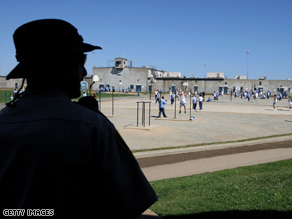
California must cut the number of inmates in its prison system by up to 40 percent, judges have ruled.
Federal judges tentatively ruled on Monday that California must reduce the number of inmates in its overcrowded prison system by up to 40 percent to stop a constitutional violation of prisoners’ rights.

“Overcrowding is the primary cause of the unconstitutional conditions that have been found to exist in the California prisons,” the court concluded. California state officials, including Gov. Arnold Schwarzenegger, immediately promised to appeal the case to the U.S. Supreme Court, if necessary. “The governor and I strongly disagree with this ruling,” said Matthew Cate, California’s corrections and rehabilitation secretary. Implementing the court’s ruling would result in up to 58,000 prisoners being released, Cate said, describing it as a threat to public safety. He disputed the court’s contention that the prisons are unsafe the way they are now. But in 2006, Schwarzenegger declared a state of emergency because of “severe overcrowding” in California’s prisons, saying it had caused “substantial risk to the health and safety of the men and women who work inside these prisons and the inmates housed in them.” In court documents, the judges said the state’s prison system was at about 200 percent of capacity. The ruling is the result of two class-action lawsuits on behalf of California prisoners who said medical and mental health care in the state’s prisons are so inadequate that they violate the federal constitution’s Eighth Amendment ban against cruel and unusual punishment. The judges said their ruling is tentative so that the parties involved can plan accordingly, essentially giving them an opportunity to work things out themselves before an official ruling is rendered. The court suggests a two- to three-year window for reducing the number of prisoners in the system. Those who would be released would be very low risk, according to Don Specter, director of the Prison Law Office, a group that provides free legal services to California prisoners. He said the ruling would affect those in jail for three or four months because of parole violations, those getting early release dates, and those who might qualify for early release for taking part in rehabilitation programs. A final ruling also probably would reduce the number of people entering the prison system, with many being diverted through the courts and into rehabilitation programs instead of going to jail, Specter said.

Reports: Cancún police chief questioned in general’s killing

A Mexican soldier guards the entrance at a Cancún police station where the military is investigating a murder.
The police chief in Cancún has been relieved of his duties and placed under house arrest while he is investigated in the killing of a retired Mexican general who had been the area’s anti-drug chief for less than 24 hours, Mexican media are reporting.

Francisco Velasco Delgado was detained by military officials early Monday and flown to Mexico City, where he was placed under 45 days of house arrest, according to the media reports. With Delgado’s removal, the military has taken over the Cancún police force, several newspapers reported. Cancún Mayor Gregorio Sanchez Martinez said the move was made “to facilitate all types of investigations into the triple murder that happened last week,” the Diario de Yucatan newspaper said. Salvador Rocha Vargas, the secretary for public security for the state of Quintana Roo, will lead the police force. He said he will take all the pertinent measures “to clean up the Cancún police,” the Excelsior newspaper reported Tuesday. Retired Gen. Mauro Enrique Tello Quinonez’s bullet-riddled body was found a week ago on a road outside Cancún. Authorities said he had been tortured before being shot 11 times.

Don’t Miss
Mexico drug fighter killed after less than a day on job

Latin America to hold summit to fight crime

His aide and a driver also were tortured and killed. Quintana Roo state prosecutor Bello Melchor Rodriguez y Carrillo said last week there was no doubt Tello and the others were victims of organized crime. “The general was the most mistreated,” Rodriguez y Carrillo said at a news conference. “He had burns on his skin and bones in his hands and wrists were broken.” An autopsy revealed he also had broken knees. Tello had been appointed less than 24 hours earlier as a special drug-fighting consultant for Gregorio Sanchez Martinez, the mayor of the Benito Juarez municipality, which includes the city of Cancún. Tello, who retired from the army in January at the mandatory age of 63, had moved to the resort area three weeks ago. Mexico is undergoing an unprecedented wave of violence that some have likened to a civil war. The government is battling drug cartels as the traffickers fight each other for control of the lucrative illicit market. Tello was the second high-ranking army officer to be killed in the area in the past few years. Lt. Col. Wilfrido Flores Saucedo and his aide were gunned down on a Cancún street in 2006. That crime remains unsolved. The latest killings come as Mexico grapples with the highest violent-death rate in its history. Mexican Attorney General Eduardo Medina Mora reported in December there had been around 5,400 slayings in 2008, more than double the 2,477 tallied in 2007. There already have been more than 400 drug-related killings this year, according to some news accounts.

City duo Elano and Robinho tame Italy

Robinho, right, is congratulated by Brazil team-mates after his magic unhinged Italy in the prestige friendly.
Manchester City duo Elano and Robinho fired Brazil to a 2-0 victory in their prestige friendly international against world champions Italy at Arsenal’s Emirates Stadium on Tuesday.

More than 60,000 fans saw Elano open the scoring after 13 minutes with Robinho finding the target on 27 in an encounter that brought an end to Italy coach Marcello Lippi’s unbeaten run. Lippi suffered a first loss with Italy in 32 games since defeat against Slovenia during his first spell in charge in 2004. Robinho opened the way for Brazil to take the lead in the first meeting between the global giants for 12 years with a superb pass for midfielder Elano to fire beyond goalkeeper Gianluigi Buffon. Elano backheeled the ball to Robinho, who instantly returned it for his City team-mate to muscle his way past several Azzurri defenders before unleashing a shot into the bottom right corner. Striker Robinho then banked his 19th goal for Brazil after stealing the ball from Andrea Pirlo who had intercepted a cross from the returning Ronaldinho. Robinho weaved his way past three players before firing beyond Gianluigi Buffon’s outstretched hand and into the bottom right corner. Pirlo looked to have set up an opener for Italy early on when he found Fabio Grosso who was adjudged offside as he volleyed past Julio Cesar. Daniele De Rossi went close for Italy in the 35th minute when the keeper produced a superb save and there was more frustration midway through the second half when Luca Toni’s ‘goal’ was ruled out for handball. Julio Cesar pulled off another stunning stop three minutes from time to keep out Simone Perrotta’s free-kick and ensure Brazil kept a clean sheet.

Army official: Suicides in January ‘terrifying’

If reports of suicides are confirmed, more soldiers will have taken their lives in January than died in combat.
One week after the U.S. Army announced record suicide rates among its soldiers last year, the service is worried about a spike in possible suicides in the new year.

The Army said 24 soldiers are believed to have committed suicide in January alone — six times as many as killed themselves in January 2008, according to statistics released Thursday. The Army said it already has confirmed seven suicides, with 17 additional cases pending that it believes investigators will confirm as suicides for January. If those prove true, more soldiers will have killed themselves than died in combat last month. According to Pentagon statistics, there were 16 U.S. combat deaths in Afghanistan and Iraq in January. “This is terrifying,” an Army official said. “We do not know what is going on.” Col. Kathy Platoni, chief clinical psychologist for the Army Reserve and National Guard, said that the long, cold months of winter could be a major contributor to the January spike. “There is more hopelessness and helplessness because everything is so dreary and cold,” she said.

Don’t Miss
Army to report record number of suicides

Troops won’t get Purple Heart for stress disorder

But Platoni said she sees the multiple deployments, stigma associated with seeking treatment and the excessive use of anti-depressants as ongoing concerns for mental-health professionals who work with soldiers. Those who are seeking mental-health care often have their treatment disrupted by deployments. Deployed soldiers also have to deal with the stress of separations from families. “When people are apart you have infidelity, financial problems, substance abuse and child behavioral problems,” Platoni said. “The more deployments, the more it is exacerbated.” Platoni also said that while the military has made a lot of headway in training leaders on how to deal with soldiers who may be suffering from depression or post-traumatic stress disorder, “there is still a huge problem with leadership who shame them when they seek treatment.” The anti-depressants prescribed to soldiers can have side effects that include suicidal thoughts. Those side effects reportedly are more common in people 18 to 24. Concern about last month’s suicide rate was so high, Congress and the Army leadership were briefed. In addition, the Army took the rare step of releasing data for the month rather than waiting to issue it as part of annual statistics at the end of the year. In January 2008, the Army recorded two confirmed cases of suicides and two other cases it was investigating. Last week, in releasing the report that showed a record number of suicides in 2008, the Army said it soon will conduct servicewide training to help identify soldiers at risk of suicide. The program, which will run February 15 through March 15, will include training to recognize behaviors that may lead to suicide and instruction on how to intervene. The Army will follow the training with another teaching program, from March 15 to June 15, focused on suicide prevention at all unit levels. The 2008 numbers were the highest annual level of suicides among soldiers since the Pentagon began tracking the rate 28 years ago. The Army said 128 soldiers were confirmed to have committed suicide in 2008, and an additional 15 were suspected of having killed themselves. The statistics cover active-duty soldiers and activated National Guard and reserves. The Army’s confirmed rate of suicides in 2008 was 20.2 per 100,000 soldiers. The nation’s suicide rate was 19.5 per 100,000 people in 2005, the most recent figure available, Army officials said last month. Suicides for Marines were also up in 2008. There were 41 in 2008, up from 33 in 2007 and 25 in 2006, according to a Marines report. In addition to the new training, the service has a program called Battlemind, intended to prepare soldiers and their families to cope with the stresses of war before, during and after deployment. It also is intended to help detect mental-health issues before and after deployments. The Army and the National Institute of Mental Health signed an agreement in October to conduct research to identify factors affecting the mental and behavioral health of soldiers and to share strategies to lower the suicide rate. The five-year study will examine active-duty, National Guard and reserve soldiers and their families.

Businesses in depressed Indiana town doubt Washington can help

Elkhart, Indiana, has become the poster child for the nation's economic downturn.
Surviving economically in downtrodden Elkhart, Indiana, may require doing some things you don’t want to do.

“Here in Elkhart, I’ve never seen things as bad as they are,” lifelong resident Yvonne Sell said Tuesday. “When you open the newspaper, unless you want to be a topless dancer, there’s nothing.” Elkhart became the poster child for the nation’s economic downturn when President Obama visited there Monday and then mentioned it several times during his first White House press conference. Unemployment in the Elkhart-Goshen, Indiana, area was 15.3 percent in January, the Bureau of Labor Statistics reported, the fourth highest of any U.S. metropolitan area. Elkhart’s unemployment rate has spiked more than 10 percentage points in the past 13 months. But is it really that bad in Elkhart According to Sell and several other business owners and workers, it is. Sell and her four co-owners are in the process of selling Blessing Music Co., which has sold, rented and repaired musical instruments for school bands since 1916.

Don’t Miss
Obama in Florida to push stimulus plan

Transcript of Obama’s press conference

Obama in Elkhart: No common recession

WSBT-TV: Laid-off workers turn out to hear Obama

“We’re not making money. It’s just too tight,” Sell said. The company has high overhead and a “considerable” high-interest loan, and credit continues to be a problem, she said. Sell said she isn’t hopeful that any government plan will kick-start commerce in Elkhart or elsewhere. The banks, which started the mess, have already been bailed out, she said, but “I’m not seeing them loosening their purse strings.” Small businesses as well as individuals need credit — not government spending — to keep the economy churning, she said. Take, for example, recreational vehicles, one of the town’s knotted lifelines: Sell said she knows plenty of people willing to purchase RVs, but they can’t without a bank loan. “People won’t buy them because they’re too scared,” she said. “I don’t personally see how spending the amount of money [Congress is] talking about spending is going to stimulate the economy.” Robert Dunlop runs a different kind of business, but he agrees with Sell. “Unfortunately, when you drop a ton of money to pay billion-dollar bonuses on the East Coast, it kind of sucks on the Midwest,” said Dunlop, president of J.A. Wagner Construction Co. in Elkhart. “If banks can free up a little bit of credit so that people can buy products and get people back to work, that would be good for this area.” People in Elkhart who were interviewed said they don’t have much confidence in the government’s ability to resolve the crisis, though Dunlop said he thinks tax relief would help some. “Unfortunately, you still have to have a job to have relief from the tax burden, and a lot of these people are behind in house payments and, quite frankly, it’s a vicious cycle: You don’t have a job, you can’t make your house payment, you’re not out buying anything. Even if you reduce the tax burden to those people, they still need to have some sort of income. When that occurs, they start buying things, which creates more jobs, which then starts the cycle back up again.” Elkhart Mayor Dick Moore echoes that view. He said people need jobs so they have money to spend and support industries such as RVs. The Democrat supports the stimulus plan Obama was touting in his town Monday because it will get residents to work quickly. “It’s jobs, jobs, jobs,” Moore told CNN’s “American Morning” on Tuesday. Watch what Elkhart’s mayor says about the president’s visit » “We have 16 shovel-ready projects ready to go … These are not pie-in-the-sky items; they’re not pork. … These are projects we will have to do,” Moore said. But gift shop owner Joanie Smith said she thinks government programs are no solution. “I think that the government and the banks are the biggest problem, because we have checks and balances to make sure what happened didn’t happen, and obviously it didn’t work,” she said. “They’ve already bailed out the banks; I don’t know why the banks aren’t lending money or offering the assistance that most businesses run with.” Smith saw traffic at her gift shop start dropping off at the end of 2007. “I have a store that is full of wonderful things, but nothing anybody needs,” Smith, owner of The Picture Show for 27 years, said with a tense laugh. “We’re just in a real reality-check area right now. It’s hard not being negative.” Smith has survived in retail by being financially conservative — she doesn’t have any loans to repay and has cut hours for her two employees, she said. Several years ago she downsized her shop from more than 4,000 square feet to a cozy 1,200. Smith said she feels protective of Elkhart and its image. “It’s a real entrepreneurial city,” she said. “We still manufacture here. We still create here. And unfortunately we’ve lost so much of our diversity of businesses here to China.”

Despite these lean times, Smith said she is determined to stay in business. “Women love to come in here and shop, and we want to be there for them.”