Religious leaders face spying charges in Iran

Gilad Shalit, who was seized by militants in 2006, is shown in a family photo.
Seven imprisoned leaders of the Baha’i faith in Iran have been accused of espionage and will face court hearings within a week, a judicial spokesman said Wednesday.

Gaza’s Hamas leadership rejected the decision by Israel’s Security Cabinet to link the release of Gilad Shalit to the lifting of the blockade. Hamas insisted Shalit’s release was a separate issue from the cease-fire deal under which the blockade lifting was agreed. “Gilad Shalit and attaining his release is our top priority,” Israeli spokesman Mark Regev told CNN. “The people of Gaza are not our enemy. But a wider opening of the crossings is contingent upon the release first of Gilad Shalit.” Hamas is under pressure to alleviate economic suffering in Gaza compounded by border closures. Israel allows limited humanitarian aid into the Palestinian territory, which has been under international embargoes by countries — including the United States — that consider Hamas a terrorist organization. Israel’s announcement came two days after Hamas said that it is willing to consider Shalit’s release, but not as part of a broader cease-fire agreement. Egypt meanwhile is attempting to broker a more detailed cease-fire between the two sides, which Regev said includes “trying to bring about the release of Gilad Shalit,” in addition to “trying to achieve long-term quiet” in southern Israel.

Don’t Miss
Hamas says it may consider Israeli soldier’s release

Israel denies reports of Hamas negotiations

Shalit was 19 when he was captured in June 2006 by Palestinian militants from Gaza, including some linked to Hamas. The militants tunneled into Israel and attacked an Israeli army outpost near the Gaza-Israel-Egypt border, killing two other soldiers in the assault. Israel immediately launched a military incursion into Gaza to rescue Shalit, but failed. Outgoing Israeli Prime Minister Ehud Olmert is also under pressure to secure Shalit’s release as part of a broader cease-fire deal. There is speculation he is trying to complete this before leaving office in the next few weeks. Last month, Israel temporarily halted a three-week military operation in Gaza and declared a unilateral cease-fire that did not include Shalit’s release as a condition. Hamas later declared its own unilateral cease-fire. Israel launched the military operation on December 27 to halt rocket attacks on its southern communities and towns, which it blames squarely on Gaza’s Hamas leadership.

Israel demands release of missing soldier

Gilad Shalit, who was seized by militants in 2006, is shown in a family photo.
Israel on Wednesday demanded the release of an Israeli soldier seized by militants more than two years ago as a condition of lifting its economic blockade on Gaza, a government spokesman said.

Gaza’s Hamas leadership rejected the decision by Israel’s Security Cabinet to link the release of Gilad Shalit to the lifting of the blockade. Hamas insisted Shalit’s release was a separate issue from the cease-fire deal under which the blockade lifting was agreed. “Gilad Shalit and attaining his release is our top priority,” Israeli spokesman Mark Regev told CNN. “The people of Gaza are not our enemy. But a wider opening of the crossings is contingent upon the release first of Gilad Shalit.” Hamas is under pressure to alleviate economic suffering in Gaza compounded by border closures. Israel allows limited humanitarian aid into the Palestinian territory, which has been under international embargoes by countries — including the United States — that consider Hamas a terrorist organization. Israel’s announcement came two days after Hamas said that it is willing to consider Shalit’s release, but not as part of a broader cease-fire agreement. Egypt meanwhile is attempting to broker a more detailed cease-fire between the two sides, which Regev said includes “trying to bring about the release of Gilad Shalit,” in addition to “trying to achieve long-term quiet” in southern Israel.

Don’t Miss
Hamas says it may consider Israeli soldier’s release

Israel denies reports of Hamas negotiations

Shalit was 19 when he was captured in June 2006 by Palestinian militants from Gaza, including some linked to Hamas. The militants tunneled into Israel and attacked an Israeli army outpost near the Gaza-Israel-Egypt border, killing two other soldiers in the assault. Israel immediately launched a military incursion into Gaza to rescue Shalit, but failed. Outgoing Israeli Prime Minister Ehud Olmert is also under pressure to secure Shalit’s release as part of a broader cease-fire deal. There is speculation he is trying to complete this before leaving office in the next few weeks. Last month, Israel temporarily halted a three-week military operation in Gaza and declared a unilateral cease-fire that did not include Shalit’s release as a condition. Hamas later declared its own unilateral cease-fire. Israel launched the military operation on December 27 to halt rocket attacks on its southern communities and towns, which it blames squarely on Gaza’s Hamas leadership.

Why Chimps Attack

Why Chimps Attack

The ferocious attack by a chimpanzee of a woman in Stamford, Conn., on Feb. 16 wasn’t a question of if, but when.

The 200-lb. chimp named Travis, whose owner, Sandra Herold, 70, raised as part of her own family, had no history of violence — aside from one incident in 2003 when he escaped and stopped traffic in Stamford for hours. But when Charla Nash, 55, a friend of Herold’s, came to visit on Monday afternoon, Travis suddenly lashed out at her. The 14-year-old chimpanzee latched onto Nash’s face and tore it apart.

The victim’s injuries were reportedly gruesome; the head paramedic who treated her on the scene told the New York Times that he had “never seen anything this dramatic on a living patient.” Nash remains in extremely critical condition. The chimp was shot dead by a police officer, who was also attacked.

But even as investigators try to figure out exactly what triggered Travis’s attack , the reality is that a chimpanzee living among people is simply a ticking time bomb. No matter how many years it has lived peacefully as a pet, a chimpanzee is not a domesticated animal and can snap without warning. “They are wild animals, and all wild animals are potentially dangerous,” says Colleen McCann, a primatologist with the Wildlife Conservation Society and New York’s Bronx Zoo. “They are not pets. This is tragic, but it’s not surprising.”

It might be hard to imagine that a chimpanzee — familiar from zoos, animal shows and slapstick comedies like Cannonball Run — could be capable of the kind of savage violence inflicted on Nash. Travis himself was reportedly a beloved figure around Stamford; he was recognizable from television commercials, could bathe and dress himself and use a computer — qualities that made him seem dangerously close to human.

But adult chimpanzees might be better described as superhuman — a 200-lb. chimpanzee is five to seven times stronger than a person of the same size, especially in the upper body. “They are incredibly powerful, and people underestimate that,” says McCann. “An adult male chimpanzee is a formidable animal. I would not want to be standing next to one.”

Nor are wild chimpanzees the docile, childlike creatures portrayed on TV. Highly territorial, chimpanzees will attack and kill other chimps. Though mostly vegetarian, they will also hunt and kill other animals for food; young male chimpanzees in Africa have been known to fashion crude weapons and use them to hunt bushbabies for meat. Attacks on human beings are rare, but they do happen — and the results are often catastrophic. The former NASCAR driver St. James Davis, who raised a chimpanzee as a pet, was attacked by escaped chimps at an animal sanctuary in 2005; he was left with injuries and disfigurement so severe that doctors kept him in a medically induced coma for three months.

Pet chimpanzees are also reservoirs of disease and can pass along infections like yellow fever, monkey pox and the Marburg virus to their human keepers.

Despite the potential threat chimpanzees pose, many U.S. states, including Connecticut, legally allow people to raise them as pets. Primatologists like McCann argue, of course, that chimpanzees should never be kept privately, and the WCS supports the Captive Primate Safety Act, a bill pending in Congress that would ban the private selling of primates as pets. The bill has stalled since it was introduced in 2005, but the Stamford assault may well renew the debate. “This is a tragedy for the families involved, for the animal and for the community — but it’s not a unique story,” says McCann. “When humans keep wild animals as pets, they pose a danger, and more times than not it will end in tragedy.”

In Travis’s case, his owner was forced to call 911, then attack and repeatedly stab him — a cherished pet she had reared for years — with a butcher knife in a desperate attempt to save her friend.

See TIME’s Pictures of the Week.

See the Cartoons of the Week.

Harley Davidson Faces Recession — and Aging Riders

Harley Davidson Faces Recession — and Aging Riders

In a Facebook video, the screen is filled with a sea of 20-something men and women cruising on sleek black motorbikes, all of them Harley-Davidson’s Sportster Iron 883. It’s part of marketing campaign to generate buzz around the newest Sportster. “That’s hot!” one woman declares on Harley-Davidson’s Facebook page, where other mini-documentaries promoting the bike are posted.

Back at Harley’s Milwaukee headquarters, one can only hope for heat. At roughly $8,000, the Sportster is positioned to help one of the world’s most iconic brands survive the gravest economic crisis in decades. But it must also help Harley-Davidson move beyond its aging Baby Boomer base.

It’s been a grueling few weeks for American companies, but particularly so for Harley-Davidson, purveyor of bikes that easily top $30,000. Last month, the company reported that its fourth-quarter global sales fell 13.1%. Last year, its profit sank nearly 30%. And it’s been a wipeout for investors: Harley-Davidson’s stock price has plunged nearly 70%, to $11.96 a share in mid-February, from $37.34 a share one year ago. Americans haven’t lost reverence for Harley-Davidson. But a key problem is that people are simply less willing to spend money on luxury items: Overall motorbike sales fell 7.2% last year, according to the Motorcycle Industry Council, an Irvine, Calif., trade group.
America’s leading motorcycle manufacturer is enduring its bleakest period since the 1980s, when it nearly went bankrupt. “Clearly, it’s a challenging environment, and we’re doing all the right things in this environment to position our premium brand in this marketplace, to make sure we’re even stronger when we’re out of this cycle,” says Tom Bergmann, Harley-Davidson’s chief financial officer.

Harley-Davidson has been through a few cycles. It was founded here in 1903, and within a decade had built a global business. It survived the Great Depression by selling to police departments. In 1957, it introduced the Sportster, a sleeker, less-expensive alternative to the company’s popular touring bikes, and a response to a wave of British imports. The Sportster’s relative small size made it appealing to women. But by the 1970s, motorcycling had become a marginalized sport. Its renaissance came in the late-1980s, driven largely by Baby Boomers’ new affluence. Between 1992 and 2007, new bike sales soared from 278,000 to 1.1 million annually. Harley-Davidson rode much of that wave, chiefly with touring bikes like the brawny Ultra Classic Electra Glide . Its patrons grew older and wealthier, but its efforts to cultivate a large base of female and younger riders have been marginally successful.

Acknowledging the challenge of selling premium motorcycles in this environment, Harley-Davidson recently introduced a print ad aiming to play on the Sportser Iron 883’s relatively low price. The message: “About six bucks a day. Cheaper than your smokes, a six pack, a lap dance, a bar tab, another tattoo, a parking ticket…” The Sportster line is expected to account for a larger share of Harley-Davidson’s sales this year — though still less than 25% of the total.

Guiding Harley-Davidson’s marketing strategy is Mark-Hans Richer, 44, who was hired as chief marketing officer in July 2007 after having led marketing efforts at General Motors’ Pontiac unit. One of Richer’s first moves was to hire a director of product development for “outreach customers” — young people, women and non-U.S. markets. Richer’s team quickly discovered that young people aren’t into the heavy chrome found on many Harley-Davidsons. Hence the emphasis on the primarily black Sportster Iron 883, which was already in development.
See pictures of expensive things that money can buy.

See 25 people to blame for the financial crisis.

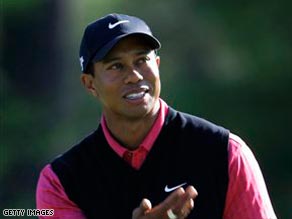
Woods close to golfing return says caddie

Woods has been out of action since winning his 14th major last June.
Tiger Woods is set to return "in the next few weeks" according to his long-time caddie Steve Williams.

The date of the world number one’s return to competitive golf has been the subject of fevered speculation, but Williams has thrown some further light on his readiness in an interview with Television New Zealand. “He is ready to go anytime in the next few weeks,” Williams said. “He is about 90 per cent but he won’t play unless he is 100 per cent.” Williams’ comments cast doubt on reports that Woods could return as early as next week’s WGG Accenture World Match Play Championship in California, where he is defending champion. He added: “He has had to modify his swing a little bit to accommodate his knee but it is a matter of getting back into the groove.” The world’s richest sportsman has not played since winning the U.S. Open in June last year before having reconstructive surgery on the anterior cruciate ligament in his left knee the following week. Woods said earlier this month that he would put his family first in the timing of his comeback. He and wife Elin are celebrating the recent birth of their second child, but he will be anxious to return to the PGA Tour ahead of the first major of the season at Augusta in April. Woods has won 14 majors, four shy of the all-time record of the legendary Jack Nicklaus. The extent of his injury has led to suggestions that he will struggle to perform to his previous standards, but Williams has no doubt. “I’ve said it before, the best quote I have heard about him is that ‘they haven’t operated on his head and you haven’t operated on his heart’, which are his two best components,” he added. “Maybe his game is not as good but if he is mentally stronger – we all know that he is the mentally toughest player to play the game so that in itself is a big factor.”

Obama’s Yes-We-Can War: 17,000 More Troops to Afghanistan

Obamas Yes-We-Can War: 17,000 More Troops to Afghanistan

Afghanistan became President Obama’s war on Tuesday, when he ordered
two more U.S. combat brigades into the fight. He will send 17,000 combat troops to join the 36,000-strong U.S. force already in the theater. The fact that the units now ordered to Afghanistan had originally been slated for Iraq underscores the new Administration’s shift in priorities.

The reinforcements include about 8,000 Marines from Camp Lejeune, N.C.,
who should be in Afghanistan by late spring, and a 4,000-strong Army brigade
from Fort Lewis, Wash., which should arrive in the summer. Those units will be joined by about 5,000 more Army “enablers” to provide logistical support.

The White House announcement took subtle shots at the priorities of the Bush Administration, stressing that the request from U.S. commanders in Afghanistan for the additional troops was “months old”. President Obama’s written statement explained, “This increase is necessary to stabilize a deteriorating situation in Afghanistan, which has not received the strategic attention, direction and resources it urgently requires.”

If Army General David McKiernan, the U.S. commander in Afghanistan, gets
his way, the total increase over the coming year will be 30,000. McKiernan has said
he needs to beef up U.S. forces in Afghanistan to roll back a growing Taliban insurgency, especially before the presidential election currently slated for August. Indeed, U.S. officials say they have only 40% of the American officers needed to train the Afghan army to take over security duties at some point in the future.

But sending any additional troops to Afghanistan would require reducing U.S. troop levels in Iraq, and Obama has ordered a review of U.S. strategy in Afghanistan before committing to further reinforcements. Defense Secretary Robert Gates explained last week that the units ordered to Afghanistan on Tuesday had to be given their marching orders before the Administration’s strategy review could be completed because of the pressing need for reinforcements.

Obama is keenly aware of the limitations on what his reinforcements can achieve. “I am absolutely convinced that you cannot solve the problem of Afghanistan, the Taliban, the spread of extremism in that region solely through military means,” he told an interviewer on Tuesday. But more troops are needed simply to arrest and begin to reverse a perilous slide in NATO’s fortunes in Afghanistan.

With the Taliban growing in confidence and feeling the wind at its back, the bad news out of Afghanistan just keeps getting worse for the U.S. NATO commanders have long expressed frustration at the failure of the Pakistani military to prevent Taliban and al-Qaeda fighters maintaining sanctuaries in Pakistan from which they can launch attacks inside Afghanistan. But Pakistan’s announcement on Monday of a peace agreement to accommodate the domestic Taliban insurgency in the Swat Valley suggests that an all-out war against militants on their soil is not what Pakistan’s generals have in mind. And the supply lines that funnel food, fuel and war materiel to U.S. forces in Afghanistan, already imperiled by militant attacks in Pakistan, may face a further setback this week when the parliament in Kyrgyzstan votes on whether or not to kick the U.S. out of the Manas airbase, which has played a key role in air support in Afghanistan. The U.N. just announced that 2,118 civilians died in fighting in Afghanistan in 2008, a 40% hike as the war grows ever more bloody. And, last week, the Taliban “welcomed” U.S. envoy Richard Holbrooke to Kabul by launching an audacious terror attack on three government buildings in the capital, leaving 26 people dead.

Having watched rival armies fight their way back and forth across the country for the past 30 years since the Soviets invaded, Afghans have become adept at accommodating themselves with the likely winner at any given moment. Right now, the trends are not moving in Washington’s favor, and that fact is recognized by the Afghan citizenry. “There’s been a major shift towards acceptance of the Taliban,” military scholar Anthony Cordesman told a congressional panel last week. He noted that polling in Afghanistan shows “the number of people who feel the United States has performed well in Afghanistan has been cut in half in the last three years,” from 68% in 2005 to 32% now.

Hardly an auspicious moment, then, for Obama to put his stamp on the U.S.-led
war in Afghanistan, but a commander-in-chief doesn’t always have the
luxury of choice. As a senator, Obama had criticized the “surge” of nearly
30,000 additional U.S. troops into Iraq two years ago. Now, as commander in
chief, he has begun ordering what may turn out to be a similar increase
into Afghanistan. Of course, he had maintained on the campaign trail that
Afghanistan, not Iraq, was the “right” place to wage war on terror, but his strategy review reflects the fact that many have begun to question the goals and focus of the U.S. mission there.

Obama began his terse statement Tuesday by acknowledging that “there is
no more solemn duty as President than the decision to deploy our armed
forces into harm’s way.” He has been personally writing letters to the
families of each U.S. soldier killed in Afghanistan and Iraq, hand signing
them “Barack.” Such letters no doubt will become more difficult to write in
the months ahead, when the casualties begin to include some of those he ordered into combat.

Watch a video about skateboarding in Afghanistan.

Yemen arrests al Qaeda member once held at Gitmo

People line up to receive $108 U.S. dollars worth of shopping vouchers in Taipei, Taiwan, last month.
Yemen authorities have arrested and extradited a Saudi man who rejoined al Qaeda after he was released from the U.S. military’s detention facility at Guantanamo Bay, Cuba.

The island’s economy spiraled into recession with its second straight quarter of economic losses. For the third quarter of 2008, Taiwan’s real gross domestic product (GDP), adjusted for inflation, slipped about 1 percent, according to the Directorate General of Budget, Accounting and Statistics. Behind the dismal economic numbers is a global recession that is sapping demand for the products Taiwan makes. “The types of exports that Taiwan ships to the West — electronics — are very severely affected, very sensitive to changes in Western consumer sentiment,” said Frederic Neumann, a senior Asian economist for HSBC. The GDP numbers are the broadest measure of Taiwan’s economic activity. A recession is defined as two consecutive quarters of falling GDP. Taiwan’s central bank, in a move to boost the economy, on Wednesday dropped its key interest rate one-quarter point, to 1.25 percent.

Don’t Miss
Taiwan citizens get vouchers to go shopping

China to provide $19B to Taiwanese businesses

Since the end of 2007, the central bank has lowered rates by more than 2 percent. In January, the Taiwanese government offered the island’s residents up to $108 each to go shopping, in another attempt to stimulate the economy. More than 90 percent of those eligible took up the offer, pumping about TW $86 billion ($2.6 billion) into the economy and sending shoppers to malls, officials said.

California can’t solve budget crisis

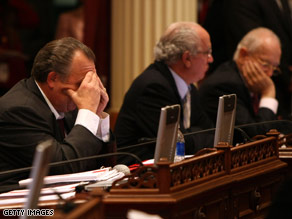
California state senators struggle through a long budget negotiation session Tuesday.
California lawmakers worked into early Wednesday but couldn’t pass a budget to avoid the possibility of laying off 10,000 more state workers.

Lawmakers brought blankets and toothbrushes to work Tuesday, planning to stay as long as it took to pass a budget, but as of 2 a.m. PT (5 a.m. ET) Wednesday, it appeared they had taken a step backward. Late Tuesday, Republicans ousted their leader, Sen. Dave Cogdill of Modesto. The move was likely to complicate debate because Cogdill had headed up negotiations with Democrats on the budget impasse. Gov. Arnold Schwarzenegger issued 10,000 layoff notices Tuesday, affecting a wide spectrum of state agencies and employees, in an effort to deal with the budget crisis, a spokesman said. Another 10,000 layoff notices might be sent Wednesday, the spokesman said. All the layoffs would take effect July 1, the start of the new fiscal year. California faces a $42 billion deficit, prompting the governor to declare a fiscal emergency in December. Schwarzenegger had set a Monday night deadline for a budget deal, threatening to start sending the layoff notices if the lawmakers failed. iReport.com: What you’d fix first The Republican governor has butted heads for months with the Democratic majority over easing the $11.2 billion revenue shortfall this fiscal year alone. Cuts would save California $750 million for the year. The $42 billion deficit is for the current and next fiscal years. Interactive: See projected state budget gaps »

Don’t Miss
White House: Stimulus plan will add jobs

States to Congress: Stop squabbling and send help

Obama expected to announce foreclosure plan

California budget crisis jeopardizes 20,000 jobs

Last month, the state began delaying $3.5 billion in payments to taxpayers, contractors, counties and social service agencies so the state could continue funding schools and making debt payments. Watch more on California’s budget woes » On Tuesday, Kansas managed to work through its budget issues, which had forced the state to suspend tax refunds and caused concern it would not be able to pay state employees. But Gov. Kathleen Sebelius ended the impasse by signing a bill to balance the budget, according to CNN affiliate KMBC-TV in Kansas City, Missouri. The signing of the bill was a key demand for Republicans who had been blocking the Democratic governor’s plan to transfer $225 million into the state’s main bank account from other state government accounts. With her signature, Sebelius ended a cash crunch a half-hour before a key payroll budget deadline. KMBC reported the state’s 42,000 employees should receive their biweekly paychecks on time Friday. Without Sebelius’ signature on the bill, the state may not have had enough money to pay state employees, or provide money for schools and health care providers. Kansas also stopped processing income tax refunds last week because of low funds, said Department of Administration spokesman Gavin Young. “This political game the Republican leaders are playing affects real Kansas families,” Sebelius had said Monday in a statement. “The Republican legislative leadership is jeopardizing our citizens’ pocketbooks for no other reason than to play political games — games in which the only ones set to lose are Kansas families, workers and schools.” Kansas’ money problems stem in part from the recession but also from “substantial” funding to finance public schools and Medicaid, said Senate Majority Leader Derek Schmidt. In Colorado, state workers may face unpaid time off in an effort to spare the state’s colleges and universities millions of dollars in budget cuts, KUSA-TV in Denver reported Tuesday. Interactive: Estimated job growth across the country Gov. Bill Ritter, a Democrat, announced plans recently to furlough some state workers to balance the budget. Roughly $600 million in budget cuts need to be made by the end of this fiscal year, according to KUSA. State lawmakers will debate a bill in the House this week that would require furloughs for state workers depending on how much money they make. “It’s drastic, but we’re in a drastic situation,” Rep. Steve King, R-Grand Junction, told KUSA. In Washington state, proposed budget cuts have led to protests in the capital, Olympia, KOMO-TV in Seattle reported. State officials are looking at some $300 million in cuts as part of a package the governor is expected to sign this week. Lawmakers also are aiming to cut nearly $6 billion over the next two years. But about 100 union members, state employees, school supporters and health care providers rallied on the lawn of the Capitol, telling lawmakers to stop the health care and education cuts and prevent tuition hikes. State employees said they want fair pay, better benefits and pensions and no layoffs. Hawaii faces a nearly $2 billion budget shortfall in the upcoming fiscal year. That figure has led legislators to seek alternative ways of balancing the budget, including possible reductions in health and retirement benefits for government workers, KHNL-TV in Honolulu reported Tuesday. One bill being debated in the Legislature aims to cut off insurance benefits for all employees retiring after July 1 regardless of how many years they had worked. Back East, states such as New York and Florida, which have high unemployment rates and huge budget shortfalls, also are looking to cut programs. In New York, the expected budget shortfall is around $1.7 billion, according to the National Conference of State Legislatures. President Obama took his economic stimulus message to Florida last week to hard-hit Fort Myers. The jobless rate in the area is 10 percent, up from 2.3 percent this time in 2006, and the area’s foreclosure rate of 12 percent is the highest in the nation. Interactive: See where the stimulus money is going »

And Michigan’s Democratic Gov. Jennifer Granholm, whose state has been especially hard-hit by the recession and the auto industry’s near-collapse, said job creation is paramount to turning the economy around. “We see the impact of this every day, and I’m speaking not just for Michigan, but for governors across the country. We need help. We need it now. And it’s not about budgets; it’s about creating jobs in our states,” she said recently on CNN’s “State of the Union With John King.”

Why Annie Lennox is ready to move on

Annie Lennox's new album, a best-of, will be her last with Sony.
Annie Lennox has incredible eyes.

They’re a translucent blue-green, both kind and inviting in one glance, then piercing and all-knowing in another. At 54, Lennox’s orbs are as captivating today as they were when they stared at us from under that fiery orange crew cut in the music video for the Eurythmics hit “Sweet Dreams (Are Made of This).” That was 1983. Yes, Lennox’s Eurythmics days seem like a lifetime ago for the Scotland-born singer-songwriter, especially when you consider the successful solo career she’s enjoyed since her partnership with Dave Stewart. It’s that body of work — songs like ‘Why” and “No More ‘I Love You’s’ ” that are showcased on her newest album, “The Annie Lennox Collection.” It’s Lennox’s fifth solo outing, and her final album with her record label of 30 years, Sony Music Entertainment. “It’s like a demarcation line in a way because there is that body of work to look back on in retrospect,” says Lennox. “And the future is ahead of me and that’s very interesting because I’m really not sure exactly what that’s going to mean logistically … how that’s going to pan out. But I’m very excited about it because of Internet technology.” Lennox, who’s won Grammys, BRIT Awards and an Academy Award (for co-writing “Into the West” from “The Lord of the Rings: The Return of the King”), says she’s become somewhat of a voracious blogger, using her MySpace page and official Web site not only as a repository for her musical work, but also to lend a voice to her humanitarian efforts. In 2007, Lennox formed the SING Campaign, a nonprofit initiative to help fight the HIV pandemic in Africa.

Don’t Miss
See more of Shanon Cook’s ‘Music & Conversation’

The initiative has its own anthem, called “SING,” which features vocals from Madonna and Celine Dion among others, and is included on Lennox’s new album. She also recorded two new tracks to celebrate the release, one a cover of Irish band Ash’s hit song “Shining Light.” “It’s one of those incredible anthemic songs that just stay with you,” she says. “It’s like when you heard Jeff Buckley’s version of Leonard Cohen’s ‘Hallelujah.’ It’s almost like a revelation when you hear it.” Lennox spoke to CNN about tapping into her inner divas to make those theatrical music videos, the pitfalls of fame and why she celebrates her naiveté. CNN: Who is your “shining light” Annie Lennox: Ordinary people who don’t necessarily have the spotlight shone on them, who do extraordinary things. Those people always inspire me. A lot of people that are working in nongovernmental organizations inspire me very much, because I think those people are really risking life and limb to make a difference to people’s lives in really impossible circumstances. And they really give me the sense that if they can do that, I can do something, too. CNN: How do you feel about where you are in life right now Lennox: Of course now I’m in that middle-age place, age-wise, and youth is no longer really something that I’m a part of anymore. And that started happening for me when I was about 40, to be honest with you. I had my kids and my focus went elsewhere. And I think I’ve changed so much through having children … inside myself. It’s been a kind of evolution and a maturity. And that has informed the SING Campaign a lot, because my focus is really on women. … I understand what it is for a woman to want to protect their children and give them the best they can. And so I identify with that. … I can let go of some of the things I was maybe focused on when I was younger and I’m focused on different things. CNN: Over the years your music videos have served as an outlet to explore different personas. Is that a cathartic experience for you Lennox: Performance feels quite cathartic, to be honest with you. It’s a good feeling. And songwriting is cathartic because you have something you want to express. … Ultimately when you’ve completed that songwriting process there is a sense of yes … completion. It’s out. It’s expressed. It’s done. And then you can communicate it to other people in performance. CNN: You come across as extremely fearless in your videos. Yet you’ve said as a person you’re quite shy. You don’t seem shy to me. Lennox: No I’m not shy right now, but I can be quite shy. It depends on the circumstances. … Shyness is actually quite crippling. When one is shy it’s not helpful. But a lot of being on stage has given me that opportunity to go beyond my normal persona. CNN: Which music video are you most proud of Lennox: Quite a few. I think that “Broken Glass” is just … it’s hilarious. A lot of the things I do have got humor in them. But the fact that we had John Malkovich who came in and Hugh Laurie who was there … we had a big cast. CNN: A lot of your songs are about pain and failed relationships. Do you still feel that you have a lot to learn about love Lennox: I think we all do. I think the world needs to be a far more loving place. And I think we are confused between erotic love [and] unconditional love. I think our sexuality is a very different thing from our love. … We are a society fixated with sexuality and it can be very cruel. When the love, and the respect and the consideration [are] missing, people live very isolated existences. CNN: What has fame taught you Lennox: I think fame for fame’s sake is a very toxic thing. … And people in this society have this idea that they wanna be famous, and they don’t know what for. And they pursue “celebrity” for itself. I would say that without something to offer, whether it be that you’re an actor, you have a craft, you have something to offer people, if you’re a writer, a painter, a musician … when it’s just about you and your actual life it’s a little bit cannibalistic. The industry of celebrity is quite a savage one and when you fall foul of it, and your privacy is so brutally invaded … you may be having difficulties in your own life as we all do … and all the images of you, your dogs, your children, the inside of your house … they’re all splattered across every front page, I think that’s [a] very unhealthy place to be. And I think it’s sad that people caught it so vociferously. CNN: Well you obviously raised two children. How difficult was it to shield them from your fame Lennox: It hasn’t been too difficult. Part of my work is public, but I make a distinction between that and who I am as a person in private. … I was very careful that … I wasn’t telling stories to gossip papers, and showing my life and [my children] were gently kept away from that. CNN: Fame also serves as a useful platform, and you’ve been very involved with various charities, notably HIV/AIDS. Do you ever feel frustrated that you you’re not making as big a difference as you would like Lennox: I had to think about this very carefully because I understand that there are so many problems in the world. Infinitely. And there always will be. That will never change, no. … And if you make this decision to get involved, don’t think that there’s just an end result and that’s what you’re aiming for. No, it’s the day-to-day commitment. It’s the small steps that really count, in my opinion. CNN: I’ve read that you consider yourself to be quite naive. Is that still true Lennox: I still have an aspect of naiveté, and I think it’s a valuable thing, because if I was jaded and cynical 100 percent as I could be, you know I would be less human and I think my acknowledgment that I can be naive is fine. It’s part of being human.

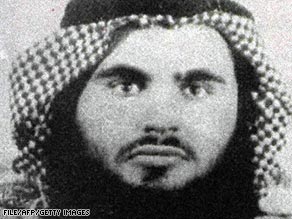
Deport radical cleric Abu Qatada, orders UK court

Abu Qatada, shown here in a 2000 file image, has been accused by the UK government of supporting terrorism.
The UK’s highest court Wednesday ordered that the man known as Osama bin Laden’s spiritual ambassador to Europe be deported to Jordan, despite claims that he faces torture, local media have reported.

The court also ordered that two Algerians, known only as “RB” and “U,” be deported to Algeria. Radical cleric Abu Qatada, also known as Omar Othman, has been engaged in a long-running campaign to remain in the UK since he arrived 16 years ago. UK ministers have described Qatada as an “inspiration” for terrorists such as Mohammed Atta, the lead hijacker behind the September 11, 2001 attacks in the United States. The government has claimed that he is a national security risk who fundraised for terrorist groups, including organizations linked to bin Laden; and that he publicly supported the violent activities of those groups. Qatada has denied the allegations. It is expected that he will appeal the decision to the European Court of Human Rights. Welcoming the judgment, UK interior minister Jacqui Smith said: “I’m delighted with the Lords’ decision today in the cases of Abu Qatada and the two Algerians ‘RB and U’. It highlights the threat these individuals pose to our nation’s security and vindicates our efforts to remove them. “My top priority is to protect public safety and ensure national security and I have signed Abu Qatada’s deportation order which will be served on him today. I am keen to deport this dangerous individual as soon as I can.” Qatada came to the UK on a forged United Arab Emirates passport in 1993, according to court documents, and claimed asylum for himself, his wife, and their three children. The UK government recognized him as a refugee and allowed him to stay in the country until 1998. Qatada applied to stay indefinitely, but while his application was pending, a Jordanian court convicted him in absentia for involvement in two 1998 terrorist attacks and a plot to plant bombs to coincide with the millennium. By 2002 the UK government said it suspected Qatada was a terrorist and a national security risk. Refusing him leave to stay in Britain, it ordered he be deported and detained him. Last June a three-judge appeals panel freed Qatada under strict bail conditions, including fitting him with an electronic monitoring tag and ordering that he stay at home for 22 hours each day.

Don’t Miss
UK ‘disappointed’ at radical cleric’s bail

The panel said there was no reason to continue holding him but that he presented a “continuing and significant” threat. The deportation decision Wednesday by the Law Lords followed the government’s appeal against that decision. But human rights group Amnesty International said it was “gravely concerned” by the consequences of the decision. “What is not acceptable is to use suspicion of involvement in terrorism to justify sending someone to face a real risk of torture or other serious violations of their rights,” said Nicola Duckworth, Europe and Central Asia Programme Director at Amnesty International, in a statement. “If these individuals in question are reasonably suspected of having committed a criminal offence relating to terrorism, it is always open to the UK authorities to charge them and give them a fair trial. “It would be deeply worrying if the Law Lords’ decision were to be taken by the UK government as a green light to push ahead with deporting people to countries where they will be at risk of abuses such as torture and unfair trials.” Duckworth also said that diplomatic assurances from the governments of Algeria and Jordan about the suspects safety, were “completely unenforceable and as such cannot be relied upon.”