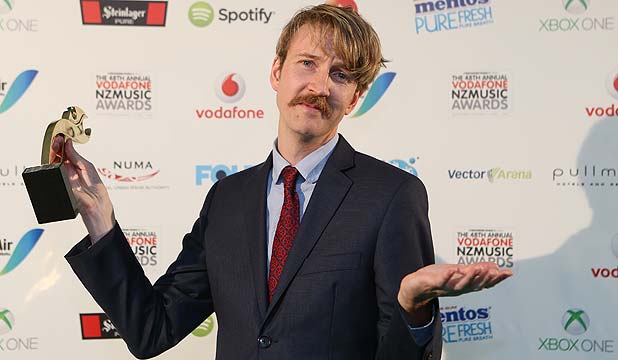
Lawrence Arabia plays it all


If you’ve been a musician for a while, making set-lists for your gigs can be a challenge.

This time around James Milne, aka Lawrence Arabia, chose a different road. Instead of picking and choosing he’s set to play his three albums in full over two (Auckland) or three (Wellington) nights.

The first nights will see him play the self titled Lawrence Arabia (2006) and the Taite Music Prize-winning Chant Darling (2010).

The last night he will play his acclaimed 2012 album The Sparrow from start to finish accompanied by a string quartet.

Going down memory lane and unearthing songs he hadn’t played since 2006 (some never performed live on stage) was a great challenge.

“I haven’t played some of the songs from Chant Darling since going first on tour in May 2006” he said.

That’s why he’s enjoying playing the first album the most.

“It’s so long ago, that it is a novelty again.”

He and his bandmates opened old session files from Lawrence Arabia trying to remember how the songs were played.

Apart from playing his solo shows, supporting and playing with Liam Finn at his recent album release tour, Milne is also working on new material and spending a lot time with his 1-year-old daughter.

He has again teamed up with Mike August aka the Black Seeds’ Mike Fabulous with whom he released Fabulous/Arabia in 2009.

His fourth solo album, recorded partly in Lower Hutt, was more than half finished and Milne expected to release it early next year.

“It is more poppy and vibrant than the moody Sparrow,” he said.

Thinking back to when he wrote the tracks for his first album, the song-writing process was much slower these days.

“While back then it often was a burst from a mysterious force, I am much more critical with my own work,” he said. When writing lyrics it could be months before a new line was added.

May is almost over, and although featuring on a compilation by German beer company to celebrate New Zealand Music Month, he’s not really sold on the whole concept.

“It sill has the approach that New Zealand music is in need of charity or pity,” he mused.

“Everyone is struggling and they do need help but it might be time to reframe it.”

Instead of bemoaning the state of things, a big festival around the country that actually celebrated local talent, might be a much better idea to reignite people’s passion for music.

But in lieu of that, there are Lawrence Arabia gigs to go to this week.

If two or three consecutive nights sounds a bit too much, Milne recommendedfans see his performance of his latest album The Sparrow.

“Apart from my band there will be also a string quartet and extra horns,” he promised.

Lawrence Arabia plays his albums in full at Auckland’ Kings Arms Tavern on May 28 and 29 and Wellington’s Puppies on May 30 and 31, and June 1.

Visit lawrencearabia.com for more details.

Ad Feedback

– Stuff

James Croot’s Twenty in 20


Fairfax film reviewer James Croot this month celebrates two decades of scribbling in the dark. To celebrate, he selects his favourite 20 films released since May 1994.

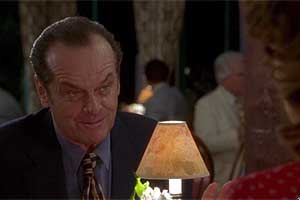
As Good as It Gets (1997)
There was a time when Helen Hunt was the actress du jour and Jack Nicholson could do no wrong. This unlikely rom-com represented the high-water mark of both of those phenomenons. James L Brooks’ tale about a waitress, a misanthropic author and a gay artist is chock full of memorable moments, images and dialogue. Best of all, it made me ”want to be a better man”. Just shades the magnificent Jerry Maguire.

The Assassination of Jesse James by the Coward Robert Ford (2007)
Overshadowed by There Will Be Blood and No Country For Old Men at the 2008 Oscars, Andrew Dominik’s film is actually one of finest 21st century westerns. Brad Pitt, at his laconic and charismatic best, produced 160 minutes of his finest work, while Casey Affleck shone in the true anti-hero role. Elegantly shot and lovingly, languorously paced, the film also boasted one of the most evocative and best soundtracks of the decade by Nick Cave and Warren Ellis.

Braveheart (1995)
Sure its grasp of history might be shaky to say the least, but Mel Gibson’s Oscar-winning epic sure delivers on spectacle. He’s a compelling presence, while James Horner’s stirring score and those battle scenes still stick in the memory. Helping unearth talents like Brendan Gleeson and Sophie Marceau, it was the last film I saw with my late father and some of its quieter moments provided the soundtrack to my wedding.

Crouching Tiger, Hidden Dragon (2000)
The film that gave the globe wuxia and wushu. Director Ang Lee had already shown his versatility with the likes of Sense and Sensibility and The Ice Storm, but he caught the world’s attention with this miraculous Mandarin marriage of how-did-they-do-that martial arts and intimate love story. Actors Michelle Yeoh and Chow Yun-Fat were simply superb.

Eternal Sunshine of the Spotless Mind (2004)
Although the premise now sounds like Total Recall meets (500) Days of Summer, Michel Gondry’s bizarre non-linear and fractured romance is a haunting and heartbreaking account of love gone awry. Jim Carrey has never been more restrained and yet is an engrossing presence while Kate Winslet, criminally overlooked at the Oscars in 2005, is at her charismatic best as the unforgettable, multi-coloured Clementine.

Frozen (2013)
The Lion King might edge it on Shakespearian tragedy, but for sheer animated inventiveness, thrilling adventure, tear-inducing emotion and an eclectic array of hummable toe-tapping tunes it is hard to beat Disney’s 53rd animated adventure. I can only echo the words of my three-year-old boy who succinctly broadcasted his feelings about Frozen at its conclusion: “I love that movie.”

Ad Feedback

Gravity (2013)
Such a simple premise, such an effective execution. Alfonso Cuaron’s two-stars-in-space (Sandra Bullock, George Clooney) dazzles with its amazing imagery (3D has never been more immersive) and ability to wring maximum emotion out of every scene as Bullock’s emotionally and physically broken astronaut battles to stay alive and somehow make it back home. And Stephen Price’s score is stirring and chilling in equal measure.

Grizzly Man (2005)
Well known for capturing human obsession at its most extreme in both dramas and documentaries, Werner Herzog found a perfect example in the reformed alcoholic, paranoid, child-like Timothy Treadwell. The result is 100 minutes of compelling cinema, as Grizzly Man weaves heartbreak, horror and humour, into a fascinating story of a man who seemed to act as if ”he was working with people in bear costumes, rather than wild animals”.

Heavenly Creatures (1994)
His Lord of the Rings trilogy might have taken home all the box office gold and award gongs, but its his recreation of the infamous 1954 Parker-Hulme murder case which best marries his imaginative flights of fancy to something dramatically grounded. Weta’s nascent effects are breathtaking, while actresses Kate Winslet and Melanie Lynskey displayed immense promise that they would later fulfill.

A History of Violence (2005)
Best known for visceral, extremely violent or disturbing works like The Fly and Crash, Canadian director David Cronenberg reined in his macabre inclinations to produce one of his most accessible works. His trademark visual flourishes and black humour remain – but they are here backed by a fantastic performance from Viggo Mortensen and Josh Olson’s superb script, which explores the nature and genesis of violence and deftly and devastatingly displays its emotional and physical consequences.

Leon (1994)
Known as The Professional on its release here, Luc Besson’s story of the strange relationship between a hitman and a traumatised but precocious tween gave the world Natalie Portman, Jean Reno and Gary Oldman (playing one of cinemas’ greatest villains). Notable for its restraint as well as its boundary pushing, you’ll never be able to listen to Beethoven in quite the same way after watching this.

Magnolia (1999)
The apex of the multi-narrative, ensemble movie. PT Anderson’s magnum opus not only showcases such diverse talents as Julianne Moore, Philip Seymour Hoffman, William H Macy, Jason Robards and yes, Tom Cruise, but it also delivers on searing drama. Plus it boasts a stonking soundtrack by Aimee Mann, culminating in a fourth-wall smashing, breathtaking, heartbreaking sequence set to her plaintive Wise Up.

Man on Wire (2008)
Proof of how far documentaries have come this century. James Marsh’s account of Philippe Petit’s audacious 1974 walk between New York’s twin towers boasts more tension in it than most conventional Hollywood thrillers. It’s the combination of interviews, actual footage, recreations and an evocative score that make this such a compelling and now, thanks to the events of September 11, 2001, poignant watch.

Million Dollar Baby (2004)
Probably the most consistent director of that decade, Clint Eastwood’s finest hour of the noughties came with this Oscar-winning boxing drama. Despite being in a lead role he actually takes a back seat to the superb combination of Morgan Freeman and Hilary Swank. Packing a powerful emotional punch, Million Dollar Baby also produced one of the twists of the decade which left many audience members in shock.

Moulin Rouge! (2001)
Having reinvented Shakespeare for the MTV generation in the 90s, Aussie director Baz Luhrmann single-handedly breathed new life into the musical genre with this eye-popping, toe-tapping spectacle. Dizzying and dazzling, Luhrmann married high-melodrama, lavish set design and costumes to fabulous renditions of 70s and 80s staples from the likes of Queen, Elton John and The Police.

The Prestige (2006)
Although overshadowed by his more celebrated projects that bookended the decade – Memento and The Dark Knight – this dark, dense and devilishly clever drama from Christopher Nolan is a reminder of the potent power of a little showmanship and superior storytelling. The superb cast includes Christian Bale, Hugh Jackman, Rebecca Hall, Scarlett Johansson and David Bowie. A film that deserves and rewards close and repeat inspection.

Run Lola Run (1998)
Arguably German cinema’s most commercial and finest 90 minutes. Franka Potente’s flame-haired firecracker has just 20 minutes to source a large amount of cash and stop her boyfriend from robbing a supermarket. Essentially played out in real-time, it offers three different Sliding Doors-style scenarios, a pulsating soundtrack and a stunning mix of filmmaking techniques.

Rushmore (1998)
Many people will argue there are better Wes Anderson films but its the combination of Bill Murray at his most charming, the delightful discovery of Olivia Williams and Jason Schwartzman’s subversive anti-hero that makes this high-school comedy shine above the rest. The many delights are in the details, from Max’s many extra-curricular activities to his bravura Apocalypse Now-inspired stage show.

A Time to Kill (1996)
McConaughey, Bullock, Spacey, Jackson. All names back at the top of their game almost two decades on. A John Grisham potboiler this might have been but it was a southern fried courtroom drama par excellence. McConaughey announced his arrival as both an actor and shirtless wonder here, while it also boasted the best trailer of the past two decades.

Twelve Monkeys (1995)
Visuals have always been Terry Gilliam’s strong point, but this was the film where he married it to a compelling and coherent twisty-turny time-travelling plot. Inspired by Chris Marker’s seminal 1962 short La Jetee, Gilliam drew terrific performances out of an eclectic cast that included Bruce Willis, Madeleine Stowe and Brad Pitt and dared to deliver a sweet but downbeat ending. Without it there would have been no Looper or Donnie Darko.

– Stuff

Passion and pain on Coro Street


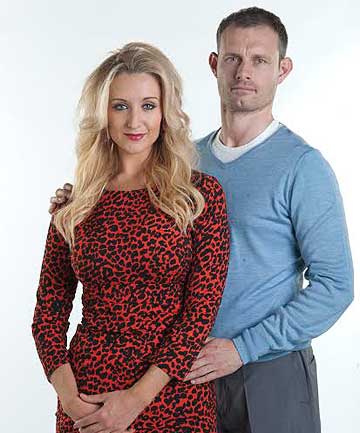
Childhood sweethearts Leanne Battersby and Nick Tilsley look set to rekindle their romance. But as Nick asks Leanne to move in with him, he makes a deadly enemy in a furious Peter. Jim Maloney hears about the passion and pain on Coronation Street.

Nick Tilsley shares a passionate embrace with Leanne this week on Coronation Street and it looks like everything is rosy, particularly when she agrees to move in with him, along with Simon.

But Nick knows that Leanne no longer has the same feelings for him and that she still loves Peter.

However, he is willing to accept a life like this if it means they can be together again.

“I think Nick is providing stability for her,” says Ben Price, who plays Nick. “He’s got his own business, with The Bistro, he doesn’t drink – unlike Peter, who’s an alcoholic – and he is willing to take her and her

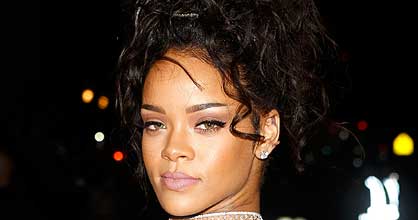
Has Rihanna lost her social media mantle?


She’s been called a village idiot by Charlie Sheen, a cyberbully by fans and a NSFW exhibitionist by Instagram. Is RiRi’s social media reign over

That’s the question since “badgalriri” mysteriously vanished from the social media site a little over a fortnight since.

She’d been on thin ice. After posting a topless magazine cover, Rihanna had been slapped with a temporary ban from the site for her skin-baring habits.

But when it lifted, RiRi went one better and deleted her account altogether.

With it went a carefully crafted suite of swimsuit selfies, Barbadian street festivals and dope cakes.

Unlike her contemporary Beyonce – whose posts seem as tightly managed as North Korea’s nightly news – Rihanna seemed hellbent on cataloguing the truth of her celebrity lifestyle.

Bar Kim Kardashian, she was the Celebrity Queen of Social Media.

But it looks like her reign is over.

Along with her lost Instagram, RiRi’s been suffering attacks on her remaining social media front: Twitter.

The Umbrella singer copped an online spray from Charlie Sheen today after declining to meet his fiancee while both were dining at the same Californian restaurant.

“Sorry we’re not KOOL (sic) enough to warrant a blessing from the Princess. (or in this case the Village idiot),” he tweeted.

“It was a pleasure NOT meeting you.”

He even took a shot at the pixie-crop pink wig she’s been sporting lately: “I’m guessing you needed those precious 84 seconds to situate that bad wig before you left the restaurant.”

Ouch.

But some would argue Sheen’s tiger blood-fuelled rant was just desserts for Rihanna.

Last week, she came under fire for mocking a diehard fan who tried to recreate a Alexandre Vauthier jumpsuit she wore in 2010 for her prom outfit.

With its inbuilt cape and plunging neckline, Alexis Carter’s outfit was soon christened “Prom Bat” by some social media users who poked fun at it online.

Among them was the Bad Gal herself, who tweeted a picture of the fan alongside the Wu-Tang Clan’s bat emblem.

“Alexis Carter u rocked that outfit, u looked fierce girl. Rihanna doesn’t deserve you as a fan,” one supporter tweeted.

Another said the young girl should never have had to endure being “torn down by your idol”.

Ad Feedback

Despite the backlash, the controversial singer’s appetite for selfies hasn’t abated – at the time of writing, she’d managed to post three within a half hour.

But like a viral Marie Antoinette, it seems RiRi is increasingly isolated from her once-loyal subjects.

Let her eat dope cake, perhaps

– AAP

A pony tale for the blokes


They came in their thousands. Packed into a room at New York’s Hotel Pennsylvania, grown men, gawky and bursting with obscure, nittygritty questions, waited with bated breath for a whinny.

It was only then, sitting before 4000 devotees, that the strange truth dawned on Canadian voice actress Ashleigh Ball: she was the unwitting hero to tens of thousands of ‘bronies’, male fans of the TV show My Little Pony: Friendship is Magic.

And she hadn’t done her homework.

“They asked me things like, ‘In episode four of season two, when you did this, how did you feel’ and I’m trying to remember for the life of me what the f*** they’re talking about,” says Ball, who voices two of the show’s ponies, Rainbow Dash and Applejack.

“Or, ‘Can you sing the song you sang when Rainbow Dash got a pet’, and I’m like, I don’t know what that even sounded like, and they know all the words and are trying to get me to sing along with them.”

It was, to use her word, weird.

As far as unexpected phenomena go, bronies are an eyebrow-raiser. It started in 2010, with the relaunch of the 80s
toy-turned-TV series My Little Pony, this time with the added ‘Friendship is Magic’ tagline. The series follows the adventures of six magical ponies living in Ponyville.

Despite being created for young girls, the show became hugely popular among older fans, overwhelmingly men, who would visit imageboard website 4chan after each episode to dissect plots and share pictures.

They called themselves ‘bronies’ – a blend of ‘bros’ and ‘ponies’. Soon there were brony meet-ups and conventions, dedicated websites and brony radio stations.

And there was Ball, who, along with her castmates, had become an unsuspecting hero to one of the internet’s oddest subcultures.

“I thought it was a passing fad or something,” says Ball, who first heard about bronies from a colleague in late 2010.

“But, sure enough, I started getting emails, comments on my band’s YouTube page and just random bronies showing up wherever I was. It’s been…” she pauses, “interesting.”

The unusual messages filling Ball’s inbox came up in conversation one evening in late 2011 with her friend, Canadian-New Zealand filmmaker Brent Hodge.

“One guy who emailed her wanted to ask his online girlfriend, who he met through a brony community, to marry him [using] Ashleigh’s Rainbow Dash voice,” Hodge recalls. “I thought, this is so funny, we’ve got to film every bit of this.”

Hodge spent the following year travelling around the US, meeting and interviewing any brony willing to talk.

When Ball was invited to attend BronyCon, the world’s largest My Little Pony fan convention, Hodge went along to capture the interaction with her admirers.

Ad Feedback

The result is A Brony Tale, an 80-minute insight into the eccentric and spectacular world of the brony subculture. The whole project was self-funded and cost just over $100,000.

“When I first met them, I didn’t get it. I didn’t get anything about it,” says Hodge. “I realised very fast that this is nothing to do with a kids’ show; this is to do with the community. That’s their hook: you come for the show, you stay for the community.”

Was there ever a lower-hanging fruit for anonymous online bullies than a group of men fawning over a show for young girls

From the beginning, bronies have been subject to vicious harassment on YouTube comment threads and online forums.

To haters, bronies are perverts who get off on a show for children. They create pony porn and write erotic fan fiction about cartoon characters. They dress up as horses and have sex with each other.

They’re a bunch of paedophiles.

Hodge had read the vitriol before setting out to make the movie, and so knew of the disturbing rumours. But in his year of interviews and research, he saw nothing resembling the behaviour suggested online.

“I never really came across it and, believe me, I did not shy from asking the questions.”

Ball believes the contrast between the girly show and its brawny fans gives outsiders the wrong idea. “Haters say, ‘They’re into a little girls’ show, they must be perverts or paedophiles or they’re all crazy homosexuals.’ That’s not the case.”

In reality, your average brony is a young, straight, Caucasian man. A worldwide survey of more than 21,000 bronies, titled ‘State of the Herd’, was released in March, finding roughly 80 percent of the fanbase is male – women, too, identify as bronies – and the average age is 21.

“Just under 85 percent of bronies report being either mainly or exclusively heterosexual, while just over four percent claim to be mainly or exclusively homosexual,” the report says.

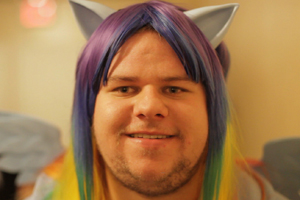
The fans have taught Ball not to judge people so quickly. “You see a man in a pink pony wig and you’re like, ‘Woah, what’s up with this guy’, but you talk to him and he’s just really sweet and he wants to connect and share his love for the show.”

Misunderstood they may be, but bronies are fervent fans, and Ball sometimes finds the attention overwhelming. She gets regular letters, art and presents from admirers, some intensely personal and mostly bizarre.

“I’ve been given quite a number of wood carvings of the character or [of] me as a pony,” she says. “There’s this one fan in New York, he was really into wood carving and he stopped doing it because it wasn’t lucrative. [But then] he watched the show and, all of a sudden, he started carving ponies. It started bringing him joy again, so he has been gifting all my cast-mates wood carvings of their characters.”

“It’s pretty crazy,” she adds. “A lot of the time they want to hear you say something in your [pony] voice – ‘Can you give a message to my aunt in Rainbow Dash’s voice’ You feel like a bit of a monkey sometimes – ‘Do the voice, do the voice.'”

Yet, despite the attention Ball receives, bronies aren’t really interested in her, says Hodge. Not like that.

“These guys don’t like her, they like her voice. It’s really odd. They like the characters she creates.”

Perhaps the hardest thing for outsiders to comprehend is just why bronies care so much about the show. What is it about My Little Pony that appeals to older men

The question was put to bronies in the State of the Herd report, and the most common reason for tuning in was for the characters, followed by the art style and animation, the stories, and the music.

The question of ‘why’ was one Hodge wanted to clarify, and he put it to the dozens of bronies he interviewed.

Among the best answers was that from Dustykatt, a bulky, trucker-moustached, motorcycle-driving mechanic, who looks more like a bodyguard than a brony. He watches My Little Pony because he finds it to be a well-written TV show with compelling characters.

“Each individual character is so well rounded,” says Dustykatt. “People can see themselves as a Rainbow Dash, a Rarity or an AppleJack. That is the basis of excellent storytelling.

“Don’t think of it as six little ponies,” he continues. “Think of it as six friends learning from each other. I’m just a guy who happens to like a TV show. I like what I like. I don’t need society to tell me what I like.”

Hodge believes the disturbing reputation bronies have belies something far more innocent.

The bronies he met are brave, genuine and relentlessly kind. They are often socially awkward individuals, brought together by a TV show society thinks they shouldn’t watch.

Despite knowing they will be taunted online and in real life, they’re unashamed to be fans of a show aimed at little girls, because it makes them happy.

“They all just want to find a place,” he says.

A Brony Tale screens in Auckland and Wellington as part of the Documentary Edge Festival. For screening times, visit
documentaryedge.org.nz.

– Sunday Magazine
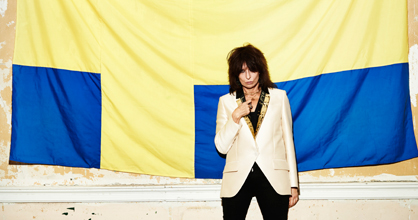
Chrissie Hynde: Beyond the fringe


John Lydon from the Sex Pistols remembers a young Chrissie Hynde as a “hard girl”; journalist Julie Burchill told The Independent the young Hynde was “half John Wayne, half Cleopatra”; and Hynde’s former lover, the blackleather-clad rock critic Nick Kent, once described his ex as a “harridan”.

She is, undeniably, the quintessential rocker.

A fiercely independent woman with a singular style; a staunch vegetarian and an animal rights activist.

And who could forget the tough-as-nails image of Hynde on the cover of the first Pretenders record in 1979 Red leather, lace fingerless gloves, that trademark heavy, blunt fringe, lashings of tar-black eyeliner and an unflinching gaze.

And those songs. From the snarling Private Life to the unabashed sultriness of Brass in Pocket, and later the chiming catchiness of Back on the Chain Gang, Hynde, with her group the Pretenders, has created some enduring hard-edged pop classics.

While I can vouch that Hynde swears like a trooper, in our interview she is warm, chipper, enthusiastic and frequently exclaims “Yay!” in delight. It’s far from the spiky demeanour of songs such as Tattooed Love Boys in which she crankily demands, “stop snivelling”.

One defining thing about the Pretenders was that they were a gang. Chrissie and her boys.

Hynde has said she loves being in bands, that it’s a band that makes a song a ‘rock’ song. But now, for the first time in her 30-year musical career, she has struck out on her own.

While the Pretenders made riffy new-wave pop, her debut solo album Stockholm is glossier, more power-pop – with an extremely catchy first single, Dark Sunglasses.

“I love that you say it’s power-pop,” says Hynde.

“It’s really fun, basic rock. We’ve got some great guitar performances on here. For me, it’s all about the guitar. With the Pretenders, people were always saying, ‘Yeah it’s just you, yeah it’s just you, yeah it’s just you.’ I’d say, ‘Oh, f*** off!’ And now, ironically, it’s just me.”

It may be a solo album, but Stockholm might actually be one of Hynde’s most collaborative projects yet.

She
worked closely with musician and producer Bj

Playing in the shadows


There we were, clustered around a campfire in our cave, gnawing on the charred haunch of an unlucky antelope – hairy and unwashed, a tad smelly; an evolving people, clad in the skins hacked from the very same animal we were spit-roasting for dinner.

The art of human speech was still a little way off, so we made do with grunts and gestures.

And to entertain each other through the long winter nights, we took turns standing in front of the fire and making spooky shadows of forest creatures upon the wall.

“Shadow play’s a really primal, ancient thing,” says actor, comedian and shadow enthusiast Steven Banks from his New York office. “Making shapes with shadows takes most of us straight back to our own childhood, but of course, it’s far older than that.

In fact, it was probably one of the very first things people did. Ever since mankind has existed, you can bet some guy did shadow tricks by the fire on the wall of the cave.”

Yes, but they would have been very simple tricks back then, wouldn’t they Playful monkey. Lofty giraffe. Fierce lion. Cavepeople certainly didn’t stand on each other’s shoulders to form the outlines of skyscrapers.

They didn’t contort themselves into complex human sculptures that projected shadows of passing cars, psychotic chefs, or mutant bird people.

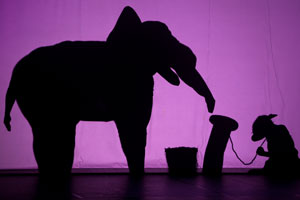
To witness shadows this strange and modern and marvellous, one would have to buy a ticket to Shadowland, a shadow dance show written by Banks and currently on its way to New Zealand.

With a background in theatre and stand-up, Banks has also written a host of plays and children’s books, and scripted cult cartoons including Catdog, Jimmy Neutron and SpongeBob Squarepants.

Nine years ago, while head writer on Spongebob, he was commissioned to write Shadowland for Connecticut’s Pilobolus dance troupe. That touring show has now been seen by more than half a million people worldwide.

“They approached me, and I was excited to see what we could achieve together. Ninety percent of modern dance companies are very boring and pretentious, but Pilobolus is different; they started in the early 70s with just three or four guys in college who only took dance because they thought it would be easy, but then they gradually formulated this amazing thing that no one had seen before.

When they perform, they’re right on top of each other, bending themselves, interlocking like a giant jigsaw to project shadow shapes on a series of moveable screens. As you can imagine, it demands huge accuracy.

“If the dancers are off by as little as two inches, it will not work. The position of their bodies in space is crucial; from one angle, a hand just looks like a hand, but from a very slightly different angle, it looks like the tail of an elephant. There’s no room for error.”

Visit YouTube and you’ll find dozens of jaw-dropping clips of the Pilobolus dancers in action.

Among them there are extraordinary shadow pieces from 60 Minutes and The Oprah Winfrey Show, an award-winning car commercial, and their famous breakthrough performances at the 2007 Academy Awards, in which they created shadow clips for all the films nominated for Best Picture.

Ad Feedback

The company has choreographed over 100 shadow pieces to date, but many consider Shadowland its greatest work: a full feature-length multi-media show combining dance, shadow work, acrobatics, kinetic sculpture and projected images, with a musical score by former Bob Dylan/Tori Amos collaborator David Poe.

“In a nutshell, it’s a coming of age story about a young girl who goes to sleep then disappears into a surreal dream world,” says Banks.

“There’s a metaphor there for those changes during puberty, a time that’s exciting, stressful, horrible and wonderful, all at once. Along the way she has to face many strange people and undergo life-changing adventures. She gets captured by a circus freak show because she’s perceived as a freak, and gets transformed into a dog-girl, where the top half is a dog and the bottom half is human. There’s action, magic, romance, some scary bits, and a lot of very moving moments, too. You get a lot of bang for your buck.”

With no dialogue, the show has been able to sidestep language barriers in over 60 countries where it has been performed so far. Wherever it plays, says Banks, people of all ages are absolutely knocked out by it.

“Kids in particular can’t believe what they’re seeing, even with all the other kinds of hi-tech entertainment they have these days.

“A friend of mine took his son along to see Shadowland and afterwards they took him behind the screen and made this car around him, with him in the front seat. This kid could see all these bodies piled up around him in a seemingly arbitrary way, but when he saw the shadow on the backstage monitor, he was amazed: there he was, inside this perfect moving car, with the wheels spinning and the wind blowing and him driving it forward across the stage.”

The Pilobolus dance company brings Shadowland to Auckland’s The Civic from Tuesday 3 – Sunday 8 June. Bookings: ticketmaster.co.nz or 0800 111 999.

– Sunday Star Times

The angst of adapatation


It is the eternal argument – which was better, the book or the film

Should you watch Lord of the Rings first, or read the books What about Game of Thrones – will reading the books now just ruin the suspense, or will it add to the back story

Should they even bother making the last Hunger Games into a film

Since the first film reel flickered into life, it has been an issue to contend with. And in recent years, every second book seems to have been thrown into the widening vortex of film or television adaptation.

You cannot go to the movies without running the risk of seeing one of your favourite characters ruined forever, or watching every plotline you love being torn apart for the sake of a speedier narrative.

If you think it is tough being in the audience, imagine the pressure brought to bear on the screenwriter or director trying to bring a much-loved book to life – or on the author, forced to relinquish control on a piece of their work.

So what is the recipe for a successful film adaptation And how do some directors get it so wrong

Oscar-winning screenwriter Philippa Boyens admits she could not bear to read Lord of the Rings ever again.

Her once-favourite book, which she had already read eight times before agreeing to co-write the screenplays with Sir Peter Jackson and Fran Walsh, will never be the same.

She has dissected the actions of every dwarf, analysed each fight scene, gleaned minute details of every tree and rock and landscape.

“When you adapt it you kind of lose it forever, because you have a different knowledge of it now,” Boyens says.

She is currently in the middle of post-production for the third instalment of the $500 million The Hobbit trilogy, her most recent work.

The screenwriter says it is “hugely daunting” approaching a novel, especially one that has given rise to to as many passionate fans as the J R R Tolkien series.

While it was important to keep in mind how beloved the books were, it would be an error to let them dictate your every move, Boyens says.

“There’s two ways of approaching it. One is to be fearful of putting a foot wrong, in which case you are dooming yourself to fail anyway. Fran [Walsh] always says by its very nature, taking a book and putting it on screen, you are changing it.

“Your adaptation is just your version of a piece of literature, a piece of work that you love as much as anyone else. You cannot take on the responsibility of making a definitive version of The Lord of the Rings, because you would fail.”

The other way is to look for what drives the storytelling, and find ways of getting it across visually.

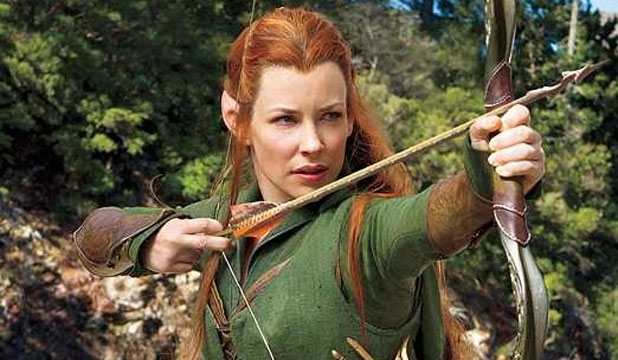
With The Hobbit, this included creating an entire character that does not appear in the book. Tauriel, the fighting elf played by Canadian actor Evangeline Lilly, was designed to bring a “female energy” that was missing from the story, Boyens says.

Ad Feedback

“When Tolkien wrote the plot he was writing a children’s story, he was not conceiving it as a film. He was writing against a visual landscape of his own creation . . . the way I like to think of it is that he did not write her into The Hobbit because he did not need to tell the story in that way – but we did.

“The female energy is great, and she’s become one of the most popular characters in the film so I feel like we made the right choice there. It allowed younger women a way into the story, and it also leavened it because you can feel the blokiness of 13 dwarfs after a while.”

While it is impossible to ask Tolkien what he thought, other authors have been blunt when it comes to critiquing film versions of their work.

In 2009, writer Elizabeth Knox told the Dominion Post she lay in bed and cried for days after watching director Niki Caro’s adaptation of her novel The Vintner’s Luck. Knox said she was shocked and upset by how much it departed from her story.

“She took out what the book was actually about, and I was deeply surprised and deeply puzzled by it, because I do not know why she did it.”

Reviewers echoed Knox’s sentiments, with the Hollywood Reporter calling the film “an overblown work of amazing silliness”.

Caro declined to be interviewed for this article.

Author Roald Dahl famously said the film version of Charlie and the Chocolate Factory was “crummy” and vowed never to allow its sequel.

Stephen King hated The Shining, the 1980 feature film written and directed by Stanley Kubrick, despite it arguably being among the greatest horror movies of all time.

But sometimes a screen adaptation not only lives up to the novel, but breathes new life into it. Sales of Witi Ihimaera’s Whale Rider skyrocketed when Caro’s adaptation of that book hit the big screen in 2002. Nowadays, it is being used as a textbook in English classes as far away as Kenya.

But without Ihimaera’s involvement, it is doubtful the film itself could have been made. He was associate producer of the project, and says it was important to him his story, a Maori story, was told in the right way.

“John [Barnett, executive producer] had the sense that Whale Rider could be an international film . . . a lot of hopes were riding on this project, so we had to get it right. And it was not easy; to make a film adaptation in New Zealand we had to take hold of that whale and push it all the way across the South Pacific, it felt like.” It also meant smoothing over resistance to Caro, a Pakeha, telling a Maori story.

“There are some writers whose experiences with film have not been very good at all, and there are some books that have been made into movies which I do not think do justice to the books. It’s kind of a dilemma, and I try to make it less of a dilemma by getting involved.”

Writer Lloyd Jones was a script consultant on the film version of Mister Pip, but that was where his input ended.

He says while it was “terrifying” watching Mister Pip for the first time, he loved what director Andrew Adamson had done with the film.

“Strangest of all, I think, was seeing the physical embodiment of characters,” he says via email.

“Here they were in flesh and voice and clothed and sometimes not quite how I had imagined them. But that is how it is for any reader who in the course of reading creates for themselves the image of the character. It took me a moment to adjust to the idea of Hugh Laurie as Mr Watts, but only a moment. Now I cannot imagine Mr Watts looking or sounding any other way than Hugh’s Mr Watts.”

As hard as it might be then, maybe the answer for readers – and viewers – is to treat book and film as separate works of fiction.

As Boyens says, if Lord of the Rings had been a flop, JRR Tolkien’s works would have remained fantastic novels.

“Books are inviolate, you really cannot destroy them – if it’s a great piece of literature it will be a great piece of literature forever.”

Five books to read before they become movies in 2014

Dark Places – Gillian Flynn
Murder, class issues and satanic cult hysteria in rural America – what could be more thrilling The cast includes Charlize Theron and Nicholas Hoult.

This is where I Leave You – Jonathan Tropper
A dysfunctional Jewish family are forced to fulfill their dying father’s final wish and observe a religious holiday together. The film stars Jason Bateman and Tina Fey.

All you need is Kill – Hiroshi Sakurazaka
A military recruit finds himself stuck in a time loop, fighting the same battle against alien invasion every day. Tom Cruise and Emily Blunt star in the adaptation, retitled Edge of Tomorrow.

The Hundred Foot Journey – Richard C Morais
A displaced Indian family opens a restaurant in small-town France, but must contend with the Michelin-starred eatery across the road. Helen Mirren will star, with Steven Spielberg and Oprah Winfrey producing.

The Maze Runner – James Dashner
Potentially the next Divergent, Maze Runner is yet another young-adult dystopian science fiction trilogy, this time featuring teenagers with telepathy. Starring Thomas Brodie-Sangster and Dylan O’Brien.

– Sunday Star Times