The Education Crisis Everyone Is Ignoring

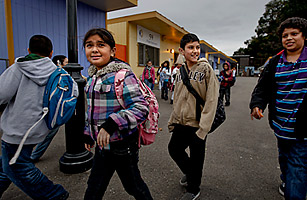
4th and 5th graders at Achieve Academy heading home after school in Oakland, Calif, February 04, 2010.
On Tuesday, when President Obama traveled to El Paso, Texas, to again make the case for immigration reform, he talked about the tragedy of a policy that denies children the chance to earn a college education because of the way that their parents entered the country. But in many ways, we’ve already failed our fastest growing ethnic group, Hispanics Americans, long before they reach college and regardless of whether they were born here or not.

Hispanics now comprise 16 percent of the United States population and the Census Bureau estimates they will account for 30 percent in 2050. This obviously means the number of Hispanic students in our public schools is increasing as well. From just 2001 to 2008, the percent of Hispanics in public schools grew from 17 to 21 percent. In Texas, Hispanics already comprise a majority of public school students.

Why Obama’s Not a Lock

Why Obamas Not a Lock
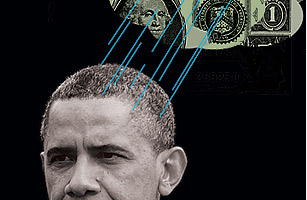
The most telling moment in Barack Obama’s 60 Minutes interview came when Steve Kroft asked for his reaction after he saw the photo of Osama bin Laden, shot in the head. “It was him,” the President said. And that was all he said. Now, this was a classic TV how-did-you-feel question, and Obama had a range of possible options. He could have gone all political, “I thought of the families who had lost loved ones …” Or graphic, “Well, it was pretty ugly, but …” Or excited, “Oh. My. God.” Or religious, “Thank God.” Or triumphal, “My first thought, actually, Steve, was ‘Hasta la vista, baby.’ ” But, of course, this is Barack Obama, more Gregory Peck than John Wayne. And the same taciturn, hyperdisciplined quality that is so frustrating when he seems unable to connect with the economic anguish of the American people came across as just right, perfectly Midwestern — Kansas, not Hawaii, much less Kenya.

A few days earlier, five of the Republican candidates for President gathered in South Carolina for their first official debate. It was a weird show, newsworthy only because Congressman Ron Paul came out in favor of legalizing heroin, cocaine and prostitution. Many of the more serious and less serious Republican candidates weren’t there — and so it would be unfair to compare the Republican punytude with the massive presidentiality of Obama during his strongest week.

Why We’re Stuck with Pakistan

Why Were Stuck with Pakistan

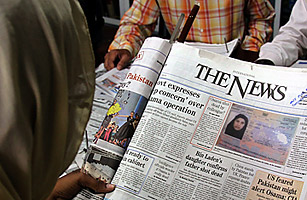
When the U.S. confronted Pakistan after the terrorist attacks of Sept. 11, 2001, there were no discussions of common goals and shared dreams. There was just a very direct threat: you’re either with us or against us. Pakistan had to choose between making an enemy of the U.S. and taking a quick and dirty deal sweetened with the promise of a lot of cash. In the end, Pakistan’s cooperation was a transaction that satisfied the urgent needs of the day, brokered by a nervous military dictator, Pervez Musharraf, who failed to explain the value of the U.S. relationship to his people. That allowed a theme to become fixed among Pakistanis: the war on terrorism was America’s war. When Pakistani soldiers started dying in battles with militant groups, when suicide bombers began killing Pakistani civilians, it was America’s fault because it was America’s war.

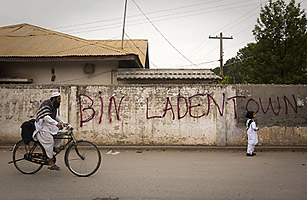
So as Pakistanis processed the mission that killed Osama bin Laden, many concluded that they had been betrayed by their supposed ally. How dare the Americans sneak into the country without so much as a warning and conduct a military operation just 75 miles from the capital? But they felt betrayed too by their military. How could it be that Pakistan’s armed forces, which claim a lion’s share of government spending, were clueless about the presence, a mere mile from the country’s most prestigious defense academy, of the world’s most wanted terrorist? Cyril Almeida, one of Pakistan’s best-known opinion writers, summed up the national anguish in a column: “If we didn’t know [bin Laden was in Abbottabad], we are a failed state; if we did know, we are a rogue state.”

The Cool Kid

The Cool Kid

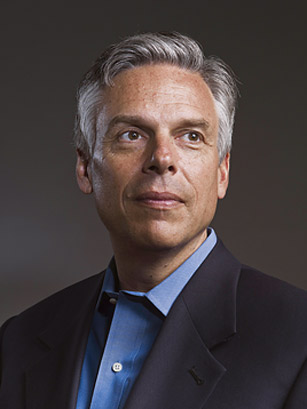
Republican presidential hopeful Jon Huntsman has just proved he can keep 1,100 graduating college kids awake for 17 minutes — and even led them in a popular local cheer about kicking ass. But Obama’s lean, understated former ambassador to China is really here to prove he can mount a credible campaign against the man he was working for a week prior. In a brightly lit cinder-block room inside the sports arena where the University of South Carolina has held its commencement, the former Utah governor jokes that the stark setting of our interview — his first since returning to the U.S. — suggests he might be in for some “enhanced interrogation.”

But if that’s what I’m up to, then torture really doesn’t work, because in several sittings and a couple of hours together over a week’s time, I don’t even come close to getting him to spill such puny secrets as whether he thinks we should be in Afghanistan or Libya , in what ways he disagrees with Obama or, for that matter, where he parts company with his fellow Republicans, including his distant cousin, former Massachusetts governor Mitt Romney . And as for whether or not Huntsman still belongs to the Church of Latter-day Saints, I know less than I did before I asked him.

‘Pakistan Wasn’t bin Laden’s Only Hideout,’ says Prime Minister Gilani

Pakistan Wasnt bin Ladens Only Hideout, says Prime Minister Gilani

Osama bin Laden may have been found and killed in Pakistan, but that country’s leaders believe it wasn’t the only place where the al-Qaeda leader had traveled after fleeing Afghanistan in late 2001. Prime Minister Yousuf Raza Gilani, in an exclusive interview with TIME on Wednesday — one of the first he has given since the raid on Abbottabad — thinks bin Laden may have visited his ancestral homeland, Yemen, in search of a new bride.

Just this past Tuesday, Gilani said, he received a cable from Pakistan’s Embassy in Syria, reporting that the sister of bin Laden’s fifth wife, a Yemeni national, was in Damascus, and had made contact with Pakistani diplomats there. According to the diplomatic cable, the sister-in-law claimed that bin Laden had married Aml Ahmed, currently 29, in Yemen in 2002. “That was after 9/11,” said Gilani. “And they say that they’ve got the proof.” If the information contained in the cable is correct, he continued, that would put bin-Laden in Yemen in 2002.

Ahmed had been in a bedroom with bin Laden when U.S. Navy SEALs had stormed the three-storey compound in Abbottabad, and she was shot in the leg after allegedly attempting to protect her husband. She is currently being treated at a Pakistani hospital, and the Pakistan government says it will soon repatriate here to Yemen.

The claim that bin Laden was in Yemen mere months after the 9/11 attacks could, of course, simply be an attempt to spread blame that Pakistan is currently attracting. Bin Laden’s discovery less than a three hours’ drive away from Gilani’s office has amplified allegations of either complicity or ignorance on the part of Pakistan’s much-vaunted intelligence agencies.

Are Asian Free-Trade Agreements Producing a New Bloc?

Are Asian Free-Trade Agreements Producing a New Bloc?

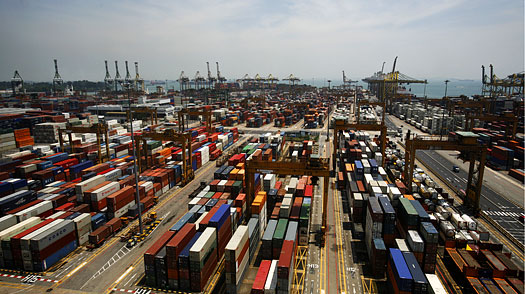
The great recession hasn’t been great for free trade. As unemployment has risen throughout the world, governments have become more focused on protecting their own industries than on promoting international commerce. The U.S., typically an enthusiastic supporter of open markets, included “buy American” clauses in its stimulus package and propped up its flailing auto industry with handouts. Although a meeting of ministers in New Delhi in early September promised to restart long-stalled World Trade Organization negotiations aimed at reaching a global consensus on freer trade, wide differences remain between developed and developing nations that make a final deal difficult.

Yet against this dim backdrop, the part of the world that was hit hardest by the trade crash — Asia — has been actively opening up its regional markets. According to the Asian Development Bank , the number of free-trade agreements signed by Asian countries has grown from just three in 2000 to 56 by the end of August. Nineteen of those FTAs are among 16 Asian economies, a trend that could help the region become a powerful trading bloc. “Asian integration is sort of a dream, but it is much more realistic than it was before,” says Ganeshan Wignaraja, an ADB economist. “There is a move toward making a better business environment in Asia. The momentum is quite strong.”

That can be seen clearly in the continuing stream of agreements tying together regional powers. In August, India inked two FTAs in a week, with South Korea and the 10-member Association of Southeast Asian Nations . ASEAN and China are scheduled to bring most of the final tariff reductions of an FTA signed in 2004 into full effect by 2010. More deals are likely. Taiwan President Ma Ying-jeou has made his policy priority reaching a comprehensive economic framework with China that would reduce tariffs on Taiwan goods entering the Chinese market. Yukio Hatoyama, Japan’s presumptive Prime Minister, has even proposed the creation of a common Asian currency.

The drive to lower trade barriers has taken on fresh urgency amid the recession. Fears of an extended slump in spending by U.S. consumers have prompted policymakers to look to China, India and other neighbors as customers for exports. As Asian manufacturing networks become more intertwined — and as Asian consumers become wealthier — regional commerce is becoming critical to future economic expansion. Intraregional trade last year made up 57% of total Asia trade, up from 37% in 1980. “In the past Asia produced for America and Europe,” Philippine President Gloria Macapagal Arroyo said recently. “Now, Asia is producing for Asia.”

Of course, Asia is still dependent on sales to the West. But FTAs could reduce the region’s exposure to the U.S. by giving Asian companies preferential treatment in selling to Asian companies and consumers. These benefits could come with downsides, however. Companies in countries left out of the trade pacts — for example, the U.S. — could face disadvantages when trying to tap fast-growing Asian markets. This, in turn, could have a negative impact on efforts to rebalance excessive debt in the U.S. and excessive savings in Asia. FTAs “create a nonlevel playing field with advantages for Asian countries,” says Eswar Prasad, professor of trade policy at Cornell University. “If the most dynamically growing part of the global economy gives the U.S. restricted access, that has an impact on the whole rebalancing movement.”

Not everyone is worried. Richard Baldwin, professor of international economics at the Graduate Institute in Geneva, says tariffs in Asia have already come down so significantly that the additional benefits of FTAs don’t give Asian firms that much of an edge over foreign rivals. Some analysts also believe political and economic rivalries place high hurdles in the path of a true Asia trade bloc. “The notion that there is going to be a Fortress Asia is really not correct,” says Vinod Aggarwal, director of the Berkeley APEC Study Center at the University of California, Berkeley.

Still, the benefits of greater regional integration could prove powerful enough to overcome the roadblocks. The ADB’s Wignaraja foresees Asia becoming a NAFTA-like free-trade zone within the next 10 years. “In Asia, the only thing everyone agrees upon is business,” he says. “In the end, pragmatism will prevail.” If it does, the world economy may never be the same.

Read “The Tiger Trap.”

See TIME’s Pictures of the Week.

Google’s New Android Plan: World Domination

Googles New Android Plan: World Domination

The ballroom on the third floor of San Francisco’s Moscone West convention center doesn’t look like special. But in recent years this nondescript hall has become the epicenter of major news about smartphones, tablets, and other cutting-edge mobile gizmos. Both Apple and Google use it for the keynote addresses that are the signature events at their developer conferences. As the two most significant companies in the mobile software business, they’re doing much of the heavy lifting of determining where the industry is going — and the rivalry between Apple’s iOS and Google’s Android is as fierce as any tech face-off I can recall.

This week, it was Google’s turn to fill the room with geeks and attempt to dazzle them with its plans. The company’s I/O conference actually featured two keynotes; the first one, on Tuesday morning, packed its fifty-one minutes to the bursting point with Android-related developments.

Big Love in Abbottabad: How Osama bin Laden Kept Three Wives Under One Roof

Big Love in Abbottabad: How Osama bin Laden Kept Three Wives Under One Roof
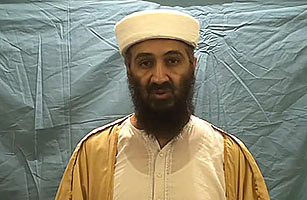
Osama bin Laden once crowed to an interviewer, “Believe me, when your children and your wife become part of your struggle, life becomes very enjoyable.” The late Al-Qaeda chief uttered those words before 9/11, when he was able to keep his four wives and many children living comfortably in separate houses across Afghanistan. Every few weeks or so, Bin Laden would drop in on a wife to fulfill his husbandly duties.

But at the end, his rosy portrayal of being married to the Jihad was sorely tested. His family must have driven him nuts. During his last days in Abbottabad, bin Laden had to contend with three wives and 17 noisy children under one roof. He had no escape from the din, save for furtive pacing around the garden late at night or vanishing into his so-called Command-and-Control Center, a dank, window-less room. Swathed against the Himalayan chill in a woolen shawl, he recorded rants that displayed an ever-widening disconnect with the daily grind of terrorism: his last oddball offerings were on climate change and capitalism.

Bin Laden, the world’s most wanted terrorist, was also a family man. An Arab woman married to an al-Qaeda fighter told TIME that after 9/11, bin Laden and his lieutenants made provisions for their families to flee the impending NATO invasion of Afghanistan. His youngest wife, Amal, may have escaped to Yemen via Pakistan, while bin Laden’s other wives are thought to have fled through Iran. But this terrorist got lonely. After setting up camp in Pakistan and breaking his own orders, he summoned back three wives: the most recent addition, Amal, plus two Saudi women he’d wed in the 1980s. Both these Saudis were mature, educated women — Khairiah a child psychologist and Siham a teacher of Arabic grammar. Bin Laden had been their husband for 25 and 27 years, respectively. U.S. counter-terrorism experts, who are eager to interrogate the wives, now in Pakistani custody, will surely want to know how al-Qaeda smuggled the boss’s wives and their kids up to Abbottabad to ease his solitude.

Under Islam, polygamy is allowed but only if the husband is able to treat all of his wives equally. Muslim law also states that a man may only have four wives at a time. Bid Laden married six times, but one marriage ended in divorce and the other was annulled. While in Afghanistan, the wives were able to steer clear of each other. According to a 2002 interview that “AS”, presumed to be Amal al-Sadah, gave to the magazine al Majalla, “we did not live in one house. Each wife lived in her own house. There were two wives in Kandahar, each with her own house. The third wife had a house in Kabul, and the fourth in the Tora Bora mountains.” Even then, a polygamous family is not without its frictions. When Amal joined the growing clan in 2000, “bin Laden’s other wives were upset, and even his mother chastised him,” according to Lawrence Wright, journalist and author of “The Looming Tower: al-Qaeda and the Road to 9/11.”
After 9/11, she fled Afghanistan with a mentally disabled son and is thought to have returned to her native Syria. Still married at the time of bin Laden’s death, she is technically his fourth widow, although she is not in custody.

Wife #2: His second wife, Khadijah Sharif, was a teacher and nine years older than bin Laden when they were wed in 1983. She reportedly bore him three children before they were divorced sometime between 1993 and 1996 when they were living in Sudan, and bin Laden fell afoul of the Saudi regime.

Wife # 3: His third wife, Khairiah, whom bin Laden wed in 1985, was the “spiritual mother” of the sprawling family, according to a woman who knew the bin Ladens in Afghanistan. “She was very open-hearted. Everybody went to her for advice,” she says. This source claims that after 9/11, Khairiah fled through Iran where she was detained under house arrest before the Iranians allowed her to return to Saudi Arabia. From there, she slipped back to Pakistan to rejoin the al-Qaeda chief in Abbottabad.

Wife #4: Shiman Sabar, who was also captured in the Abbottabad house, wed bin Laden in 1987. Militant sources say that after 9/11 she may have slipped across into Pakistan and remained there in hiding until it was safe for her to answer her husband’s summons.

Wife #5: Bin Laden’s fifth marriage is a mystery. The Saudi rashly wed a woman of unknown nationality in Khartoum in 1994 but the marriage was annulled before it was consummated within 48 hours.

Wife #6: His last wife, Amal, may have been as young as 15 when a $5,000 bride price was paid to her Yemeni family and she was shipped off to marry bin Laden, nearly 30 years her elder, in Kandahar. Wed in 2000, they had one daughter, Safiya, who was allegedly in the bedroom with her father and mother when Seals shot him dead.

So far, Pakistan has not charged his three widows of any crime. Pakistan has said it will expel the three back to Yemen and Saudi Arabia, but will grant direct access to US interrogators when the trio “is ready.” As for useful intelligence information, an Arab woman with ties to al-Qaeda, told Time that al-Qaeda militants aren’t big on pillow talk. “They tend not to tell their wives anything about their operations,” she says. Pakistani journalist Hamid Mir, who interviewed bin Laden back in 1997 recalls: “Osama once told me men should never share their secrets with women.” Nevertheless, these three women all have vital stories to tell of how al-Qaeda’s network in Pakistan managed to smuggle them back to their forlorn terrorist husband and keep them hidden for so long. As widows, under Islam, they are free to marry again, if they wish. But few suitors are likely to step forward. Marrying the widow of the world’s most wanted man has its own complications.

Tim McGirk, a former TIME bureau chief, is a fellow at the University of California at Berkeley’s Investigative Reporting Program.

See a video of where the U.S. goes from here.

See TIME’s complete coverage of Osama bin Laden.
WAR & PEACE: Pursuit of Happiness

WAR & PEACE: Pursuit of Happiness
WAR & PEACE Ten years ago next week the U. S.
entered the tenth and worst depression in its history. On the morning
of October 24, 1929, the stockmarket that had been slowly declining
skidded sickeningly, plunged down, and kept on going. Unknown to
anybody, its future unforeseen, its consequences incalculable, the
Great Depression set in. But it was not called that. The names that
people give to things reveal what they think about them, and the name
that the U. S. gave to its crisis was the ringing and melodramatic
Crash. It was the beginning of a national emergency, perhaps the greatest since
the period when an Illinois lawyer named Abraham Lincoln, brooding over
a political speech, decided to let the phrase, “a house divided against
itself cannot stand,” remain in the text. Off in the unknown future lay
a sequence of collisions and calamities, no one of which would have
been believed for a minute by the industrious philosophers of 1929.
While the echoes of the crash were still rolling, the ardent Charles
Mitchell, supersalesman of the boom years, said calmly, “I am still of
the opinion that the reaction has badly overrun itself.” Jimmy Walker,
defeating Fiorello LaGuardia for Mayor of New York, asked that movie
houses show only cheerful pictures in an attempt to brighten the
general gloom. A world that saw full-page advertisements offering
Manhattan apartments for $45,000 a year, and sable coats for $30,000 to
$50,000—a world so jittery that a decline in U. S. Steel to $195 a
share meant a panic—would not have believed that the national wealth
could drop by some $62,000,000,000 in a few years, or that the nation
could survive if it did. Survivors. But last week as the first stages of another crisis dominated
men's minds, and bred grim forebodings of the future, the survivors of
the last appeared more numerous and more meaningful than the
casualties. Theoreticians of the movies in 1929, pondering the box
office of Broadway Melody and wondering if the talkies were here to
stay, could not have believed that 1938-39 would see the movies'
greatest success—not a musical with an all-star cast, but an animated
cartoon based on a German fairy tale, Snow White, in which dwarfs,
gentle beasts, magic, and witchcraft were combined for the pleasure of
children. Still less could they have visualized Pinocchio which promised to be more successful. No prophet of 1929, peering
into the coming decade, could foresee the growth and acceptance of a
native American art—the Iowa landscapes of Grant Wood, serene
and sunny; the turbulent Missourians of Thomas Benton ,
calling up the hard-eyed, banjo-playing, riverboat life of the Central South;
the innocent art of John Kane, who put the steel mills and freight trains
of Pittsburgh on canvas for the first time and who took machinery in
his stride. “Look at those trains!” he said, as he painted Turtle Creek
Valley with the green hills and the red brick houses in the background,
beyond the smoky railroad yards. “Look at those trains, gaily defying
me to paint them right!”

Nation: THE LITTLE STRIKE THAT GREW TO LA CAUSA

Nation: THE LITTLE STRIKE THAT GREW TO LA CAUSA
ITEM: At a dinner party in New York’s Westchester County, the dessert includes grapes. The hostess notices that her fellow suburbanites fall to with gusto; the guests from Manhattan unanimously abstain. ITEM: At St. Paul’s, a fashionable New Hampshire prep school, grapes are the only part of the meal invariably left untouched. ITEM: In San Francisco, a Safeway official observes: “We have customers who come to the store for no other reason than to buy grapes. They’ll load up their car with grapes and nothing else.” ITEM: In Oakland, a conscience-ridden housewife explains apologetically to her dinner companions: “I really wanted to have this dessert, and I just decided that one little bunch of grapes wouldn’t make that much difference” ITEM: In Honolulu, the Young Americans for Freedom organizes an “emergency grape lift” by jet from the mainland, inviting “all of those starved for the sight of a California grape to come to the airport.” WHY all the excitement about this smooth, sweet and innocent fruit? The answer is that the table grape, Vitis vinifera, has become the symbol of the four-year-old strike of California’s predominantly Mexican-American farm workers. For more than a year now, table grapes have been the object of a national boycott that has won the sympathy and support of many Americans —and the ire of many others. The strike is widely known as la causa, which has come to represent not only a protest against working conditions among California grape pickers but the wider aspirations of the nation’s Mexican-American minority as well. La causa’s magnetic champion and the country’s most prominent Mexican-American leader is Cesar Estrada Chavez, 42, a onetime grape picker who combines a mystical mien with peasant earthiness. La causa is Chavez’s whole life; for it, he has impoverished himself and endangered his health by fasting. In soft, slow speech, he urges his people—nearly 5,000,000 of them in the U.S.—to rescue themselves from society’s cellar. As he sees it, the first step is to win the battle of the grapes. Magnified Movement To enter the public consciousness, a labor conflict must ordinarily threaten the supply of essential goods and services, like steel or transportation. Politicians and the public take notice only when there is great impact on the economy, when spectacular bloodshed occurs or when well-recognized issues are at stake. The grape strike seems to meet none of these criteria. Americans could easily live without the table grape if they had to, and even that minor sacrifice has been unnecessary. The dispute has been relatively free of violence. Neither great numbers of men nor billions of dollars are involved. The welfare of agricultural workers has rarely captured U.S. attention in the past, but the grape strike—la huelga—and the boycott accompanying it have clearly engaged a large part of the nation. The issue has divided husband and wife, inspired countless heated arguments at social occasions and engendered public controversy from coast to coast. As if on a holy crusade, the strikers stage marches that resemble religious pilgrimages, bearing aloft their own stylized black Aztec eagle on a red field along with images of the Virgin of Guadalupe, patroness of Mexicans and