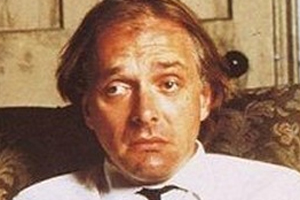
Remembering Rik Mayall


I was nine years old when I fell in love with Rik Mayall.

To begin with, I didn’t know who he was, only that he played the brilliantly arrogant blond-haired, moustachioed pilot Lord Flashheart on Blackadder Goes Forth.

Vain and promiscuous but undeniably talented and really damn cool, Lord Flash had the kind of “F— you” chutzpah that the younger me (hell, me now) desperately wanted. He was the kind of person who melted hearts, dropped jaws and punched Germans, all before breakfast.

Later, in my teenage years, I would realise he only appeared on one out of six episodes in that season; to my younger mind he had been so big, so bright, so loud, so fun, so captivating that he defined the whole final series for me.

Mayall was the King of Crude, the Rumpelstiltskin of Rude. No one – except perhaps his longtime writing and acting partner Adrian Edmondson – could spin smut, filth, grubbiness, indecency and the downright wrong into more delightful comedic gold.

Children begin life obsessed with their bodily fluids and emissions, and delight in the simplicity of slapstick, but most grow out of it, or at least pretend to be more sophisticated.

Mayall never lost the sense of how that stuff could shock adults, and shock them even more when they believed he should know better. He did of course; that’s why it worked.

Smut flowed smoothly from Mayall’s mouth, whether in a bravura character like Lord Flash, or a more put upon one like Rick, his acne-ridden, lisping anarchist with a penchant for bad pop music, from the seminal early ’80s student share house sitcom The Young Ones.

The dialogue for both of course came from the pen of Ben Elton, another master of the toilet humour turn of phrase.

Mayall’s rants, terrible poetry and general annoyingness made him lovable; indeed the first tweets to start circulating after news of his death broke were the immortal lines “He’s dead! The People’s Poet is dead!”

It remains the role he is best known for in Australia; but I only reached it in the early ’90s, by which time I had already become obsessed with Bottom, the sitcom he and Edmondson wrote and starred in together.

As Hammersmith flatmates Richie and Eddie, they were Rick and Vyvyan grown-up, their loser young adulthood blossoming into nothing more than loser middle-age: unemployable, drunk, lacking romance or basic human empathy, their lives a spiral of cartoonish violence.

They were stupid, offensive and on occasion creepy, but they always got their comeuppance and damn, they were just funny.

Who else would think of ideas like having a “See How Much Custard You Can Fit in Your Underpants” competition, devote 10 minutes of one episode to commentating a local riot, or set one entire episode on a dodgy ferris wheel

Eddie would get drunk on Old Spice and need to be resuscitated with an iron, Richie would fall down the stairs and get his head stuck in the toilet, Richie would recruit Eddie to be his butler to impress a date, then serve caviar from a bin. All of this would be accompanied by punch-ups, dust-ups, wind-ups, fall downs and knob gags.

Ad Feedback

I loved Richie’s pathetic neediness and bitterness as much as I had loved Lord Flashheart’s superiority complex.

Those characters made me, as a pre-teen, start to really look at humour, to examine jokes, to work out how a funny sequence was constructed, how to create good characters, and comedic principles like the “rule of threes” and the fact that the word “knob” is always funny.

A friend and I would recite dialogue at each other in class; my mum used to tell me off for saying “bollocks”, “bugger” and “bastard” too much (I loved hearing her ask if I knew what those words meant).

Bottom toured the UK regularly through the ’90s and early ’00s; I used to order the shows on VHS then watch and rewatch. They could swear in the live shows, and Mayall had a glorious talent for swearing. He was Shakespeare’s clown and Beckett’s buffoon but he was the James Joyce of modern comedic cursing.

In those same years he was also playing impoverished Richie’s polar opposite as greedy Conservative MP Alan B’Stard in the parody The New Statesman; he also starred as the titular imaginary friend in 1991’s Drop Dead Fred, probably his best-known film. In more recent years he had a recurring role on detective series Jonathan Creek as a policeman whose intellect and powers of observation almost matched the hero.

A couple of gems to grab are the 1998 BBC drama-thriller In the Red, in which Mayall showed off his remarkable dramatic capabilities as a fantastically immoral economist; and the sitcom Believe Nothing, in which he played the smartest man in Britain, Professor Adonis Cnut (the wordplay by no means an accident), who solves problems and mysteries with the help of a faithful manservant.

Every Mayall fan knows that nose of his; the way he would push it forward like a pig’s snout to look slimy or grovelly, tilt it up to look haughty, or pair it with a raised lip and maniacal grin to look scheming or clever. No other performer, serious or comedic, has ever acted so well with their nose.

Mayall had cheated death once before. In 1998, he crashed a quad bike Edmondson had given him as a present.

It happened the day before Good Friday, and he christened it “Crap Thursday”. There was some contention that the head wound he suffered changed him in some way forever; whether this was so is not really to speculate, save to say that any experience like that would have some effect.

What’s for certain is that while 56 is far too young to go, we did get those extra 16 years of his glorious presence, time in which he worked, and still made us laugh.

The Young Ones were always huge supporters of Britain’s famous Comic Relief charity events, and in 1986 joined Sir Cliff Richard to rerecord Living Doll. That version hit number 1 on the UK charts, and you can’t sing it now without having someone yell The Young Ones’ additional lyrics out at you (“What does this button do”)

It seems strange that one of The Young Ones should die before the seemingly immortal Sir Cliff – but then that kind of dark twist would probably be right up Mayall’s alley, the utter, utter, utter, utter, utter, utter… oh, just pass me the mallet.
Young adult books are not for old adults


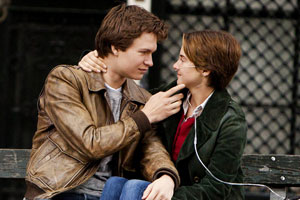
As The Fault in Our Stars barrels into theatres virtually guaranteed to become a blockbuster, it can be hard to remember that once upon a time, an adult might have felt embarrassed to be caught reading the novel that inspired it. Not because it is bad – it isn’t – but because it was written for teenagers.

The once-unseemly notion that it’s acceptable for not-young adults to read young-adult fiction is now conventional wisdom. Today, grown-ups brandish their copies of teen novels with pride. There are endless lists of YA novels that adults should read, an “I read YA” campaign for grown-up YA fans, and confessional posts by adult YA addicts.

But reading YA doesn’t make for much of a confession these days: A 2012 survey by a market research firm found that 55 per cent of these books are bought by people older than 18. (The definition of YA is increasingly fuzzy, but it generally refers to books written for 12- to 17-year-olds. Meanwhile, the cultural definition of “young adult” now stretches practically to age 30, which may have something to do with this whole phenomenon.)

The largest group of buyers in that survey – accounting for a whopping 28 percent of all YA sales – are between ages 30 and 44. That’s my demographic, which might be why I wasn’t surprised to hear this news. I’m surrounded by YA-loving adults, both in real life and online.

Today’s YA, we are constantly reminded, is worldly and adult-worthy. That has kept me bashful about expressing my own fuddy-duddy opinion: Adults should feel embarrassed about reading literature written for children.

Let’s set aside the transparently trashy stuff like Divergent and Twilight, which no one defends as serious literature. I’m talking about the genre the publishing industry calls “realistic fiction.” These are the books, like The Fault in Our Stars, that are about real teens doing real things, and that rise and fall not only on the strength of their stories but, theoretically, on the quality of their writing. These are the books that could plausibly be said to be replacing literary fiction in the lives of their adult readers. And that’s a shame.

The Fault in Our Stars is the most obvious juggernaut, but it’s not the only YA book for which adults (and Hollywood) have gone crazy. Coming to theatres later this year If I Stay, based on Gayle Forman’s recent novel about a teen-age girl in a coma.

And DreamWorks just announced it bought the rights to Eleanor & Park, Rainbow Rowell’s outcast romance that Kirkus Reviews said “will captivate teen and adult readers alike.” Before these there were the best-sellers (and movies) The Perks of Being a Wallflower and It’s Kind of a Funny Story.

Ad Feedback

Adult fans of these books declare confidently that YA is more sophisticated than ever. This kind of thing is hard to quantify, though I will say that my own life as a YA reader way back in the early 1990s was hardly wanting for either satisfaction or sophistication. Books like The Westing Game and Tuck Everlasting provided some of the most intense reading experiences of my life. I have no urge to go back and re-read them, but those books helped turn me into the reader I am today. It’s just that today, I am a different reader.

I’m a reader who did not weep, contra every article ever written about the book, when I read The Fault in Our Stars. I thought, Hmm, that’s a nicely written book for 13-year-olds. If I’m being honest, it also left me saying “Oh, brother” out loud more than once. Does this make me heartless Or does it make me a grown-up

This is, after all, a book that features a devastatingly handsome teen boy who says things like “I’m in love with you, and I’m not in the business of denying myself the simple pleasure of saying true things” to his girlfriend, whom he then tenderly deflowers on a European vacation he arranged.

That will sound harsh to these characters’ legions of ardent fans. But even the myriad defenders of YA fiction admit that the enjoyment of reading this stuff has to do with escapism, instant gratification and nostalgia. As the writer Jen Doll, who used to have a column called “YA for Grownups,” put it in an essay last year, “At its heart, YA aims to be pleasurable.”

But the very ways that YA is pleasurable are at odds with the way that adult fiction is pleasurable. There’s of course no shame in writing about teenagers; think Shakespeare or the Bront

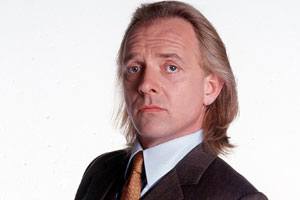
Rik Mayall, star of Young Ones and Blackadder, dies


British actor and comedian Rik Mayall, best known for his appearances in BBC shows The Young Ones and Blackadder, has died aged 56.

”We are deeply saddened to announce the death of Rick Mayall who passed away this morning,” said the actor’s manager, Geoff Stanton from Brunskill management.

”We are devastated and he will be missed by all who knew and loved him.”

Brunskill did not give any cause of death, but said further details would be released soon.

Mayall had a serious quad bike accident in 1998, which left him in a coma for five days.

Known as a pioneer of alternative comedy in the early 1980s, he appeared in numerous television shows and comedies, often featuring gratuitous, slapstick violence.

Between 1986 and 1992 he won a new audience playing the suave, treacherous politician Alan B’Stard in ITV’s The New Statesman.

Mayall’s long-time collaborator and friend Adrian Edmonson has paid tribute to him.

“Those were some of the most carefree, stupid days I ever had and I feel privileged to have shared them with him.”

Watch Mayall in The Young Ones

Young Ones, Blackadder actor Rik Mayall dead


British actor and comedian Rik Mayall, best known for his appearances in BBC shows ”The Young Ones” and ”Blackadder,” has died aged 56.

”We are deeply saddened to announce the death of Rick Mayall who passed away this morning,” said the actor’s manager, Geoff Stanton from Brunskill management.

”We are devastated and he will be missed by all who knew and loved him.”

Brunskill did not give any cause of death, but said further details would be released soon.

Mayall had a serious quad bike accident in 1998, which left him in a coma for five days.

Known as a pioneer of alternative comedy in the early 1980s, he appeared in numerous television shows and comedies, often featuring gratuitous, slapstick violence.

Between 1986 and 1992 he won a new audience playing the suave, treacherous politician Alan B’Stard in ITV’s ”The New Statesman”.

Ad Feedback

– Reuters

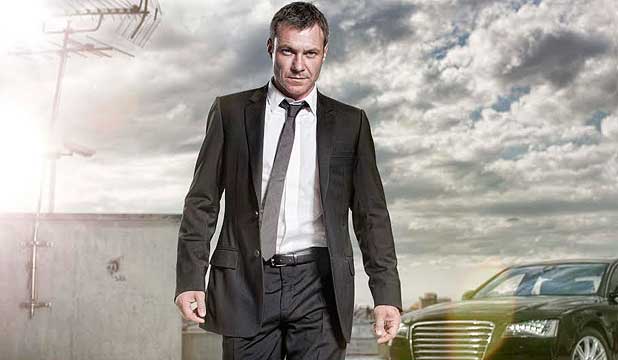
Transporter returns to TV screen


Frank Martin was an easy sell to Chris Vance.

Sure the character was synonymous with British action star Jason Statham, who played the mysterious Transporter in three cinematic outings between 2002 and 2008, but 32-year-old fellow Brit Vance was sure he could make Martin his own in the planned TV spinoff – and besides it was truly a dream role.

“Between the cool one-liners, the girls, the guns, the driving, the huge action sequences… I thought to myself, how can I not want to jump at this one” the former Prison Break and Mental star says of his reaction when first approached about the role in 2011.

He admits he had seen all three films in the Transporter trilogy and “loved what Jason brought to the part”.

“His strength and cool charm was very compelling. But I wasn’t intimidated.”

In order to put his own spin on the character, Vance says he “ended up asking a thousand questions about the character, the genre of story, the narrative landscape Frank Martin interacts with”.

Top 10 famous screen dogs


There is no supporting role greater than that of man’s best friend. We bow-wow down to the top 10 dogs of the small and silver screens.

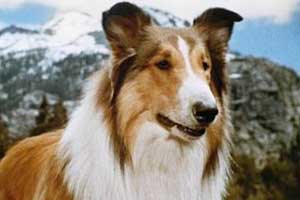
1. Lassie
Everyone wants a heroic, loyal collie to call their own. The character was created by Eric Knight in a short story in 1938, turned into a novel in 1940 and adapted into a feature film – Lassie Come Home – in 1943. Lassie quickly became an icon, with several sequels, a radio show and a television series. The first onscreen Lassie was played by a dog actor called Pal, and according to dogactors.com, eight generations of Pal’s progeny continued to portray the character over the years.

2. Rin Tin Tin
The story is as Hollywood-worthy as the dog himself. Rin Tin Tin was a German Shepherd rescued from a bombed-out dog kennel in France during World War I. His saviour, an American soldier named Lee Duncan, taught him tricks and became convinced the dog could be a star. He appeared in 27 movies, and was even nominated for Best Actor at the 1929 Academy Awards. He died at the age of 14 in 1932.

3. Snoopy
Perhaps the most recognisable dog in cartoon history, Snoopy originated from the Peanuts comic strip as Charlie Brown’s pet dog. He went on to become so much more with his hundreds of alter egos – from Joe Cool to the World War I Flying Ace. Snoopy has been firmly established as the most popular cartoon dog in history, appearing in TV specials, movies and even a broadway musical, You’re A Good Man Charlie Brown.

4. Beethoven
Forget Ludwig van. Most people would associate Beethoven with the giant, trouble-making St Bernard from the classic 1992 comedy. The original film was so popular it spawned six sequels and an animated TV series. Sadly, the first dog actor to play Beethoven – the comparatively plainly named Kris – died shortly after the making of the first two movies.

5. Toto
He was Dorothy’s faithful sidekick in the Wizard of Oz. But Toto was actually played by a girl, a Cairn Terrier named Terry. Terry appeared in several Hollywood films during her life as a dog actress, and even did all her own stunts. She was injured during the making of Oz when one of the Wicked Witch’s guards accidentally stood on her paw, breaking it. Terry passed away in 1944 at the age of 11.

6. Brian Griffin
Creators of Family Guy sparked global outrage when they decided to kill off the popular talking dog. When the eloquent, martini-sipping Griffin family pet (voiced by Seth MacFarlane) was struck by a car and killed in season 12, fans threatened to boycott the show. But so beloved was Brian that he was resurrected just three weeks after his death.

7. Wishbone
Yet another favourite dog of the 1990s, Wishbone was the star of the TV show about a talking dog who went on literary adventures. He played so many characters on the show that he had to have almost 200 doggie costumes especially made for him. The Jack Russell Terrier character was played by a dog star called Soccer, who made a name for himself appearing in commercials for Nike and Mighty Dog dog food.

Ad Feedback

8. Air Bud
How cute was this slam-dunking Golden Retriever from the 1997 family flick He was played by a dog actor called Buddy, who also featured as the family pet, Comet, in the TV series Full House. Sadly, Buddy’s sporting career was cut short when he developed a rare form of cancer and had to have a leg amputated. He passed away a year later.

9. Scooby-Doo
He’s the cowardly, mystery-solving Great Dane named after a line from a Frank Sinatra song which went, “doo-be-doo-be-doo”. The longest-running cartoon on TV, Scooby-Doo began in 1969 and became an instant Saturday morning success. Scooby’s creator, animator Iwao Takamoto, researched the character by speaking to a breeder about the desired characteristics of a pure-bred dog. He then proceeded to draw him the exact opposite.

10. Hachiko
You might not have heard of Hachiko, but in Japan he is a national treasure. In 1924, a university professor in Tokyo took an Akita dog named Hachiko as a pet. At the end of each day, the loyal dog would greet his master at Shibuya station. Though the professor died a year later, Hachiko continued to make the trek to the station every day for the next nine years. A blockbuster film about Hachiko’s life was created in Japan in 1987, and in 2009 an English version was released.

– Stuff

Maori TV complaint declined


The Broadcasting Standards Authority has declined a complaint by Te Kohanga Reo National Trust Board against a report on Maori Television.

Last September, Maori TV programme Native Affairs reported concerns about the governance and management of the trust. That included allegations the trust had been improperly providing loans to trustees and senior managers, the authority said in a decision today.

It declined to uphold the trust board’s complaint that the broadcast was inaccurate, unbalanced and unfair.

The significance of the issues to the target audience, the broadcaster’s freedom of speech and that of the disaffected whanau who were interviewed had to be balanced against the potential harm to the trust, the authority decision said.

It found the broadcast carried very high public interest and was a legitimate investigation of the financial activities of the trust and its subsidiary, Te Pātaka hanga.

Public organisations like the trust that were funded by, and served, the public, had to be subject to public scrutiny.

Maori Television general manager for news and current affairs Julian Wilcox said the authority’s decision confirmed Native Affairs followed a fair, robust and thorough process in its investigation.

Ad Feedback

– Stuff

Jackman bounces into trouble


He hopped into the theatre like a kangaroo, and now Hugh Jackman has left Tony Awards viewers scratching their heads by rapping a popular show tune.

In his fourth outing as Tony Awards host, Jackman tried his hand at staging a one-man version of classic musical, The Music Man.

But as he spun the quick-paced lyrics to one of the show’s popular tunes, the X-Men star decided to enlist the help of rappers LL Cool J and TI to rap the rest.

Wrapping the segment, Jackman even joked about his new rapping moniker: Biggie Tap Shoes.

“I think Wolverine is having a breakdown,” viewer Andi McLellan tweeted.

Another quipped that Jackman should leave the rapping to the professionals because he was “Les Miserables” at it.

Meanwhile, celebrity blogger Perez Hilton seemed sum up what many fans were feeling with: “What am I watching right now”

But others seemed to appreciate the silliness of the rap spoof.

“This is theatre blasphemy but I can’t stop laughing. Mostly because rap with an Australian accent is funny,” said Brittany Berger.

Jackman’s hosting performance appears to be dividing viewers on Twitter, with his opening dance routine also leaving some cold.

A homage to Bobby Van’s hopping routine from 1953 musical, Small Town Girl, the energetic routine saw Jackman jump through New York’s Radio City Music Hall high-fiving audience members before heading backstage.

There he continued his boppy journey to greet high-profile guests like Sting, Neil Patrick Harris and casts of Aladdin, Cabaret, A Gentleman’s Guide to Love & Murder and the stage musical revival of Les Miserables.

Jackman fans on Twitter welcomed the high energy routine as they watched the awards show kick off.

“I don’t care if is clawing mutants, raising orphans, arm wrestling or dancing, he can do no wrong,” viewer Toby Williams quipped.

But others weren’t impressed.

“Jumping does not an opening make,” Blake Erickson tweeted.

Jackman had teased the opening routine in the lead up to this year’s ceremony via social media, posting a video of himself bouncing through a series of daily tasks ahead of Sunday’s show.

The Australian actor picked up an Emmy in 2005 for his Tony Awards hosting efforts the year before.

Ad Feedback

– AAP

The wonder of Elvis always on his mind


Murray Johnson is a baker by night, a sleeper by afternoons, and a lover of all things Elvis in between.

This month he will be entering the annual Elvis Down Under competition for the sixth time but his love for the King does not stop at impersonations.

Not only is his Paraparaumu home full of Elvis memorabilia, but he and wife Denise share the same wedding anniversary as Elvis and Priscilla (May 1) and also had identical rings made.

His passion dates back to early childhood. “My mother had some Elvis records and as kids we used to play them and as soon as I heard Elvis I was hooked.

“I still have that original album, it’s called Rock n’ Roll Album One.” It is one of his collection of about 400.

Johnson’s first competition was in 1989 when he wore a hired suit.

He now owns five replicas that range in value from $1500 to about $5000. His latest purchase was a pair of original sunglasses by Dennis Roberts, an optician who made so many shades for Elvis that he was dubbed “The Man Who Framed the King”.

For Johnson, loving Elvis is about more than embroidered jumpsuits and crooning tunes.

“A lot of people don’t know [Elvis] was a generous man and gave to a lot of charities. Last year I went to Hawaii for the 40th anniversary of the Aloha concert, when he raised $65,000 to start the Pearl Harbour war memorial.”

Johnson has been practising daily for the seventh annual Elvis Down Under. “I’m wearing a new jumpsuit, it’s a rare one he wore at two concerts in 1970 and 1971 with unicorns down the front.”

His wife is supportive of his hobby. “Denise loves Elvis as well.

“She helps me with my hair before the shows – it’s not a wig.”

Elvis Down Under organiser Cathy Finau started the competition in 2008 because she was “such a huge fan”.

She said Elvis fans should give the amateur division a go. “A lot of people think oh, I haven’t got the suit and the gear – but that doesn’t matter, just wear black jeans, a shirt and glasses, which you can get from The $2 Shop.”

Mark Southan and John Lancaster will be on the judging panel, looking for the most convincing mannerisms, moves, sound and charisma to award the $2000 prize.

“It’s not just a karaoke thing.

“These guys take it very seriously,” Finau said.

The competition will take place at the Petone Working Men’s Club on June 27 and 28.

Tickets for the weekend are $40 from eventbrite.co.nz.

Email [email protected] to enter.

Ad Feedback

– The Dominion Post

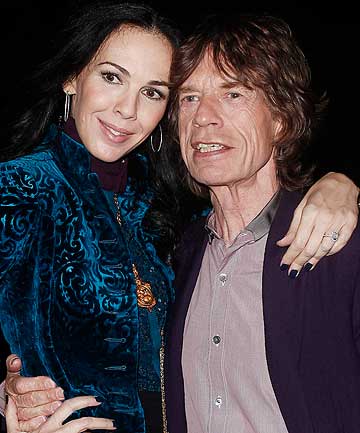
L’Wren Scott’s sister lashes out at Mick Jagger


Mick Jagger’s womanising ways contributed to L’Wren Scott’s depression, her estranged sister has said. The accusation comes a week after the rocker was pictured enjoying a rendezvous, with a Scott look-alike, in Switzerland.

Jagger’s liaison took place less than three months after the suicide of Scott, his partner of 13 years.

“And people wonder why L’Wren was so depressed” said Jan Shane, 53, who hadn’t spoken to her adoptive sister for six years and who was not invited to the funeral.

Photos show Jagger looking relaxed and intimate with the younger brunette on his hotel balcony in Zurich. According to reports, Jagger spent two days with the woman he met at a nightclub.

The Rolling Stones frontman was there with his bandmates performing, having resumed their world tour last month. They put the tour on hold following 49-year-old Scott’s suicide in March.

“These pictures make me really wonder what Mick is really thinking and feeling,” Shane continued in an angry outburst to The Mirror.

“His daughter says that he is still heartbroken and so devastated about losing my sister.