Murray Gold is a hugely prolific television music composer, producing memorable scores to British programmes including Vanity Fair, Clocking Off and Shameless.
It was his work on producer Russell T Davies’ previous shows, Queer as Folk and Casanova, which lead to his long association with Doctor Who.
He recalls his enlisting was somewhat rushed: “It must have been four weeks before they needed to finish the first episode, I got an email through from Russell and it just said: ‘I should have asked this a long time ago … ‘ So I said ‘yes’. There was no conversation anywhere else, nothing between agents or anything like that. And now nine years later … ”
Gold might have liked a longer lead-in time, but it transpires that working very quickly is one of his greatest assets: “It can be five days to a week to get through an episode, so that kind of knocked out about half the candidates for the job, I think. You have to get to know exactly how long something’s going to take and get into the rhythm of it. It’s very hard.”
Surprisingly, one of the greatest problems for Gold actually proved to be the Doctor Who theme music – composed 50 years ago and instantly recognisable to millions. “That was really difficult, because it’s not my piece. I think the original version provokes feelings of haunting, mystery and fear, and when the first [new series] episode ended this girl had effectively been seduced to go through time and space with a tall dark stranger. It was exciting and warm … and this lonely, scary theme didn’t punch home the message that we’d been left with.”
Quite a dilemma, as, along with the Tardis, the theme music is the one constant of the series’ five-decade history. Fortunately, he had the solution: “It’s fairly simple chords, so just beef up the rhythm and the orchestration a little bit, and in the end it sounded a bit more of a grand adventure theme than a horror theme. More ‘galloping horses’.”
For the episode music itself, Gold once again became aware of a new direction for the revitalised show. In its later years, the original series used almost exclusively synthesised music, and Gold produced a lengthy demo track for the new producers, assuming they wanted the same kind of sound. “I prepared for that, and then they said: ‘We loved the last 20 seconds.’ So I went back and it was just strings. I said ‘Oh, so you want orchestral kind of music’ I think they wanted to lead me to that conclusion.”
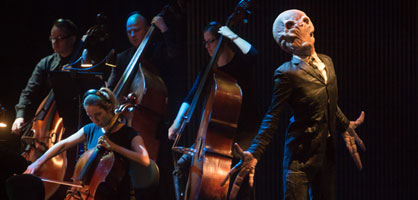
THE services of the National Orchestra of Wales were put at Gold’s disposal and an altogether richer, grander sound emerged which eventually the BBC realised would also lend itself to a live performance. In 1996, their annual charity appeal, Children in Need, featured the first live Doctor Who concert, which raised over